
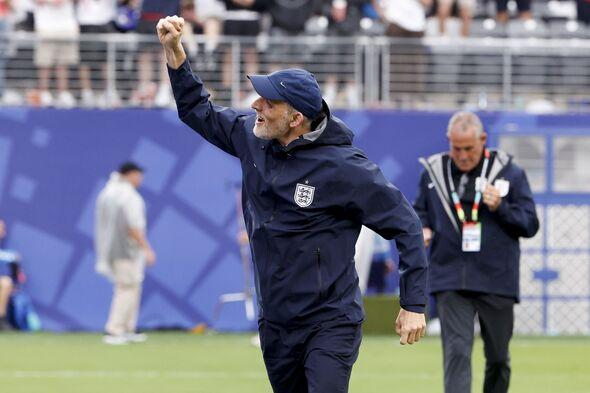
England concluded their 2026 FIFA World Cup campaign with a spectacular 6-4 victory over France, securing third place in one of the tournament’s most entertaining matches. Bukayo Saka’s hat-trick grabbed the headlines, while Thomas Tuchel finally unleashed an attacking version of England that many supporters had been hoping to see throughout the competition.
Yet despite the emphatic win, one unavoidable question remains:
Why didn’t England play with the same attacking freedom against Argentina in the semi-final?
Just days after a cautious 2-1 defeat to the defending champions, England abandoned their conservative approach and attacked France with confidence, pace, and purpose. The result was thrilling, but it also intensified the debate over whether a bolder tactical plan might have carried England into the World Cup Final.
Quick Match Overview
| Category | Details |
|---|---|
| Competition | FIFA World Cup 2026 |
| Match | France vs England |
| Stage | Third-Place Playoff |
| Venue | Hard Rock Stadium, Miami Gardens |
| Final Score | England 6-4 France |
| England Manager | Thomas Tuchel |
A Completely Different England
England looked far more adventurous than they had in the semi-final against Argentina.
Instead of retreating into a defensive shape, Tuchel’s side pressed aggressively, attacked quickly, and committed numbers forward from the opening whistle.
Within the first half England:
- Pressed France high up the pitch.
- Played forward with greater urgency.
- Allowed attacking players more freedom.
- Committed midfield runners into dangerous areas.
The rewards were immediate.
Declan Rice opened the scoring before Ezri Konsa doubled the lead. Bukayo Saka then added two more goals as England stormed into halftime with a remarkable 4-0 advantage.
England Played Without Fear

Perhaps the biggest difference was England’s mentality.
Rather than protecting possession or waiting for mistakes, they consistently attacked France’s defensive line with speed and confidence.
The front three stretched the pitch, midfielders arrived late into the penalty area, and England looked more fluid than at any other point in the tournament.
For much of the World Cup, supporters questioned whether England’s talented attacking players had been restrained by cautious tactics.
Against France, they finally saw what this squad could produce when encouraged to play on the front foot.
Defensive Problems Still Exist
While England’s attacking football deserved praise, the second half exposed familiar defensive concerns.
Despite leading 4-0, England allowed France back into the contest.
Kylian Mbappé inspired Les Bleus with two goals, while Bradley Barcola and Ousmane Dembélé also found the net.
England eventually scored six and secured victory, but conceding four goals after such a commanding lead remains a concern.
Defensive Balance
| Positive | Concern |
|---|---|
| Aggressive pressing | Lost control after halftime |
| Excellent attacking transitions | Space behind full-backs |
| High-quality chance creation | Defensive concentration faded |
| Clinical finishing | Vulnerable to counterattacks |
Finding the right balance between attacking ambition and defensive stability will be one of Tuchel’s biggest priorities before Euro 2028.
France’s Fightback

France refused to accept defeat quietly.
Led by Mbappé, Les Bleus produced an impressive second-half comeback that briefly threatened to overturn England’s advantage.
Although England ultimately held on, the dramatic momentum shift highlighted areas where the Three Lions still need to improve, particularly in managing games after building a comfortable lead.
Too Little, Too Late?
England supporters will inevitably compare this performance with the semi-final defeat to Argentina.
Against the eventual finalists, England played cautiously and surrendered control after taking the lead.
Against France, they attacked fearlessly.
That contrast has sparked understandable debate over whether Tuchel’s tactical decisions in the semi-final cost England a place in the World Cup Final.
While there is no certainty that a more adventurous approach would have defeated Argentina, England’s display against France demonstrated the attacking quality available within the squad.
Lessons for Euro 2028
England leave the tournament with reasons for optimism as well as clear areas for improvement.
Positives
- Bukayo Saka returned to outstanding form.
- Declan Rice led the team impressively.
- Young players gained valuable tournament experience.
- England secured third place with their highest-scoring performance of the tournament.
Areas to Improve
- Greater tactical consistency.
- Better game management after taking the lead.
- Improved defensive organization.
- More confidence against elite opponents.
If England can combine their attacking intensity with greater defensive discipline, they will enter Euro 2028 among the favorites.
Eyes on the Future

England now turn their attention to UEFA Euro 2028, where they will be one of the host nations.
Automatic qualification provides Thomas Tuchel with valuable time to refine his tactical identity and address the defensive weaknesses exposed during this World Cup.
France also begin a new chapter, with Zinedine Zidane expected to succeed Didier Deschamps after the longest and most successful managerial era in recent French football history.
Key Takeaways
- England defeated France 6-4 to secure third place at the 2026 FIFA World Cup.
- Thomas Tuchel adopted a much more attacking tactical approach than in the semi-final against Argentina.
- Bukayo Saka starred with a memorable hat-trick.
- England impressed going forward but still showed defensive vulnerabilities.
- The performance has intensified debate over whether England should have played more aggressively against Argentina.
Final Thoughts
England’s thrilling victory over France offered a glimpse of the team’s attacking potential under Thomas Tuchel. Freed from the caution that characterized parts of their World Cup campaign, the Three Lions played with confidence, creativity, and purpose, producing one of the tournament’s most exciting performances.
At the same time, the match leaves a lingering sense of what might have been. The contrast between England’s cautious semi-final against Argentina and their fearless display against France will remain a major talking point. As preparations begin for Euro 2028, Tuchel’s biggest challenge will be blending the attacking freedom shown in Miami with the defensive control needed to win football’s biggest tournaments.