


Football matches are not always decided by the number of shots or the amount of possession a team enjoys. Sometimes, the biggest difference comes from positioning, movement and the ability to exploit spaces that opponents leave unprotected.
Como demonstrated this through an impressive tactical performance against Manchester United, exposing several weaknesses in their defensive organisation and pressing structure.
Under Cesc Fàbregas, Como showed confidence in possession, intelligent positional rotations and an organised approach to building attacks from the back. Manchester United, meanwhile, struggled to apply consistent pressure and repeatedly allowed their opponents to find free players between the lines.
The difference was not simply individual quality. It was also about how effectively each team understood and exploited the available spaces.
Here is a closer look at the tactical details that helped Como dominate the game.
1. The Tactical Difference Between Como and Manchester United
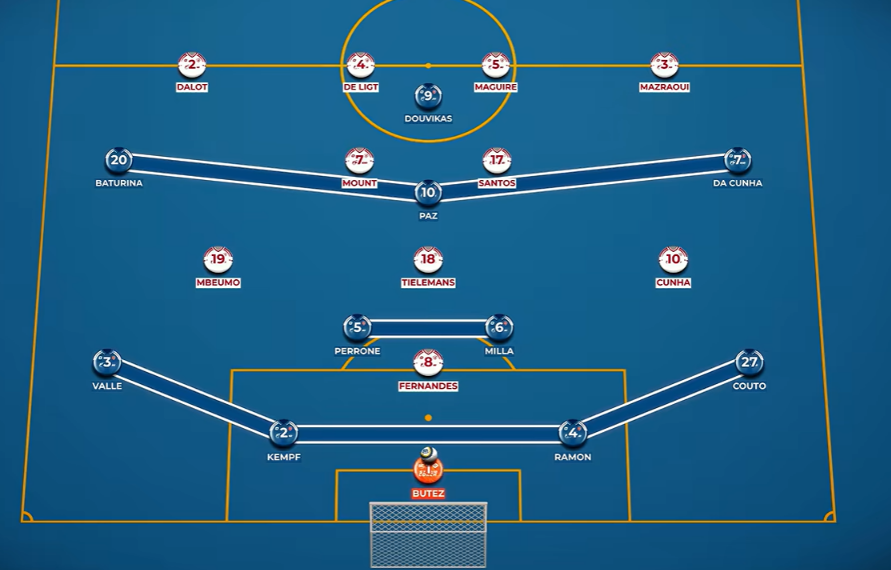
One of the clearest differences between the teams was their organisation without the ball.
Como looked comfortable building attacks from the back and moving possession through midfield. Their players understood when to drop deeper, when to move forward and how to create passing options.
Manchester United attempted to defend through a relatively cautious zonal structure, but this approach created problems.
Their defensive shape was not compact enough to prevent Como from creating overloads, while their pressing was not aggressive enough to consistently recover possession high up the pitch.
This left United in an uncomfortable middle ground.
They were neither applying enough pressure to disrupt Como’s build-up nor protecting the spaces around their defensive line effectively.
Como recognised these weaknesses and repeatedly used them to progress the ball.
2. How Como Used Their 4-2-3-1 Formation
Como started with a 4-2-3-1 formation, a system that provided balance between defensive protection and attacking creativity.
The two holding midfielders offered support during build-up, while the attacking midfielder operated between the opposition’s defensive and midfield lines.
However, Como did not remain in the same shape throughout the match.
During possession, they frequently transformed into a 4-3-3 structure.
One midfielder could drop deeper between the centre-backs, while another moved forward to provide additional support in wider areas.
These rotations made it difficult for Manchester United to identify clear marking responsibilities.
Instead of facing a predictable formation, United had to respond to players constantly changing positions.
Creating Numerical Advantages in Midfield
One of Como’s biggest strengths was their ability to create numerical advantages around the ball.
By moving players into different midfield positions, they could create situations where Manchester United had fewer players available to challenge for possession.
Bruno Fernandes and the other central players were frequently placed under pressure because Como had additional passing options nearby.
This allowed Como to retain possession and move the ball into dangerous areas without facing consistent pressure.
3. Manchester United’s Pressing Structure Was Disorganised

High pressing requires coordination.
When one player moves forward to pressure an opponent, teammates must adjust their positions to close passing lanes and prevent the opposition from escaping through open spaces.
Manchester United struggled to maintain this coordination.
There were several situations where their attacking players moved towards the ball without receiving enough support from the midfield and defensive lines.
As a result, Como could often find free players behind the first line of pressure.
The Problem With Uncoordinated Pressing
A pressing system can quickly become ineffective when players do not move together.
For example, when Manchester United attempted to close down Como’s full-backs, other players sometimes failed to cover the central passing options.
This gave Como opportunities to move the ball back inside and progress through midfield.
In other situations, United’s midfielders did not track the movements of Como’s deeper players.
The result was a pressing structure that looked aggressive in certain moments but lacked the organisation needed to win possession consistently.
4. How Como Exploited the Space Between the Lines
One of the most important tactical details was Como’s ability to find space between Manchester United’s midfield and defensive lines.
This area is often called the half-space or the space between the lines, depending on the player’s position.
When an attacking player receives the ball in these areas, the opposition must quickly decide whether a midfielder or defender should step forward.
That decision can create further spaces elsewhere.
Como used intelligent movement to make these defensive decisions more difficult.
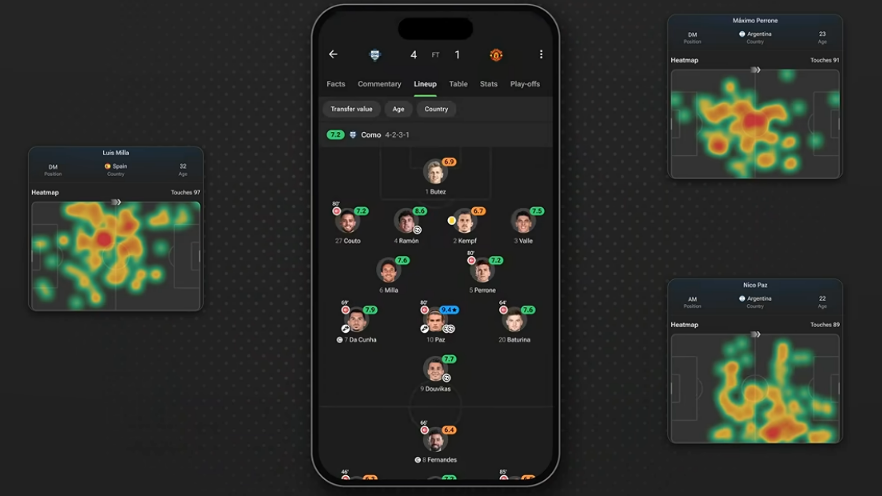
Players such as Nico Paz and Perrone were involved in connecting different phases of the attack, while their teammates created additional passing options through positional rotations.
Manchester United frequently struggled to close these spaces quickly enough.
This gave Como more time to control possession and move the ball towards the final third.
5. Como’s Full-Backs and Wingers Created Problems
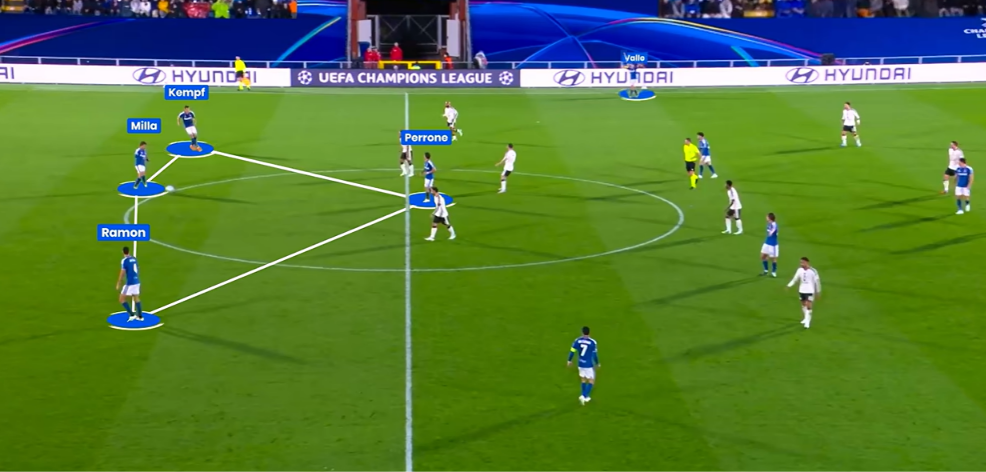
Another important feature of Como’s attacking structure was the relationship between their full-backs and wingers.
Rather than keeping every player in a fixed wide position, Como used rotations to create different attacking possibilities.
Their full-backs could move inside to support midfield, while wingers could either drop deeper or remain higher to stretch the defensive structure.
This movement forced Manchester United to constantly adjust their positions.
Creating Space on the Flanks

When Como’s full-backs moved inside, they could attract central defenders or midfielders towards the ball.
At the same time, the wingers had opportunities to move into wider positions or exploit the spaces created by these movements.
This made it difficult for United to defend both the central areas and the flanks at the same time.
Como were therefore able to progress possession through different routes instead of depending on one attacking pattern.
6. Why Como Defended More Effectively
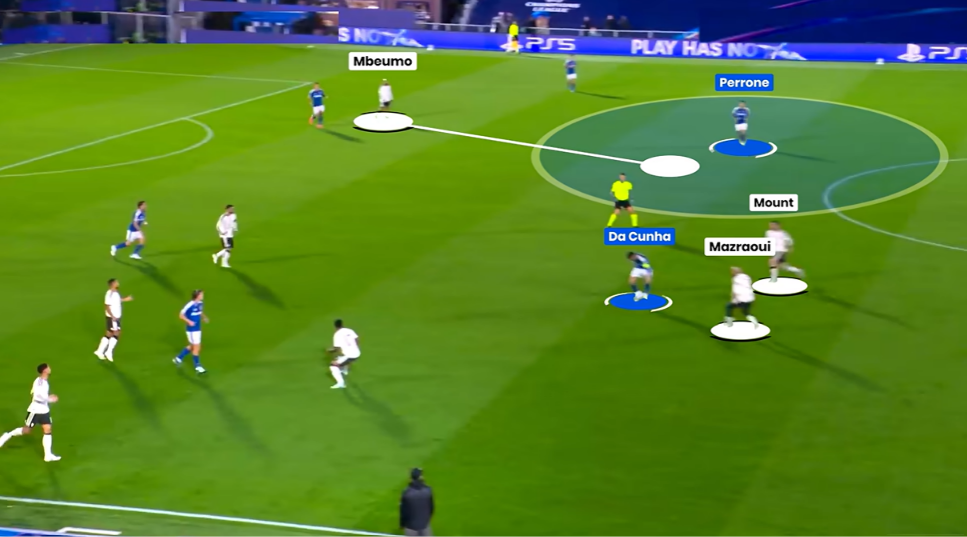
Although Como did not always press aggressively, their defensive organisation was noticeably more coordinated.
Their players understood when to close down opponents and when to recover into a compact defensive structure.
This helped them slow Manchester United’s attacks and prevent the opposition from finding easy passing options.
When United moved the ball towards the flanks, Como were able to shift their defensive shape and provide support to the player applying pressure.
This collective movement made it more difficult for Manchester United to create dangerous situations.
The key difference was not necessarily the intensity of the pressing, but the organisation behind it.
7. Manchester United’s Defensive Problems Became More Obvious
As the match progressed, Manchester United continued to struggle with Como’s movement and positional rotations.
Their midfield was repeatedly exposed, while defensive players sometimes found themselves dealing with several attacking threats at once.
Como’s second goal provided a clear example of how these problems could be punished.
An attacking player moved inside to connect the play, drawing a defender away from his original position. This created space for Nico Paz to exploit before the ball reached Douvikas.
The sequence demonstrated how one movement can disrupt an entire defensive structure.
The later goals also highlighted problems with concentration, tracking runners and covering wide areas.
Manchester United were increasingly unable to maintain their defensive shape as Como continued to attack.
8. What Manchester United Could Have Done Differently
Manchester United needed a more coordinated approach to pressing and defensive positioning.
There were several adjustments that could have made life more difficult for Como.
1. Press as a unit
When a full-back moves forward to close down an opponent, nearby midfielders and wingers must adjust their positions to remove passing options.
2. Protect the central spaces
The midfield should remain compact enough to prevent Como from receiving the ball freely between the lines.
3. Track midfield rotations
United needed better communication when Como’s holding midfielders moved into deeper or wider positions.
4. Apply pressure at the right moments
Instead of pressing inconsistently, United could have focused on specific triggers, such as backward passes or difficult receptions near the touchline.
5. Maintain defensive concentration
Defenders and midfielders needed to remain aware of runners moving into spaces behind them, particularly when Como changed their attacking shape.
These adjustments would not necessarily guarantee a different result, but they could have reduced the spaces Como were able to exploit.
Frequently Asked Questions
How did Como beat Manchester United tactically?
Como used intelligent positional rotations, controlled possession and numerical advantages in midfield. They also exploited spaces between Manchester United’s defensive and midfield lines.
What formation did Como use?
Como started in a 4-2-3-1 formation but frequently shifted towards a 4-3-3 structure during possession.
Why did Manchester United struggle to press Como?
Their pressing lacked coordination between the attacking, midfield and defensive lines. This allowed Como to find free players and progress the ball through midfield.
What is the space between the lines in football?
It is the area between an opponent’s defensive and midfield units. Attackers who receive the ball in this space can turn, create passing opportunities and threaten the defensive line.
What can other teams learn from Como’s performance?
The match highlights the importance of coordinated pressing, positional rotations, midfield control and maintaining defensive compactness.
Final Thoughts
Como’s performance demonstrated how tactical organisation can create a significant advantage against a team that struggles to maintain its defensive structure.
Their ability to change formations during possession, create numerical advantages and exploit spaces between the lines made life extremely difficult for Manchester United.
For United, the match exposed problems with pressing coordination, midfield protection and defensive concentration.
Ultimately, the biggest lesson is that pressing is not simply about running towards the ball. It requires every player to understand their role and move together as part of a coordinated system.