
Manchester City are known for their possession-based football, structured build-up play and ability to control matches through intelligent positioning. However, facing an aggressive pressing team can make even the most organised attacking system difficult to execute.
Paris Saint-Germain demonstrated exactly how to exploit these weaknesses through an intense man-to-man press, intelligent positional rotations and quick vertical attacks.
Throughout the first half, PSG repeatedly disrupted Manchester City’s build-up, forced them into uncomfortable situations and created dangerous opportunities by attacking the spaces left behind.
City eventually made important tactical adjustments after the break, but PSG continued to demonstrate why their attacking transitions are so difficult to defend.
This tactical analysis explores how PSG disrupted Manchester City, why their pressing system was so effective and how City’s second-half formation changes improved their performance.
1. Manchester City’s 3-1-3-3 Build-Up Structure
Manchester City attempted to establish their usual possession-based approach by building attacks from the back.
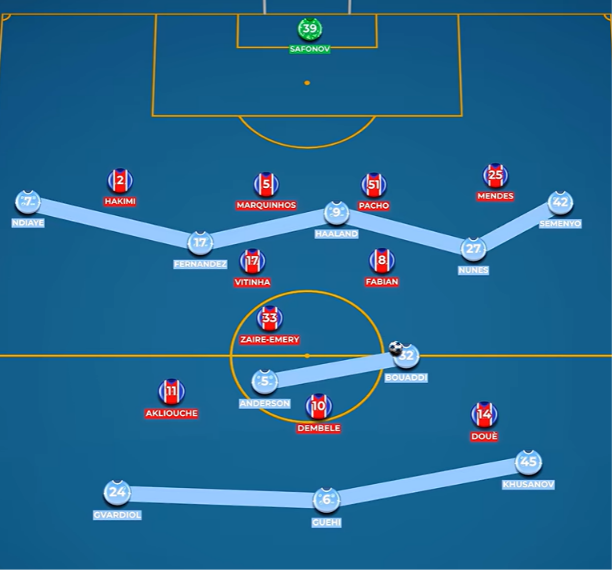
Their intended structure was a 3-1-3-3 formation, designed to provide passing options across different areas of the pitch.
Gvardiol moved inside to support the midfield, while Fernández pushed forward alongside Cherki. Anderson operated as the single pivot in front of the defensive three.
This structure was intended to give City control of possession and create numerical advantages during build-up.
However, there was one major problem: City needed time to move into their preferred positions.
Players had to rotate, establish passing angles and create the correct distances between each other.
PSG understood this and immediately attempted to prevent City from organising their structure.
Rather than allowing the defenders to circulate possession comfortably, they applied pressure high up the pitch and forced City to make decisions quickly.
2. PSG’s Aggressive Man-to-Man High Press
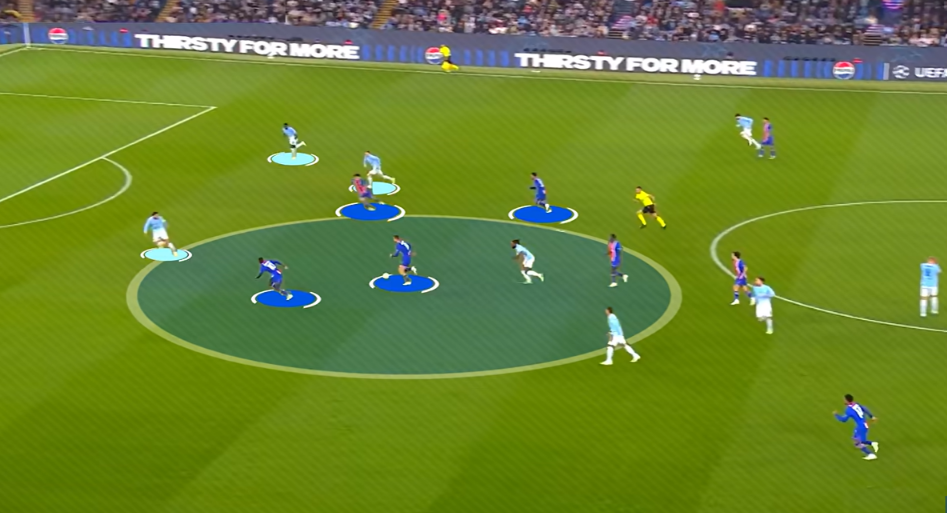
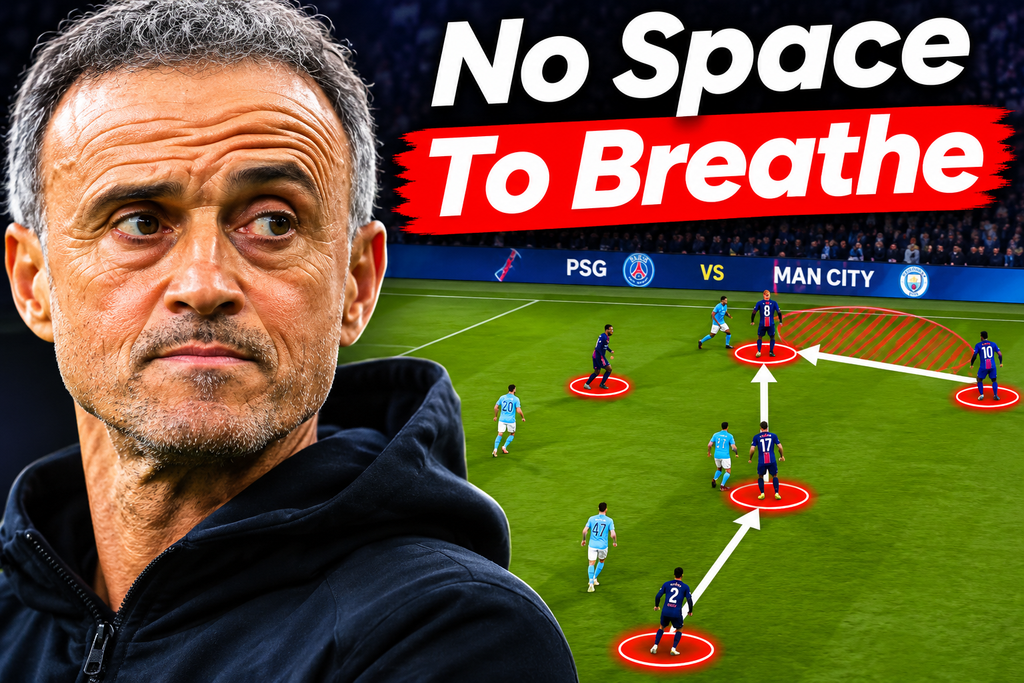
One of PSG’s biggest strengths was their ability to track Manchester City’s players individually.
Their pressing system was based on close marking, with every outfield player responsible for limiting the options available to a direct opponent.
This made it extremely difficult for City to find comfortable passing solutions.
Even when the ball reached goalkeeper Donnarumma, PSG immediately applied pressure and forced him to consider playing long.
Pressing Backward Passes
PSG also used a clear pressing trigger: whenever Manchester City played the ball backwards, the entire team moved forward.
This reduced the available space and made it difficult for City players to receive the ball facing forward.
Instead of allowing City to restart their build-up, PSG used backward passes as opportunities to increase pressure.
The result was a team that constantly struggled to find safe passing options.
3. How PSG’s Press Worked in the 15th Minute
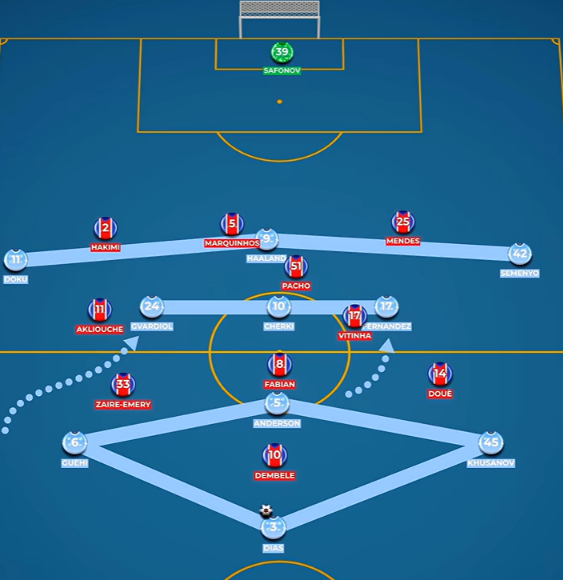
A sequence around the 15th minute demonstrated the effectiveness of PSG’s pressing structure.
Manchester City attempted to build an attack from a throw-in, but once the ball moved backwards, PSG immediately stepped forward.
Dembélé continued his movement towards Donnarumma, making a pass back towards Dias extremely difficult.
Meanwhile, the central passing options were closely marked.
When the ball eventually reached Gvardiol, Hakimi followed him and prevented him from progressing comfortably.
The pressure continued as City attempted to move possession towards Doku.
Marquinhos stepped forward aggressively to close him down, leaving City with very little time to make their next decision.
Eventually, PSG forced a mistake and Vitinha found space near the edge of the penalty area.
Although the resulting opportunity did not become a goal, the sequence demonstrated how PSG could turn defensive pressure into dangerous attacking situations.
4. PSG’s Chain Pressing: Why City Could Not Escape
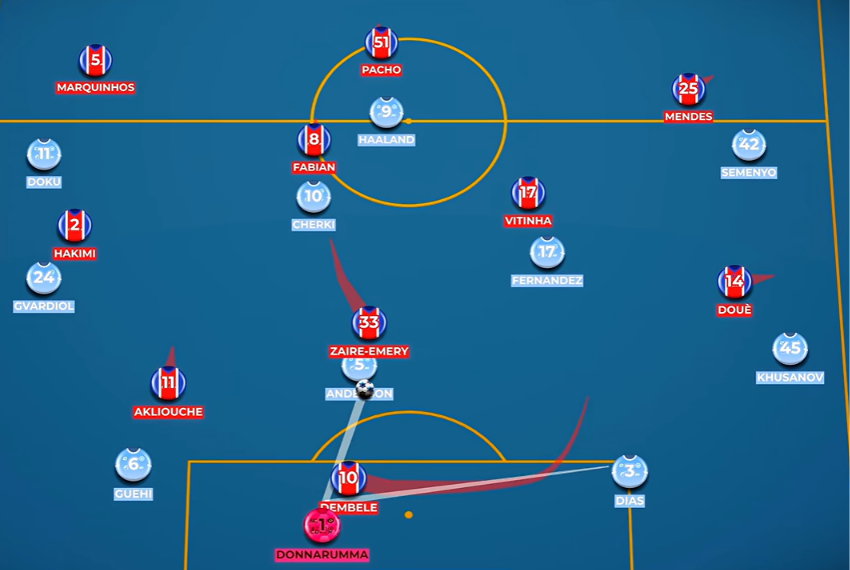
Another important feature of PSG’s defensive organisation was the way players continued their pressing movements after the opponent passed the ball.
Instead of simply stopping after closing down one player, the pressing player continued moving towards the next available passing option.
At the same time, the rest of the team adjusted their positions to cover nearby players.
This created a chain reaction that made it difficult for Manchester City to escape pressure through short passing combinations.
How Chain Pressing Works
If the centre-back passes towards the goalkeeper, the forward continues his movement to close down the next player.
If the goalkeeper then finds a midfielder, another PSG player immediately steps forward to apply pressure.
Meanwhile, teammates move closer to the ball and block the surrounding passing options.
This approach reduces the time available to make decisions and forces the opposition towards less comfortable areas.
For Manchester City, the only relatively free passing option was often on the opposite side of the pitch.
However, reaching that area required accurate passing under intense pressure.
5. How PSG’s Attacking Rotations Exploited Manchester City’s Defence
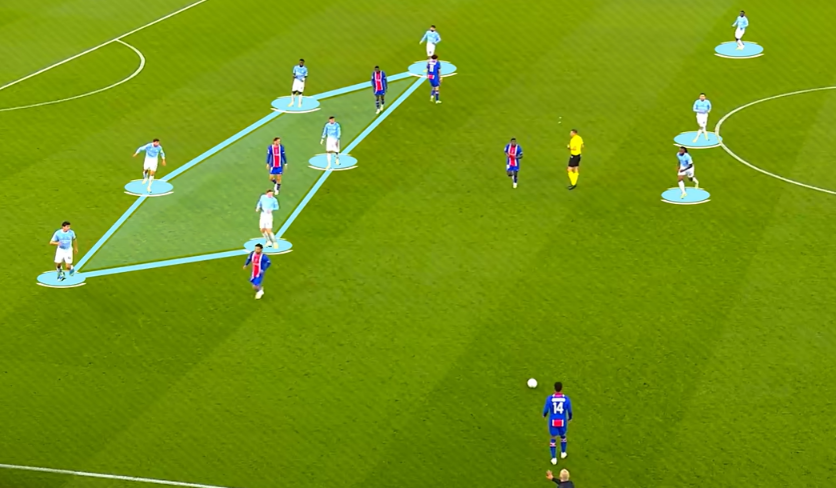
PSG’s pressing was only one part of their tactical success.
Their attacking movements also created serious problems for Manchester City’s defensive structure.
City attempted to combine man-marking and zonal defensive principles.
Their defenders generally wanted to maintain the defensive line, while midfielders and attacking players were expected to move forward and close down PSG’s players.
This created a difficult situation whenever PSG rotated their positions.
Should a City player follow his direct opponent or remain in position to protect the space?
PSG repeatedly exploited this uncertainty.
Finding Space Between the Lines
When PSG moved the ball towards the right side, Dembélé could find himself unmarked because City’s defensive players were not always able to coordinate their movements.
Once he received the ball, he had enough time to turn and attack the defensive line.
These situations became a recurring problem.
City’s midfielders stepped forward to apply pressure, but the defensive line remained deeper to protect its shape.
This created gaps between the lines that PSG could exploit through quick passing combinations and forward runs.
6. How PSG’s Rotations Created Their Opening Goal
PSG’s positional rotations were particularly effective during their opening goal.
The move started with PSG building from the back while Manchester City prepared to press.
However, several movements happened almost simultaneously.
Vitinha made a quick forward run, while Cherki did not follow him.
Dembélé dropped towards the ball and attracted Gvardiol’s attention, preventing the defender from closing down Hakimi.
At the same time, Fabián Ruiz moved across to provide additional support.
These movements disrupted City’s initial pressing structure and created a numerical advantage for PSG.
Even when Dembélé’s pass was intercepted, Ruiz was free to collect the loose ball and restart the attack.
He then found Hakimi in a wide position, creating another attacking advantage.
City attempted to compensate by pushing additional players forward, but this exposed other areas of the pitch.
PSG continued attacking through these spaces before moving the ball towards Doué, who cut inside and finished from outside the penalty area.
The sequence demonstrated how intelligent rotations can create attacking opportunities even against an organised defensive structure.
7. Manchester City’s Half-Time Tactical Changes
After a difficult first half, Manchester City made three substitutions at the break.
Doku, Cherki and Dias were replaced by Nunes, Bouaddi and Ndiaye.
These changes were accompanied by an important tactical adjustment.
City moved away from their original 3-1 build-up structure and introduced a 3-2 shape in midfield.
Instead of relying on Anderson as the only player in front of the defensive line, they now had two central players available to support possession.
Gvardiol also remained in the defensive line rather than moving forward into midfield, while Nunes took on a more attacking role.
This provided City with greater balance during build-up.
8. How the 3-2-5 Formation Helped Manchester City
The second-half changes eventually developed into a 3-2-5 attacking structure.
This gave Manchester City two central players who could help circulate possession and provide additional passing options.
The main advantage was that PSG could no longer press City in exactly the same way.
With two players available in central midfield, PSG had to make difficult decisions.
They could commit another player forward to maintain their pressing intensity, but doing so would leave someone else available to receive the ball.
Alternatively, they could remain in their defensive structure and allow City more time to progress possession.
This adjustment made City’s build-up more difficult to disrupt.
City Looked More Dangerous After the Break
The tactical changes quickly improved Manchester City’s performance.
Their first goal came shortly after half-time, when Ndiaye delivered a cross into the penalty area for Haaland to flick on.
During the opening part of the second half, City looked more comfortable in possession.
They had better central support, more passing options and greater control of the midfield.
However, PSG still possessed the ability to create dangerous attacks with very little warning.
9. How Akliouche Helped PSG Secure the Result
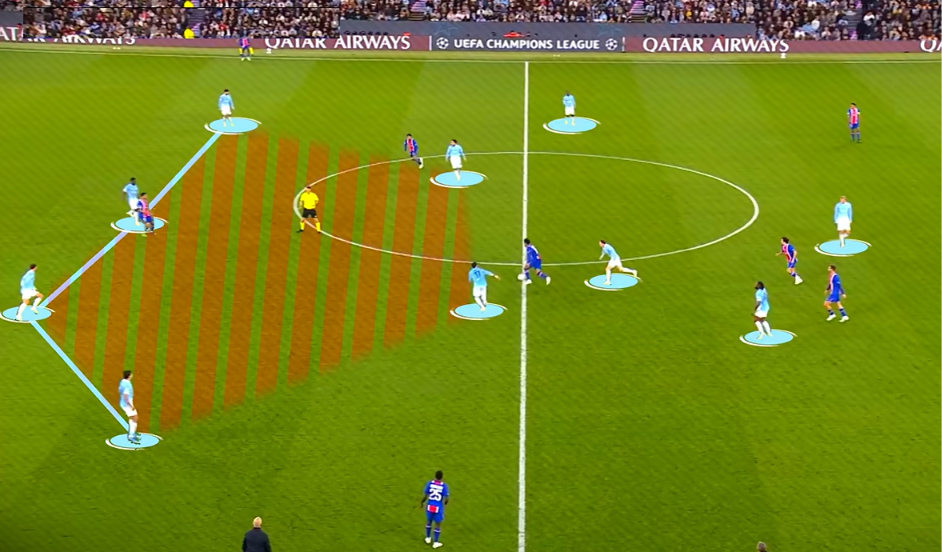
Despite Manchester City’s improved performance, PSG demonstrated that they remained dangerous whenever they found space to attack.
Their goal to make it 4-1 provided another example.
Dembélé found Akliouche between the lines before continuing his movement towards the wide area.
Dembélé then received the ball in space and delivered it back towards Akliouche.
His effort was initially saved by Donnarumma before eventually crossing the line.
This attacking sequence highlighted the importance of movement and timing.
Even when Manchester City were enjoying a stronger period of possession, PSG needed only one effective attacking combination to create a decisive opportunity.
10. Why PSG’s First-Half Performance Was Decisive
The first half ultimately proved crucial.
PSG’s organised pressing prevented Manchester City from establishing their preferred build-up structure.
Their man-to-man approach limited passing options, while their chain pressing forced City into uncomfortable decisions.
In attack, PSG used positional rotations to create numerical advantages and exploit spaces between the defensive and midfield lines.
Manchester City improved after the break by introducing a second central midfielder and moving towards a 3-2-5 structure.
However, PSG’s ability to attack quickly and exploit defensive gaps remained a major threat.
The match demonstrated how important it is for teams to have alternative build-up structures when facing aggressive pressing systems.
Frequently Asked Questions
How did PSG expose Manchester City’s defence?
PSG used aggressive man-to-man pressing, coordinated pressure and positional rotations to disrupt City’s build-up and create spaces between their defensive lines.
What formation did Manchester City use?
City initially attempted to build attacks through a 3-1-3-3 structure before changing towards a 3-2-5 attacking formation in the second half.
What is chain pressing in football?
Chain pressing is a coordinated defensive approach in which players continue their pressing movements towards the next available passing option while teammates adjust to close nearby spaces.
Why was PSG’s high press so effective?
Their pressing reduced the time available to make decisions, blocked short passing options and forced Manchester City into long balls or risky passes.
How did Manchester City improve in the second half?
City introduced an additional central midfielder, moved towards a 3-2 structure during build-up and created more passing options to escape PSG’s pressure.
Final Thoughts
PSG’s performance showed how aggressive pressing and intelligent attacking rotations can expose even highly organised possession-based teams.
Their ability to track opponents, close passing lanes and exploit spaces between the lines made it extremely difficult for Manchester City to establish their usual style of football.
Manchester City’s second-half adjustments provided a useful example of how tactical changes can help a team respond to aggressive pressing.
Ultimately, the match demonstrated that successful modern football requires more than possession. Teams must also understand how to create space, recognise pressing triggers and adapt their structures when opponents take away their preferred passing options.