
June 29, 2026 | FIFA World Cup 2026 | Match Analysis
Brazil entered the match as one of the favorites to win the 2026 FIFA World Cup, but Morocco once again proved why they are considered one of the most tactically disciplined teams in international football.
The 1-1 draw was far more than a surprising result. It was a fascinating tactical battle where Morocco frustrated Brazil for long periods through intelligent positioning, relentless pressing, and lightning-fast transitions.
Although Vinicius Junior eventually rescued a point for Carlo Ancelotti’s side, the performance exposed several weaknesses that Brazil must address if they hope to challenge for the World Cup title.
Morocco’s Perfect Tactical Plan
From the opening whistle, Morocco looked fearless.
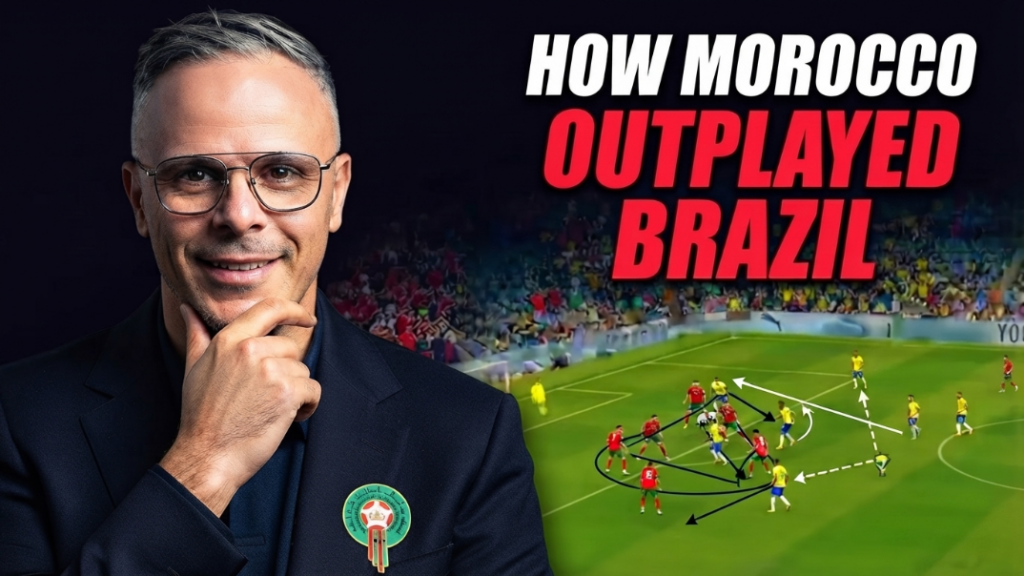
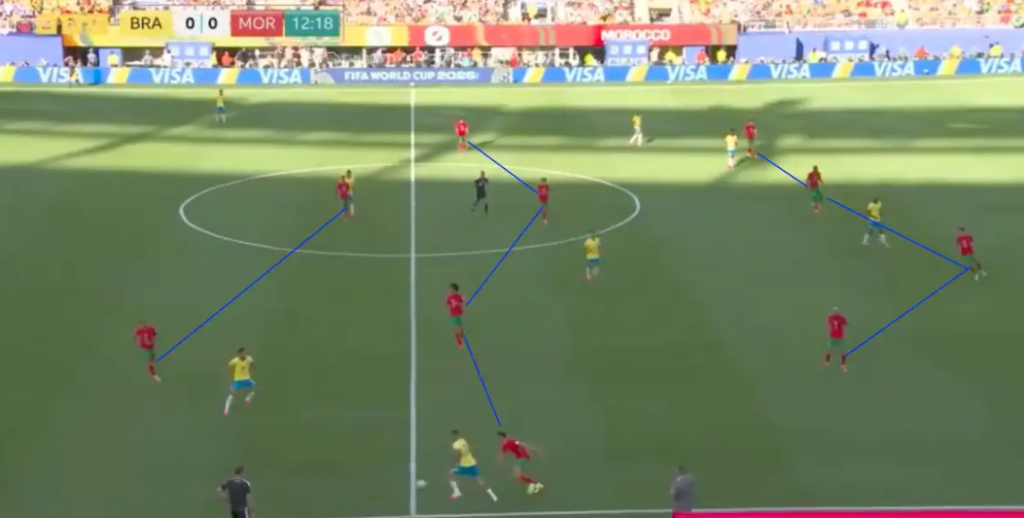
Rather than sitting deep and allowing Brazil to dominate possession, the Atlas Lions defended in a compact 4-4-2 shape that denied central passing lanes while inviting Brazil to play into wider areas.
Instead of applying constant high pressure, Morocco patiently waited for the right moments to attack. Whenever Brazil recycled possession backwards or played predictable passes toward the flanks, Morocco immediately pressed with intensity.
The strategy worked perfectly.
Brazil struggled to progress through midfield, while Morocco repeatedly recovered possession in dangerous areas before launching devastating counterattacks.
The breakthrough arrived after exactly that type of situation, as Morocco intercepted a loose Brazilian combination before Bilal El Khannouss quickly released Brahim Diaz, whose perfectly weighted through ball sent Ez Abde Saibari racing clear to calmly finish past Alisson.
It was not a lucky goal. It was the reward for a perfectly executed tactical plan.
Bouaddi Dominated the Midfield Battle
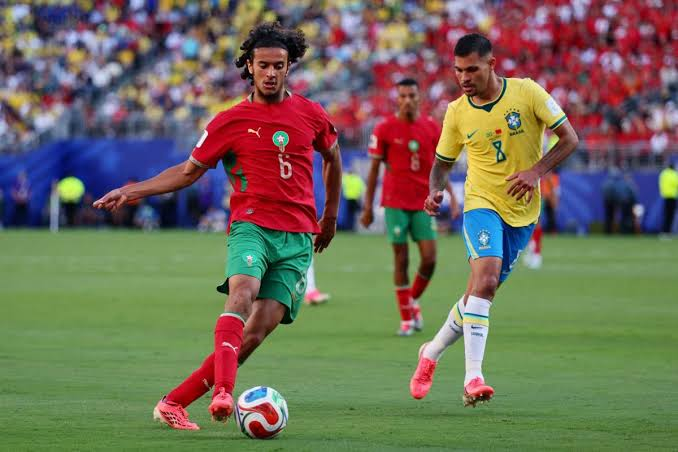
One of the biggest stories of the match was once again the outstanding performance of Ayyoub Bouaddi.
The teenage midfielder completely controlled the rhythm of the game during the opening half hour.
Whether winning possession, progressing the ball, or organizing Morocco’s pressing structure, Bouaddi looked remarkably mature against one of football’s strongest midfields.
Alongside Neil El Aynaoui and Azzedine Ounahi, Morocco consistently outnumbered Brazil in central areas, making it extremely difficult for Casemiro and Bruno Guimarães to dictate possession.
Every time Brazil attempted to build through the middle, Morocco closed the passing lanes with exceptional discipline.
Bouaddi’s performance further strengthened his growing reputation as one of the breakout stars of World Cup 2026.
Brazil’s Midfield Never Found Its Rhythm
While Brazil enjoyed plenty of possession, they rarely looked comfortable progressing the ball.
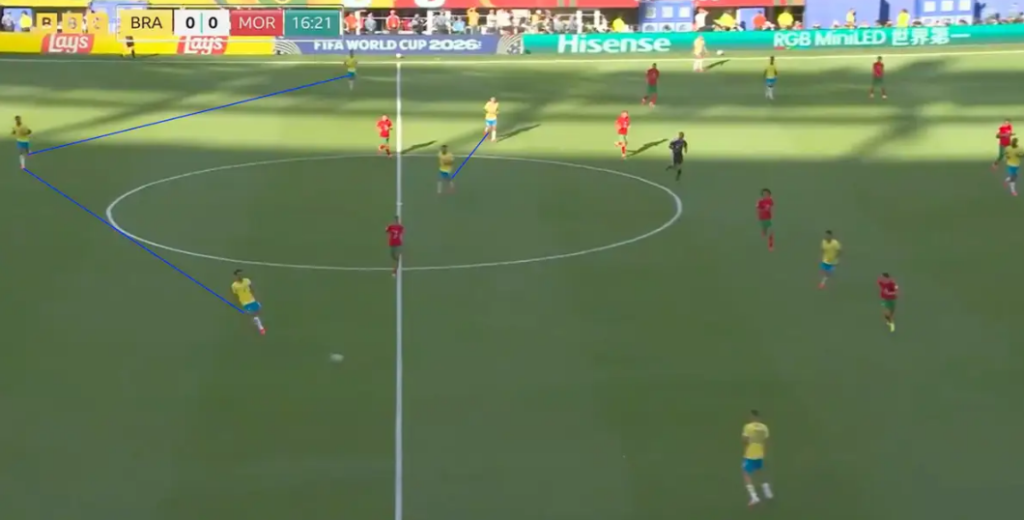
Carlo Ancelotti’s side attempted to build from the back using a 3-2 structure, but the distances between midfield and attack were often too large.
Casemiro and Bruno Guimarães frequently received possession under pressure with few passing options ahead of them.
Instead of creating quick combinations through central areas, Brazil became predictable, recycling possession across the back line before eventually forcing hopeful passes into crowded spaces.
This lack of fluidity allowed Morocco to remain compact without expending unnecessary energy.
The Seleção dominated possession statistics but rarely controlled the match itself.
Vinicius Once Again Saved Brazil
When Brazil struggled to create structured attacks, individual quality became their only solution.
Vinicius Junior once again proved why he remains Brazil’s most dangerous attacking player.
His pace, creativity, and ability to beat defenders eventually produced the equalizing goal after another moment of brilliance inside the final third.
However, Brazil relied far too heavily on isolated moments rather than cohesive attacking football.
The absence of a natural playmaker connecting midfield to attack became increasingly obvious.
Igor Thiago worked hard as the lone striker but rarely linked play effectively.
Many observers questioned why Matheus Cunha, whose movement between the lines could have provided more creativity, remained out of the starting lineup.
Without someone capable of consistently connecting midfield and attack, Brazil’s offensive play often stalled before becoming truly dangerous.
Defensive Concerns Continue for Brazil
Brazil’s defensive organization also raised concerns.
Whenever possession was lost, Morocco immediately found space behind Brazil’s midfield.
Casemiro struggled to cover large areas, while Bruno Guimarães often found himself isolated against Morocco’s quick combinations.
As the first half progressed, Brazil’s full-backs were repeatedly exposed during defensive transitions.
Recognizing the growing problems, Carlo Ancelotti reacted early in the second half by introducing fresh legs, including replacing Casemiro after an increasingly difficult performance.
The substitutions improved Brazil’s control, but they also highlighted how vulnerable the team had become.
Morocco Continue to Impress the Football World
This performance was another reminder that Morocco’s run over recent international tournaments is no coincidence.
Their defensive structure remains among the most organized in world football, while their transition play continues to punish even elite opponents.
Every player understood their tactical responsibilities, maintaining compact spacing without sacrificing attacking ambition.
Rather than relying on moments of luck, Morocco executed a carefully designed game plan that consistently frustrated one of the tournament favorites.
The Atlas Lions once again showed they are capable of competing with any nation in the world.
Key Match Takeaways
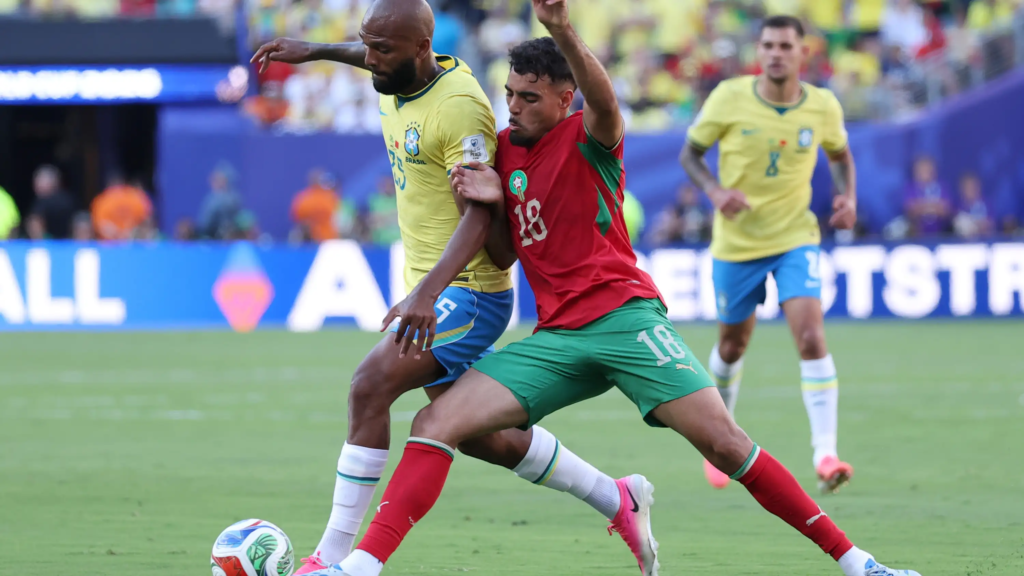
- Morocco executed one of the tournament’s best tactical performances.
- Ayyoub Bouaddi completely controlled the midfield battle.
- Brazil struggled to progress possession through central areas.
- Vinicius Junior rescued Brazil with another individual moment of brilliance.
- Carlo Ancelotti still has important tactical issues to solve before the knockout rounds.
Final Verdict
The 1-1 draw served as another warning for Brazil despite avoiding defeat.
While the Seleção possess world-class talent throughout the squad, they continue to struggle against disciplined opponents capable of disrupting their midfield structure.
Morocco, meanwhile, delivered another outstanding tactical display that reinforced their growing reputation as one of the smartest and most organized teams at the 2026 FIFA World Cup.
If the Atlas Lions maintain this level of discipline and intensity, few teams will relish facing them in the knockout stages.