
Spain’s Greatest Strength Isn’t Individual Talent
Spain arrive at the 2026 FIFA World Cup with one of the clearest football identities in international football.
While many of the tournament favorites rely on world-class individuals, Spain’s biggest advantage comes from something much harder to defend: collective understanding.
Nearly every player in the squad has grown up playing the same positional style of football. That shared education allows Spain to move as one unit, making their attacks look effortless and their possession incredibly difficult to disrupt.
Rather than constantly adapting their system, Luis de la Fuente has continued developing the philosophy that helped Spain win Euro 2024, refining it instead of replacing it. That continuity could make Spain the most complete team in the competition.
Spain’s 4-3-3 Is Built Around Positional Play
Spain’s formation rarely changes.
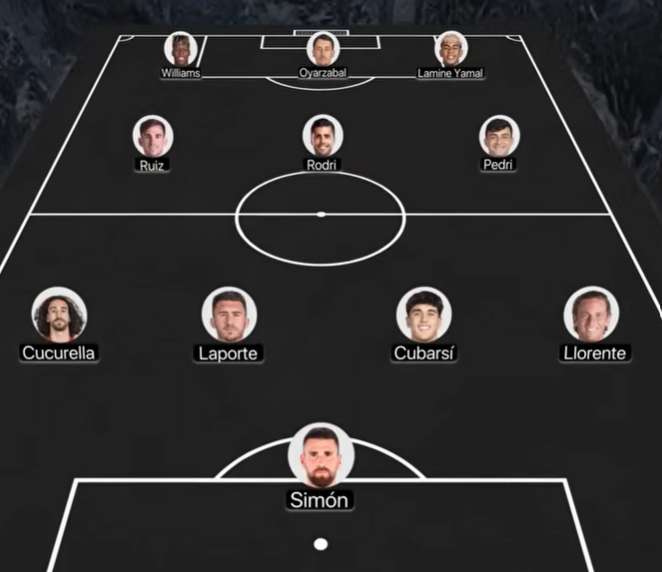
The team consistently lines up in a 4-3-3, but the real strength lies in how every player understands their role within the system.
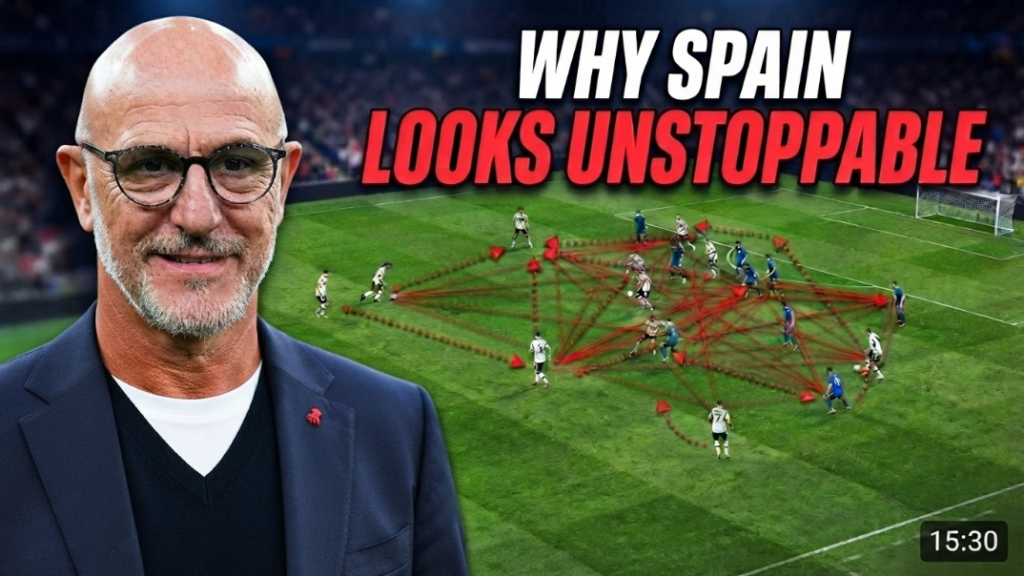
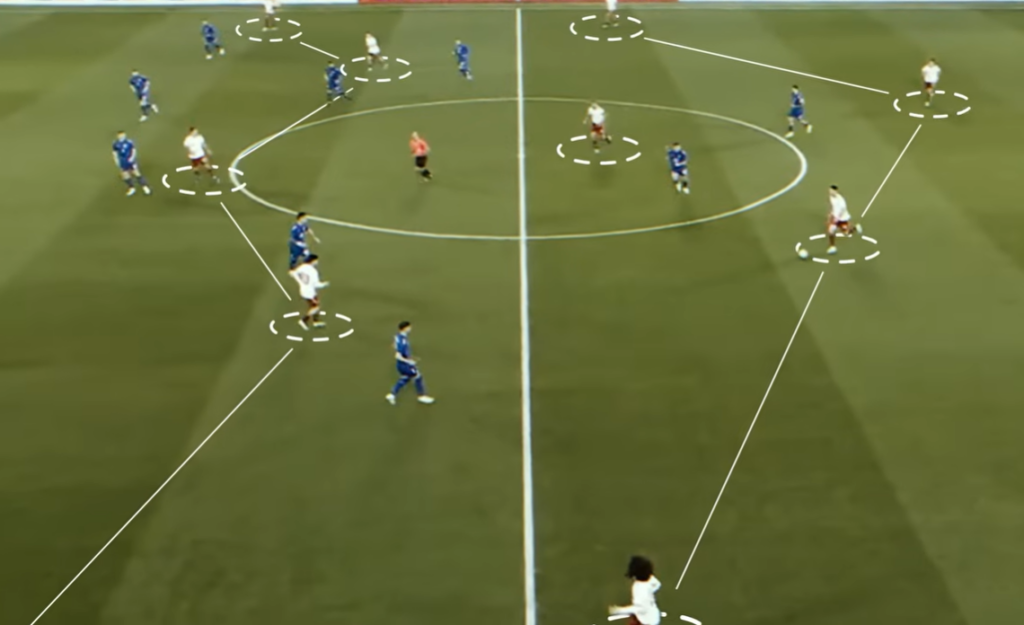
Positional play is based on maintaining the correct spacing between teammates. Instead of chasing the ball, players occupy specific zones that constantly create passing triangles across the pitch.
As possession moves, Spain shift together, forcing opponents to move with them.
Eventually, defensive gaps begin to appear.
Rather than forcing risky passes, Spain patiently circulate possession until the right space opens before accelerating the attack.
It is a system that values intelligence, movement and timing over individual improvisation.
A False Nine Makes Spain Even More Dangerous
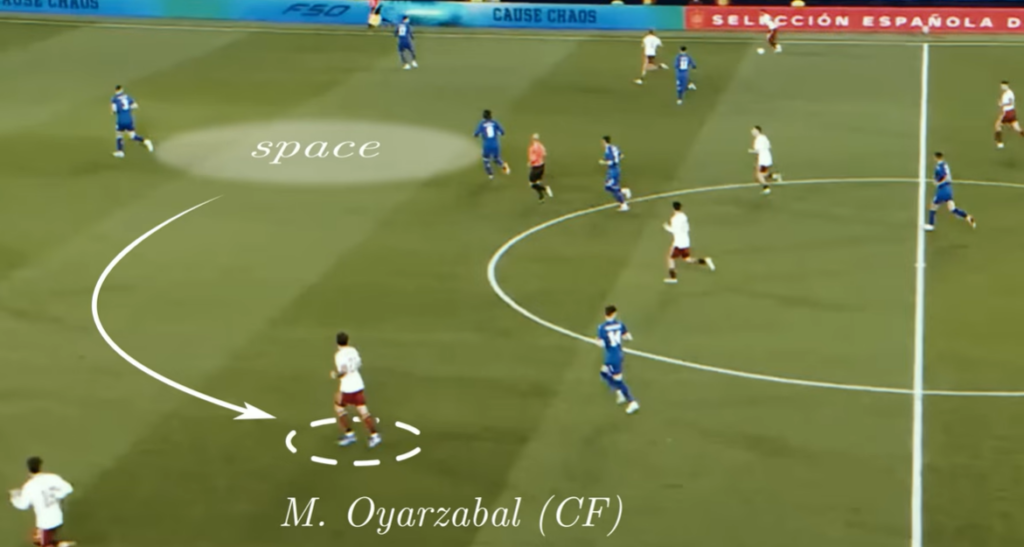
One of the biggest changes since Euro 2024 is Spain’s use of Mikel Oyarzabal as the central striker.
Unlike a traditional number nine who stays between the centre-backs, Oyarzabal constantly leaves the penalty area to receive possession.
At first glance, that movement appears to leave Spain without a striker.
In reality, it creates exactly the opposite effect.
Every time Oyarzabal drifts wide or drops into midfield, defenders are forced to follow him.
Those movements leave empty spaces inside the defensive line.
Spain’s midfielders immediately recognize those openings and attack them with perfectly timed runs.
Rather than depending on one striker to finish every move, goals can come from almost any position on the pitch.
It is a subtle tactical adjustment, but one that makes Spain far more unpredictable in the final third.
Constant Rotations Leave Defenders With Impossible Decisions
Spain’s attacking structure is built around intelligent rotations.
Players rarely remain in their starting positions for long.
Alex Baena regularly moves inside from the left wing to become an extra midfielder, while Oyarzabal drifts across the front line looking to connect play.
Even defensive midfielder Martín Zubimendi is encouraged to make advanced runs whenever space appears.
These rotations are not random.
Every movement is designed to open another passing lane somewhere else on the pitch.
When one player vacates a position, another immediately fills it.
Because everyone understands the system, Spain maintain their balance while constantly changing shape.
That coordinated movement makes it extremely difficult for defenders to decide whether to follow runners or protect space.
Either choice often creates another opening for Spain to exploit.
Lamine Yamal Adds the X-Factor
Although Spain are built around collective football, they still possess players capable of deciding matches on their own.
No player represents that better than Lamine Yamal.
While the rest of the team focuses on maintaining structure, Yamal provides unpredictability.
His dribbling, creativity and ability to beat defenders one-on-one give Spain an extra dimension when opponents successfully close passing lanes.
Instead of relying solely on combinations, Spain can suddenly accelerate attacks through individual brilliance.
That balance between tactical discipline and natural creativity is what separates Spain from many possession-based teams.
They are not only organised.
They are also capable of moments of magic.
Years of Shared Football Education Give Spain a Huge Advantage
Perhaps Spain’s biggest strength cannot be seen on a tactics board.
It comes from years of shared football education.
Most of the squad have played some version of positional football throughout their careers, whether in club academies or Spain’s youth national teams.
Luis de la Fuente also knows many of these players from coaching them at youth level.
As a result, Spain do not spend international breaks learning a new system.
They simply continue developing ideas they have understood for years.
That continuity creates a level of chemistry very few national teams can match.
While other countries are still searching for their best tactical formula, Spain already know exactly how they want to play.
Spain Still Have One Important Weakness
Despite their outstanding possession game, Spain are not without flaws.
The biggest concern appears when they defend.
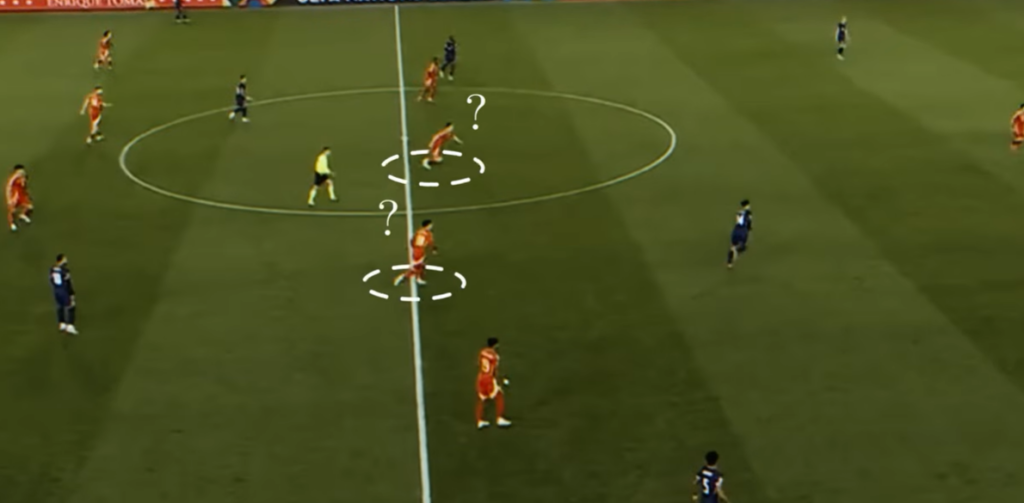
Unlike their attacking structure, Spain’s defensive identity is less consistent.
At times, the midfield looks caught between pressing aggressively and protecting passing lanes.
That hesitation can leave dangerous spaces for opponents to exploit.
Recent matches against stronger opposition have shown that Spain can concede chances when they spend long periods defending in a deeper block.
Luis de la Fuente has sometimes preferred a more conservative approach than previous Spain managers.
While that may improve defensive stability, it can also reduce the team’s biggest strength: dominating games through possession.
Finding the right balance could determine how far Spain go in the tournament.
Key Tactical Strengths
| Tactical Area | Spain’s Strength |
|---|---|
| Formation | Disciplined 4-3-3 structure |
| Playing Style | Positional play with constant passing triangles |
| Attack | Fluid false-nine movement and intelligent rotations |
| Midfield | Technical dominance and spatial awareness |
| Creativity | Lamine Yamal’s individual brilliance |
| Team Identity | Years of shared tactical education |
Final Verdict
Spain may not have the deepest squad or the biggest collection of superstars at the 2026 World Cup, but they arguably possess the tournament’s strongest tactical identity.
Every player understands the system, every movement has a purpose and every rotation is designed to create space somewhere else on the pitch.
With a midfield capable of controlling almost any match, intelligent positional play and the game-changing brilliance of Lamine Yamal, Spain have all the ingredients to dominate possession against the world’s best teams.
If they can improve their defensive consistency without sacrificing their attacking philosophy, Spain have every reason to believe they can lift the World Cup once again.