
Argentina Don’t Build Around a System. They Build Around Their Players
Most of the biggest nations heading into the 2026 FIFA World Cup have a fixed tactical identity.
Spain rely on positional play. Germany dominate through aggressive pressing. Brazil continue to evolve under Carlo Ancelotti.
Argentina are different.
Lionel Scaloni has never forced his players into one rigid system. Instead, the players shape the tactics. Formations change, player roles evolve and every lineup is built around the strengths of the footballers available rather than a predefined tactical blueprint.
That flexibility has already delivered three major international trophies, and it remains Argentina’s greatest strength heading into another World Cup.
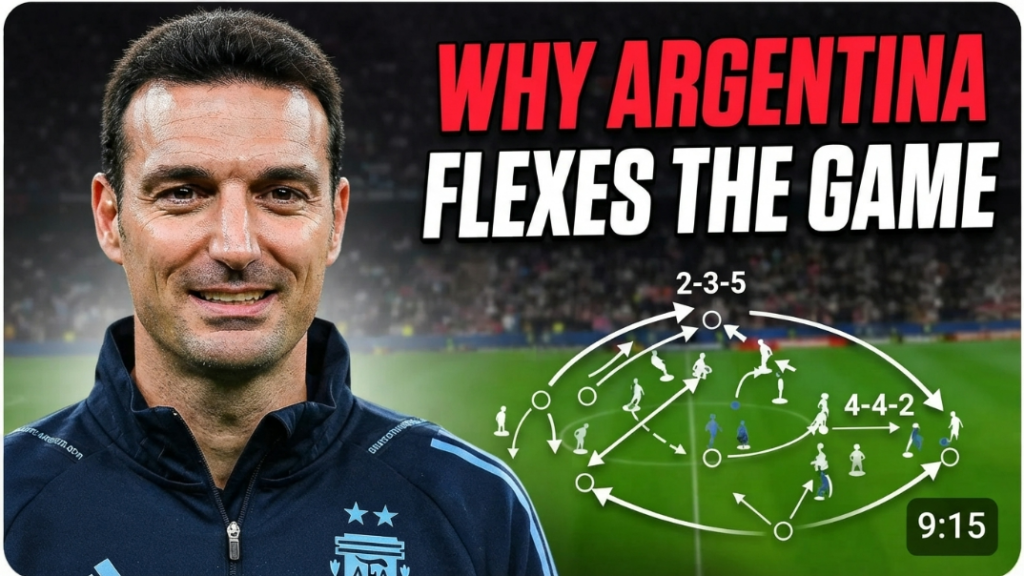
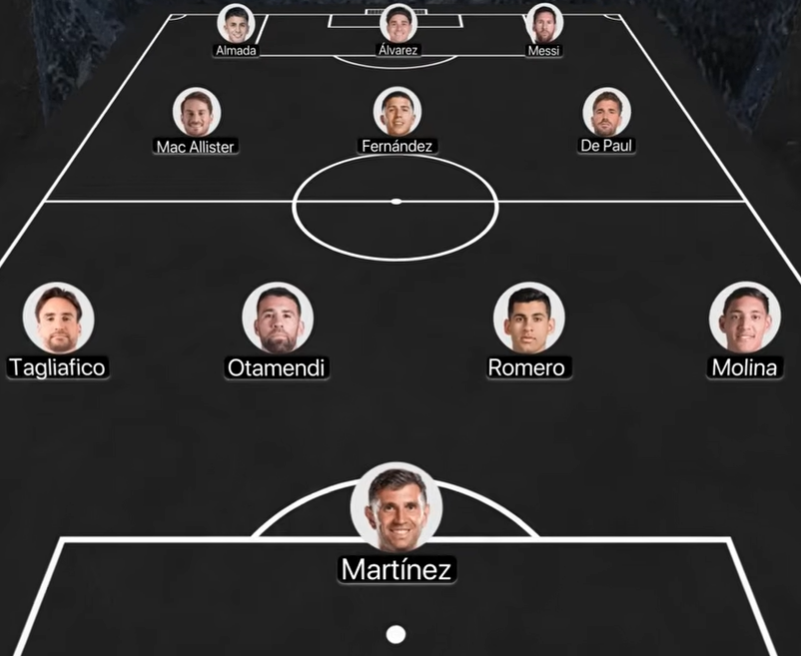
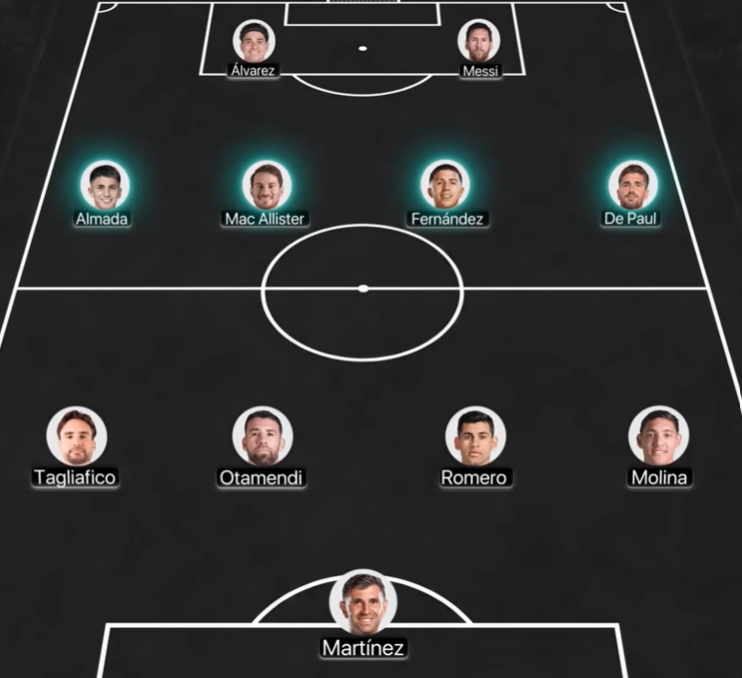
Argentina Defend in a 4-4-2 But Attack With Four Central Midfielders
Without possession, Argentina usually settle into a compact 4-4-2 shape.
Once they recover the ball, however, the structure changes almost immediately.
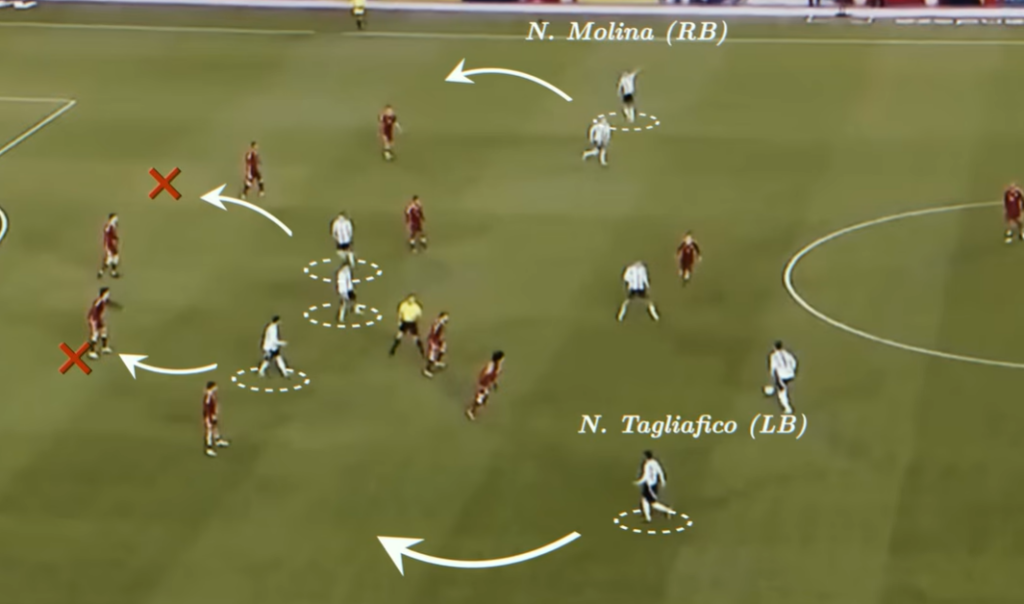
Unlike most international teams, Argentina rarely depend on natural wingers. Instead, the full-backs provide width while the majority of attacking players drift into central areas.
This creates a midfield overloaded with technical players capable of receiving under pressure, combining in tight spaces and controlling possession.
Rather than stretching opponents with pace on the wings, Argentina overload the center of the pitch until passing lanes begin to appear.
The result is a patient style built around intelligence rather than speed.
Leandro Paredes and Rodrigo De Paul Control Everything
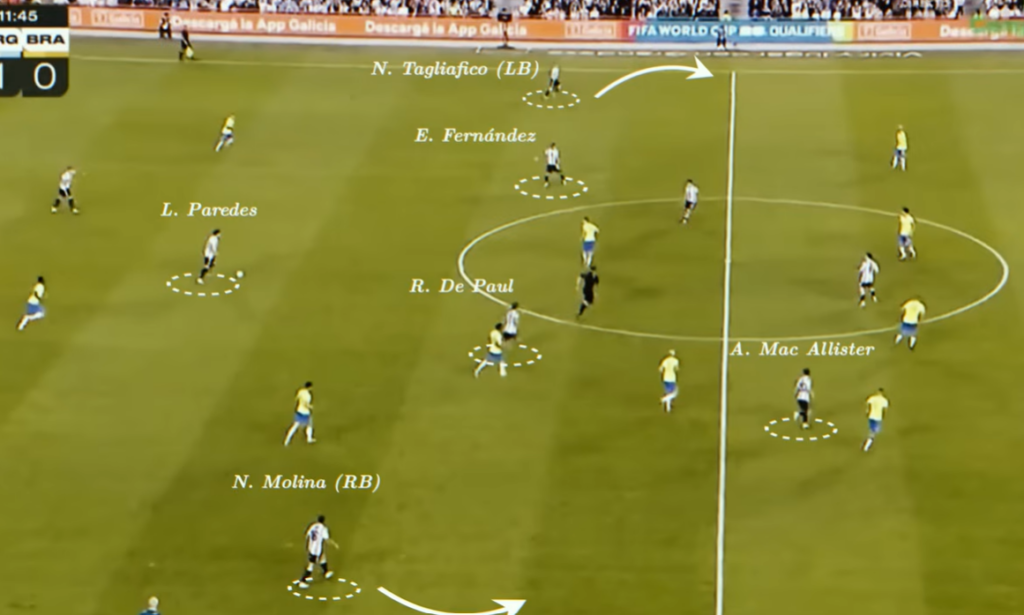
The foundation of Argentina’s build-up starts with Leandro Paredes.
Operating as the deepest midfielder, Paredes regularly drops between the centre-backs to begin attacks. His ability to recycle possession and break defensive lines with accurate forward passes gives Argentina complete control over the rhythm of matches.
Alongside him, Rodrigo De Paul performs a very different role.
Rather than staying deep, De Paul constantly moves around the midfield to support possession, connect different areas of the pitch and increase the tempo whenever Argentina need to progress forward.
Together they provide the balance between patience and progression.
When both are playing well, Argentina rarely lose control of possession.
Messi Remains the Center of Every Attack
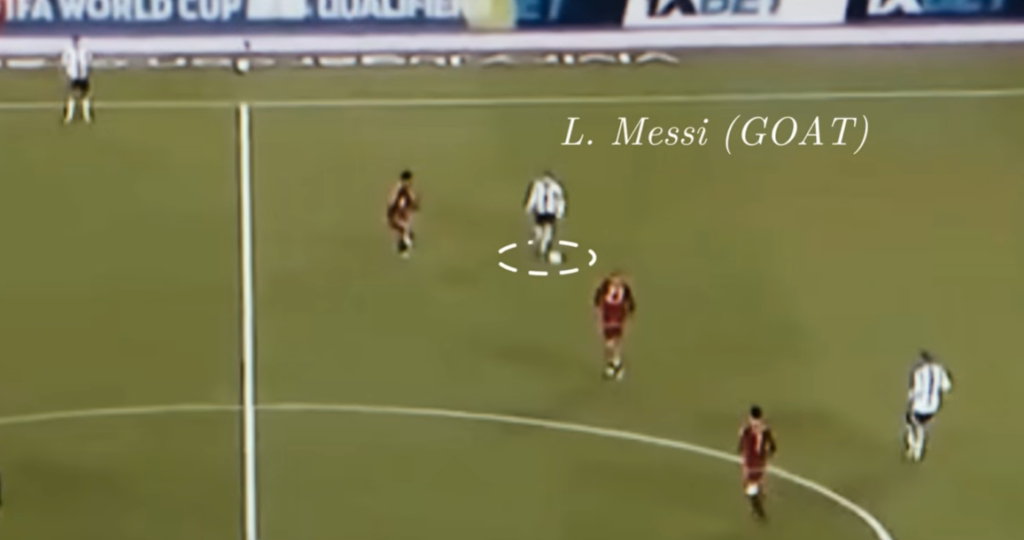
Even at 39 years old, Lionel Messi continues to define Argentina’s attacking football.
Because Argentina play with very little natural width, most attacks develop diagonally toward Messi.
Midfielders constantly rotate around him, creating third-man combinations that allow the ball to move quickly through central areas.
Rather than asking Messi to stay high as a traditional forward, Argentina allow him complete freedom to receive between the lines, dictate attacks and release teammates with precise passes.
His movement also attracts defenders out of position, creating spaces for midfield runners to attack.
Everything in Argentina’s possession game eventually flows through their captain.

Thiago Almada Adds a New Dimension
One of the biggest tactical developments during qualifying has been the emergence of Thiago Almada.
While Alexis Mac Allister offers balance and intelligent positioning, Almada brings something different.
He constantly drops deeper to support possession before carrying the ball forward at speed.
That ability to drive through midfield makes him one of the few Argentina players capable of breaking defensive lines through dribbling instead of passing.
Combined with Messi’s creativity, Almada gives Argentina another way to attack compact defensive blocks.
His performances during qualifying suggest he could become one of the tournament’s breakout stars.
Argentina Can Change Their Style Without Losing Their Identity
One reason Argentina remain so difficult to prepare for is the variety within their squad.
Players like Exequiel Palacios and Giovani Lo Celso understand the same possession principles and can replace midfield roles without changing the team’s overall philosophy.
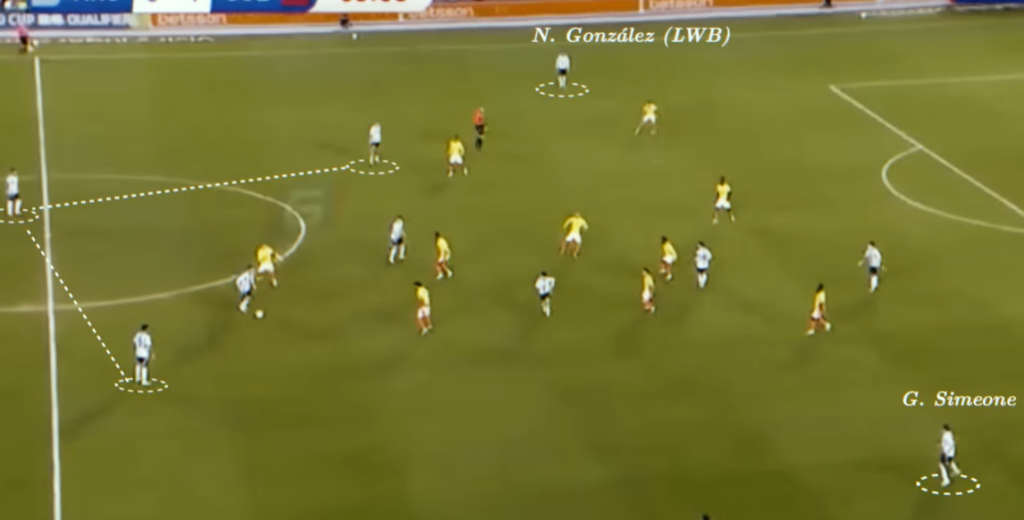
Meanwhile, Nicolás González and Giuliano Simeone provide something completely different.
Both offer direct running and greater width, allowing Scaloni to stretch defensive lines whenever opponents become too compact.
The introduction of Valentín Barco or Nico Paz can also inject fresh energy and creativity during matches.
Rather than relying on one tactical solution, Argentina possess several different ways of solving the same problem.
Experience Is a Strength… But Also a Question Mark
Argentina’s greatest achievements have been built around an experienced core.
However, that experience also brings uncertainty.
Several key players are approaching the later stages of their careers, while questions remain over the physical condition of players like Messi and Rodrigo De Paul during a demanding tournament.
There are also concerns about the right side of the defence and whether Argentina have enough attacking variety when facing teams that defend very deep.
That is why the next generation could prove decisive.
If younger players like Almada, Nico Paz and Giuliano Simeone make meaningful contributions, Argentina will become an even more balanced team than the one that lifted the World Cup in 2022.
Key Tactical Strengths
| Tactical Area | Argentina’s Strength |
|---|---|
| Formation | Flexible 4-4-2 without possession |
| Build-Up | Deep control through Leandro Paredes |
| Midfield | Technical overloads with constant rotations |
| Creativity | Messi remains the central playmaker |
| Flexibility | Tactical adjustments based on player profiles |
| Squad Depth | Multiple midfield options with different qualities |
Final Verdict
Argentina remain one of the smartest and most adaptable teams at the 2026 FIFA World Cup.
Rather than forcing every player into one tactical system, Lionel Scaloni has created an environment where the team’s identity naturally evolves around the qualities of its footballers. Their midfield dominance, intelligent passing combinations and complete trust in Lionel Messi continue to make them one of the most difficult sides to face.
The biggest challenge will be balancing experience with fresh energy as the tournament progresses. If the emerging generation successfully supports Argentina’s established stars, the reigning champions will once again have every chance of competing for football’s biggest prize.