
Morocco Are Built to Punish, Not Just Defend
Many teams at the FIFA World Cup are organised without the ball. Morocco are different.
At first glance, Walid Regragui’s side appears to be another disciplined defensive team, sitting in a compact mid-block and waiting for mistakes. But a closer look reveals something far more dangerous. Morocco do not simply defend to survive. Every defensive movement is designed to create attacking opportunities moments later.
Although only seven players from the historic 2022 World Cup squad returned for the 2026 tournament, Morocco have preserved the tactical identity that made them one of football’s toughest opponents. Instead of rebuilding from scratch, they have evolved a system capable of adapting to different opponents while remaining incredibly difficult to break down.
Morocco’s Defensive Block Is Actually an Attacking Weapon
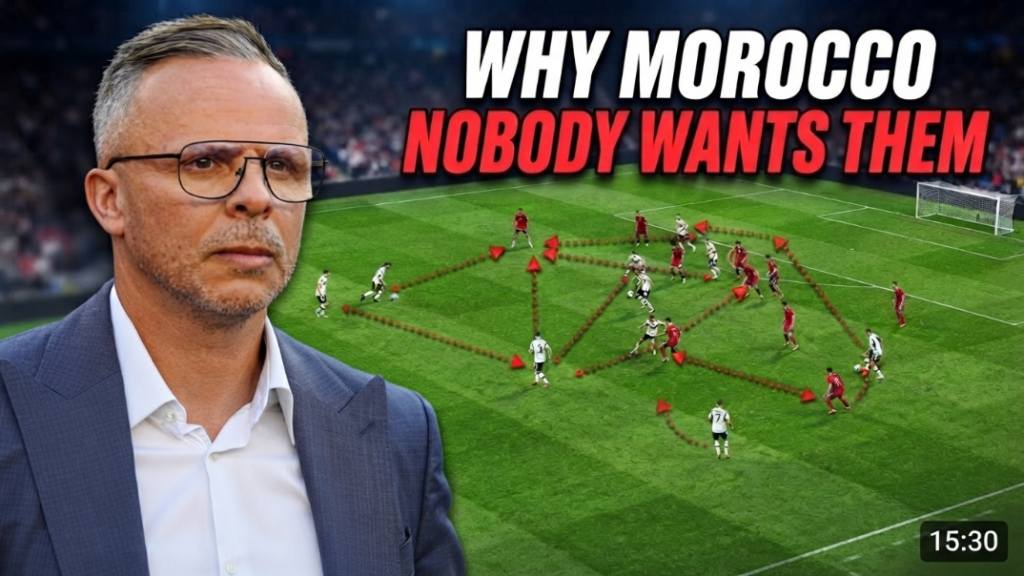
The foundation of Morocco’s game is a compact 4-4-2 mid-block.
Rather than pressing constantly, the team stays organised, protects central areas and patiently waits for the right moment to attack the ball. The central midfielders focus on screening dangerous spaces instead of marking individual opponents.
What makes this structure unusual is the positioning of the two forwards.
Instead of completely blocking passes into midfield, they deliberately leave a route open through the centre.
That decision is no accident.
Morocco are inviting opponents into a carefully prepared trap.
The Pressing Trap That Catches Opponents
Once the opponent plays the ball through the middle, Morocco react immediately.
The central midfielders explode forward to challenge for possession, attempting to recover the ball in one of the most dangerous areas of the pitch.
Winning possession there creates an immediate route towards goal.
Instead of building attacks from deep, Morocco can often reach the opposition’s defensive line with a single forward pass.
This aggressive transition is what separates Morocco from many other defensive teams. They are not simply trying to stop attacks. They are trying to create their own from defensive situations.
Defensive Risks That Increase Morocco’s Threat
Morocco are willing to accept calculated risks.
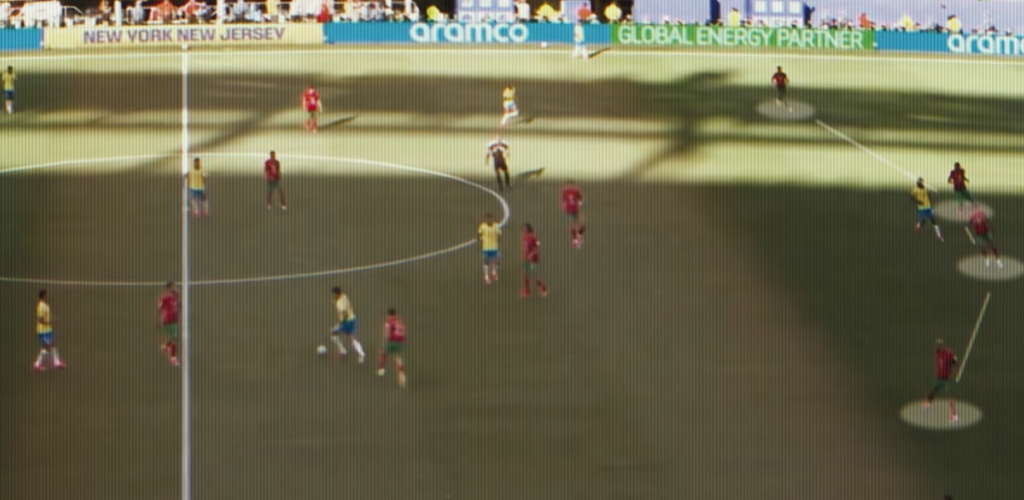
When defending wide areas, the far-side winger does not always drop into midfield. Instead, he often stays higher up the pitch.
This naturally leaves additional space between midfield lines.
However, the reward is significant.
If Morocco regain possession, they already have another attacking player positioned ahead of the ball, allowing counter-attacks to develop much faster.
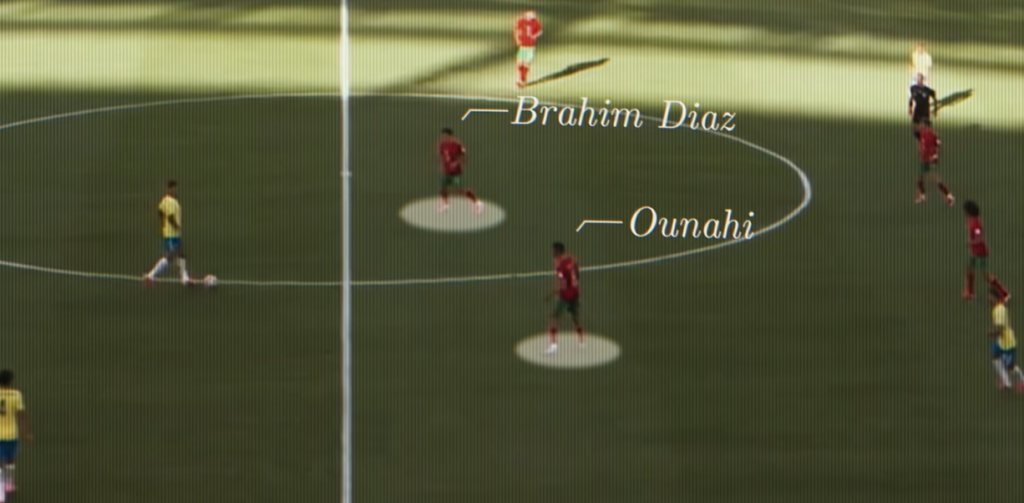
The move leading to their goal against Brazil perfectly demonstrated this idea, with Brahim Díaz becoming the immediate outlet after possession was recovered before creating the chance for Saibari.
Morocco Can Change Their Style Depending on the Opponent
One of Morocco’s biggest strengths is tactical flexibility.
Against Brazil, they were comfortable playing direct counter-attacking football.
Against Scotland, they showed a far more patient possession-based approach.
Instead of relying on one tactical identity, Morocco adjust their style depending on the challenge in front of them without losing their overall structure.
This ability makes them extremely difficult to prepare for in knockout football.
Hakimi Changes Everything in Possession
When Morocco control the ball, their structure changes naturally.
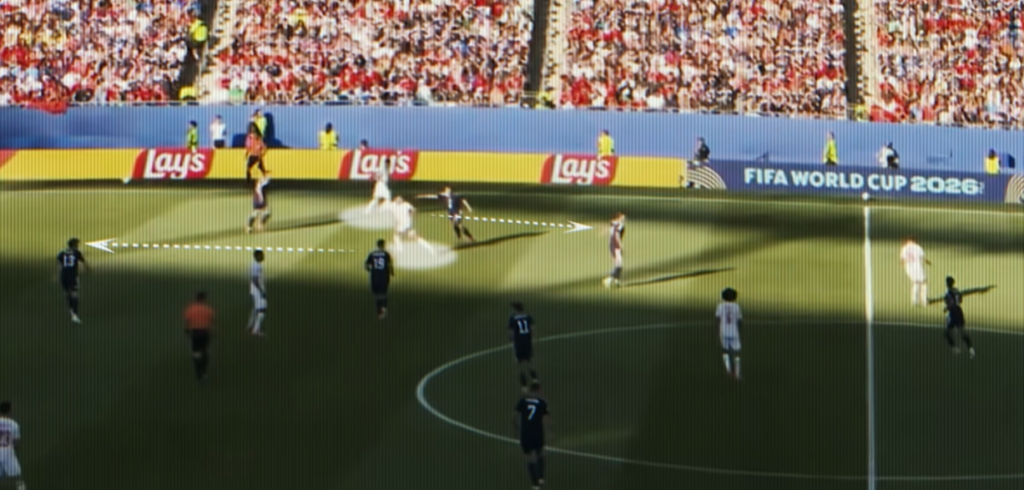
The shape often resembles a back three as Achraf Hakimi advances into advanced areas, either occupying the right wing or drifting into the right half-space.
Rather than maintaining fixed positions, Morocco constantly rotate around the ball.
Players exchange roles, create short passing options and look to manipulate defensive positioning before attacking the space behind the opposition.
Movement, rather than static positioning, becomes Morocco’s biggest weapon.
Constant Rotation Creates Uncertainty
Morocco’s attacking midfielders rarely remain in one position.
Brahim Díaz frequently drifts inside or across the pitch, while Azzedine Ounahi changes his positioning depending on the phase of play.
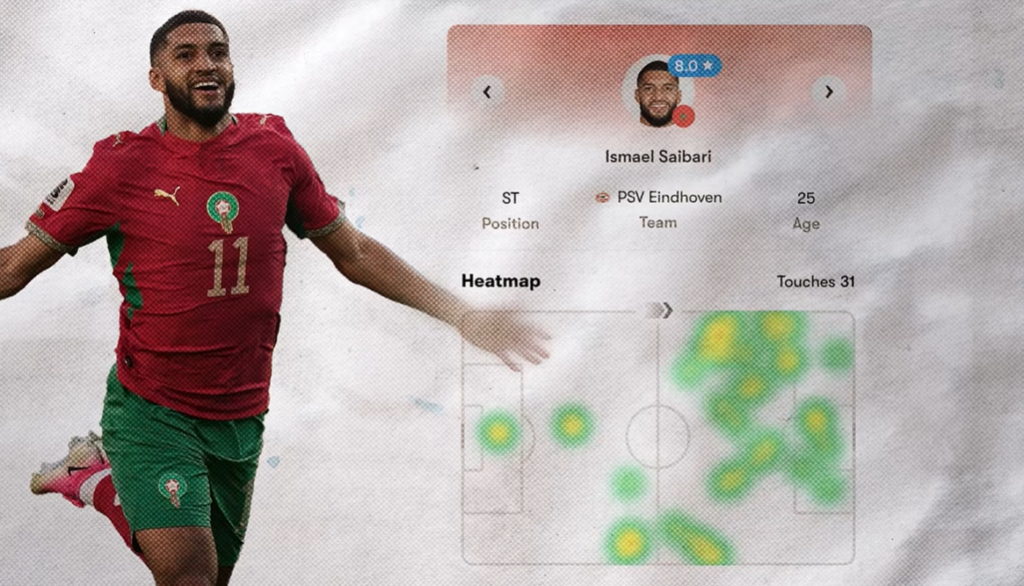
Saibari also contributes by dropping deep to connect attacks before immediately making forward runs into space.
These rotations constantly force defenders to make decisions over who should follow and who should hold position.
Instead of giving centre-backs a fixed striker to mark, Morocco repeatedly remove reference points, making defensive organisation significantly more difficult.
Key Tactical Strengths
| Tactical Area | Morocco’s Strength |
|---|---|
| Defensive Shape | Compact 4-4-2 mid-block |
| Pressing | Central pressing traps after inviting passes |
| Transitions | Immediate vertical attacks after winning possession |
| Possession | Flexible structure with constant rotations |
| Width | Advanced positioning from Hakimi |
| Movement | Continuous runs behind the defensive line |
The Players Driving Morocco’s System
Several individuals perfectly fit Morocco’s tactical approach.
Aubadi provides balance by protecting defensive spaces while remaining calm in possession. When quick counter-attacks are unavailable, he is comfortable recycling the ball and helping Morocco establish controlled possession.
Saibari offers constant movement between the lines before attacking space behind defenders, while Brahim Díaz provides the creativity needed to release runners with accurate passes.
Together, their different qualities give Morocco multiple ways to progress attacks depending on the situation.
Final Verdict
Morocco’s success is built on far more than defensive organisation.
Their compact shape, intelligent pressing traps and rapid transitions make them one of the most tactically complete teams in the tournament. At the same time, their flexibility in possession allows them to adapt to different opponents without abandoning their identity.
Rather than waiting for mistakes, Morocco actively create them. Every defensive action is designed with the next attack already in mind, making them one of the most unpredictable and dangerous teams at the 2026 FIFA World Cup.