
Modern football is filled with tactical terms that can confuse new fans. Words like regista, false nine, trequartista, and mezzala are often used by coaches, commentators, and analysts, but they are not always easy to understand. Among these roles, the mezzala has become one of the most important positions in possession-based football.
A mezzala is far more than an ordinary central midfielder. Instead of staying in one area of the pitch, this player constantly moves into half-spaces, supports attacks, creates chances, and helps connect midfield with the forward line. Many of today’s top teams rely on a skilled mezzala to add creativity and unpredictability in the final third.
This beginner-friendly guide explains what a mezzala is, how the role works, and why it has become so valuable in modern football.
Quick Overview
| Detail | Information |
|---|---|
| Position | Central Midfielder |
| Origin | Italian Football |
| Main Role | Attack from midfield |
| Strengths | Creativity, Movement, Passing |
| Common Formation | 4-3-3, 3-5-2, 4-1-4-1 |
What Does “Mezzala” Mean?
The word Mezzala comes from Italian football terminology and literally translates to “half-wing.”
The name reflects the player’s movement.
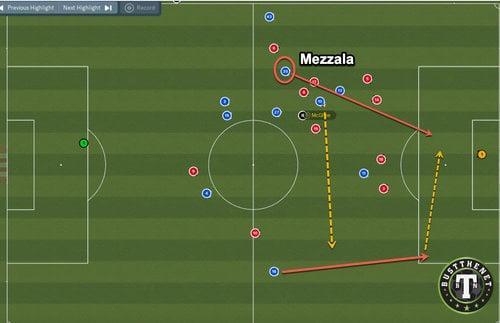
Rather than remaining in the center of midfield, the mezzala often drifts into the spaces between the center and the wing, known as the half-spaces.
From these areas, the player can:
- Create chances.
- Carry the ball forward.
- Combine with wingers.
- Make late runs into the penalty area.
- Stretch the opponent’s defense.

What Does a Mezzala Do?
Unlike a traditional central midfielder, a mezzala constantly looks to influence attacks.
Main Responsibilities
| Responsibility | Description |
|---|---|
| Ball Progression | Move possession into dangerous areas |
| Chance Creation | Create scoring opportunities |
| Late Runs | Arrive inside the box unexpectedly |
| Link Play | Connect midfield and attack |
| Pressing | Help win possession high up the pitch |
The role requires both tactical intelligence and excellent technical ability.
Where Does a Mezzala Play?

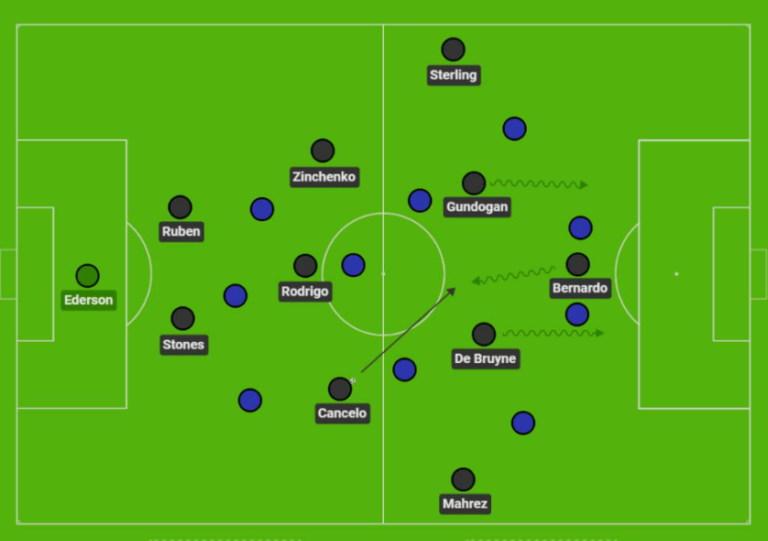
A mezzala usually starts as one of the two advanced midfielders in a three-man midfield.
Instead of staying central, they frequently move into:
- Left half-space
- Right half-space
- Wide attacking channels
- Edge of the penalty area
This movement creates uncertainty for defenders and opens passing lanes for teammates.
Mezzala vs Traditional Central Midfielder
| Category | Central Midfielder | Mezzala |
|---|---|---|
| Position | Central | Half-Spaces |
| Attacking Runs | Occasional | Frequent |
| Creativity | Medium | High |
| Defensive Role | Balanced | Secondary |
| Chance Creation | Moderate | High |
A mezzala generally takes more attacking risks than a conventional midfielder.
Skills Every Great Mezzala Needs
To succeed in this role, players need a combination of physical, technical, and tactical qualities.
Essential Attributes
| Skill | Importance |
|---|---|
| Vision | ⭐⭐⭐⭐⭐ |
| Passing | ⭐⭐⭐⭐⭐ |
| Ball Control | ⭐⭐⭐⭐⭐ |
| Dribbling | ⭐⭐⭐⭐☆ |
| Stamina | ⭐⭐⭐⭐⭐ |
| Positioning | ⭐⭐⭐⭐⭐ |
| Decision-Making | ⭐⭐⭐⭐⭐ |
These abilities allow the player to influence every phase of possession.

Famous Mezzalas in Modern Football
| Player | Why They’re Known |
|---|---|
| Kevin De Bruyne | Creative passing and late runs |
| Luka Modrić | Ball progression and movement |
| Nicolò Barella | Energy and attacking support |
| Frenkie de Jong | Carrying the ball through midfield |
| Sergej Milinković-Savić | Powerful box-to-box attacking play |
Each player performs the role slightly differently, but all combine creativity with intelligent movement.
Why Coaches Love Using a Mezzala
Modern football is increasingly focused on creating overloads and exploiting space.
A mezzala helps teams by:
- Creating numerical superiority.
- Supporting wingers.
- Breaking defensive lines.
- Opening passing angles.
- Making difficult-to-track attacking runs.
Many possession-based teams depend on this role to unlock compact defenses.
Mezzala vs Regista
These two Italian football terms are often confused.
| Category | Mezzala | Regista |
|---|---|---|
| Main Role | Attack from midfield | Control the game |
| Position | Advanced Midfield | Deep Midfield |
| Creativity | High | Very High |
| Defensive Duties | Moderate | Limited |
| Main Focus | Final Third | Build-Up Play |
While a regista dictates play from deep, a mezzala influences attacks closer to the opposition’s goal.
Tactical Importance

A well-positioned mezzala gives a team several tactical advantages.
Benefits
- Better ball progression.
- More attacking options.
- Improved combinations with full-backs.
- Extra runners into the penalty area.
- Greater unpredictability.
This versatility explains why many elite managers continue to rely on the role.
By the Numbers
| Number | Meaning |
|---|---|
| 3 | Midfielders typically used in systems featuring a mezzala |
| 2 | Half-spaces a mezzala frequently attacks |
| 90 Minutes | Constant movement required throughout the match |
| Multiple Roles | Attacker, creator, and midfielder combined |
Did You Know?
- 🇮🇹 The term Mezzala originated in Italian football and remains widely used by coaches and analysts today.
- Many modern attacking midfielders perform mezzala movements even if they are officially listed as central midfielders.
- The role has become increasingly important in possession-based systems because it creates overloads in dangerous areas.
- Elite mezzalas often contribute with goals, assists, progressive passes, and intelligent off-the-ball movement rather than just one specific statistic.
Final Thoughts
The mezzala is one of football’s most dynamic and influential midfield roles. Rather than staying fixed in the center of the pitch, these players constantly move into advanced spaces, link play between midfield and attack, and create opportunities through intelligent positioning and creative passing. Their versatility makes them a vital component in many of today’s most successful tactical systems.
For beginners, understanding the mezzala provides a deeper appreciation of how modern teams attack. The next time you watch a match, pay attention to the midfielder making diagonal runs into the half-spaces or arriving late in the penalty area. Chances are, you’re watching a mezzala quietly shape the game without always appearing on the scoresheet.