

5
Understanding the False 9 Role
Football tactics have evolved dramatically over the past two decades, introducing new positions and responsibilities that continue to reshape the game. One of the most influential tactical innovations is the False 9.
Unlike a traditional striker who stays close to the opposition’s goal, a False 9 constantly drops deeper into midfield, creating space for teammates while confusing defenders.
Although the role existed decades ago, it became world-famous through some of football’s greatest teams and remains an important tactical option for many modern coaches.
Quick Summary
| Topic | Details |
|---|---|
| Position | Centre Forward |
| Main Role | Drops into midfield to create space |
| Best For | Possession-based teams |
| Famous Players | Lionel Messi, Roberto Firmino, Francesco Totti |
What Is a False 9?
A False 9 is a centre-forward who regularly leaves the traditional striker position and moves into deeper areas of the pitch.
Instead of waiting inside the penalty box, the player drops between the opposition’s midfield and defensive lines to receive the ball.
This movement forces centre-backs into a difficult decision:
- Follow the striker into midfield and leave space behind.
- Stay in position and allow the False 9 time on the ball.
Either option creates opportunities for attacking teammates.


Why Is It Called a False 9?
Traditionally, the number 9 shirt belongs to the team’s main striker.
A False 9 still starts as the centre-forward but performs a completely different role from a classic goalscorer.
Rather than staying high up the pitch, the player behaves more like an attacking midfielder, linking play and creating chances.
The position is therefore considered a “false” version of the traditional number nine.
How Does a False 9 Work?
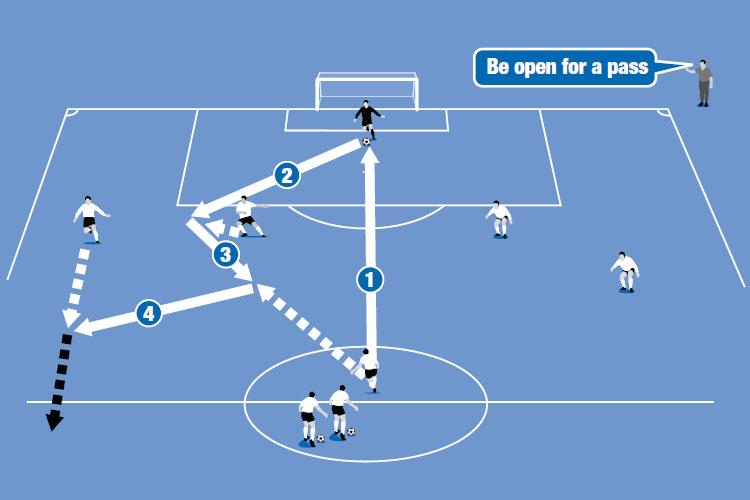
The role depends heavily on intelligent movement.
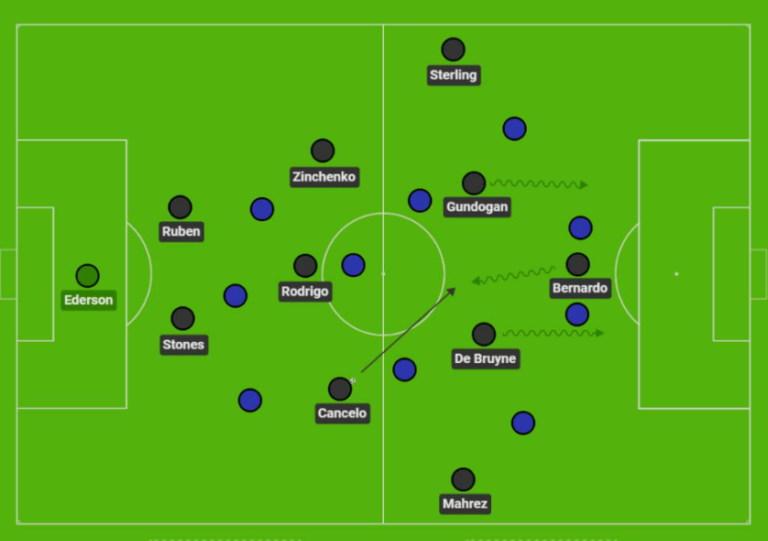
A False 9 constantly changes position to disrupt the opposition’s defensive shape.
Typical movements include:
- Dropping into midfield.
- Receiving the ball between the lines.
- Linking with attacking midfielders.
- Creating space for wingers.
- Drawing defenders out of position.
- Starting attacking combinations.
Instead of waiting for crosses, the False 9 often becomes the team’s creative hub.
What Are the Advantages of Using a False 9?
Many coaches use a False 9 because it creates tactical uncertainty.
Some key benefits include:
- Creates numerical superiority in midfield.
- Pulls defenders away from their positions.
- Opens space for wide forwards.
- Improves ball retention.
- Makes attacking movement less predictable.
- Helps dominate possession.
Possession-oriented teams often benefit the most from this system.
Are There Any Disadvantages?


5
The system is not perfect.
Without a natural striker inside the penalty area, teams may struggle to convert crosses into goals.
Possible weaknesses include:
- Fewer aerial threats.
- Less physical presence inside the box.
- Requires intelligent teammates.
- Demands excellent movement and technical ability.
- Can become ineffective against deep defensive blocks.
For the system to succeed, the entire team must understand their attacking responsibilities.
Famous Players Who Played as a False 9
Several legendary footballers helped popularize the role.
Lionel Messi
Under Pep Guardiola at Barcelona, Messi became the most famous False 9 in football history.
He constantly dropped into midfield while Pedro and David Villa attacked the space behind defenders.
Roberto Firmino
During Liverpool’s success under Jürgen Klopp, Firmino linked midfield with attack while Mohamed Salah and Sadio Mané made dangerous runs into the penalty area.
Francesco Totti
The Roma legend often played as a False 9, combining creativity with intelligent movement instead of acting as a traditional striker.
Other players who have performed the role include:
- Karim Benzema (at times)
- Kai Havertz
- João Félix
- Antoine Griezmann
False 9 vs Traditional Striker
| False 9 | Traditional Striker |
|---|---|
| Drops into midfield | Stays near goal |
| Creates space | Occupies defenders |
| Focuses on link-up play | Focuses on finishing |
| Creates chances | Scores chances |
| More mobile | More penalty-box presence |


Which Formations Use a False 9?
The role is commonly used in formations such as:
- 4-3-3
- 4-2-3-1
- 4-1-4-1
- 3-4-3
These systems allow wingers and attacking midfielders to exploit the space created by the False 9’s movement.
Is the False 9 Still Popular Today?
Although many teams now rely on more traditional centre-forwards, the False 9 remains an effective tactical option.
Several modern managers continue to use the role depending on the opponent and the players available.
Rather than being a permanent system, it has become a flexible tactical solution that can completely change the rhythm of a match.
Final Thoughts
The False 9 is one of football’s most fascinating tactical roles.
Instead of simply scoring goals, the player creates space, links attacks and forces defenders into difficult decisions.
When executed correctly, it transforms the entire attacking structure of a team and makes defending far more complicated.
While not every squad has the right players to use it successfully, the False 9 remains one of the smartest tactical innovations in modern football.
Key Takeaways
- A False 9 is a striker who regularly drops into midfield.
- The role creates space by pulling defenders out of position.
- It is most effective in possession-based systems.
- Lionel Messi, Roberto Firmino and Francesco Totti are among the most famous False 9s.
- The system emphasizes movement, creativity and teamwork rather than traditional centre-forward play.