
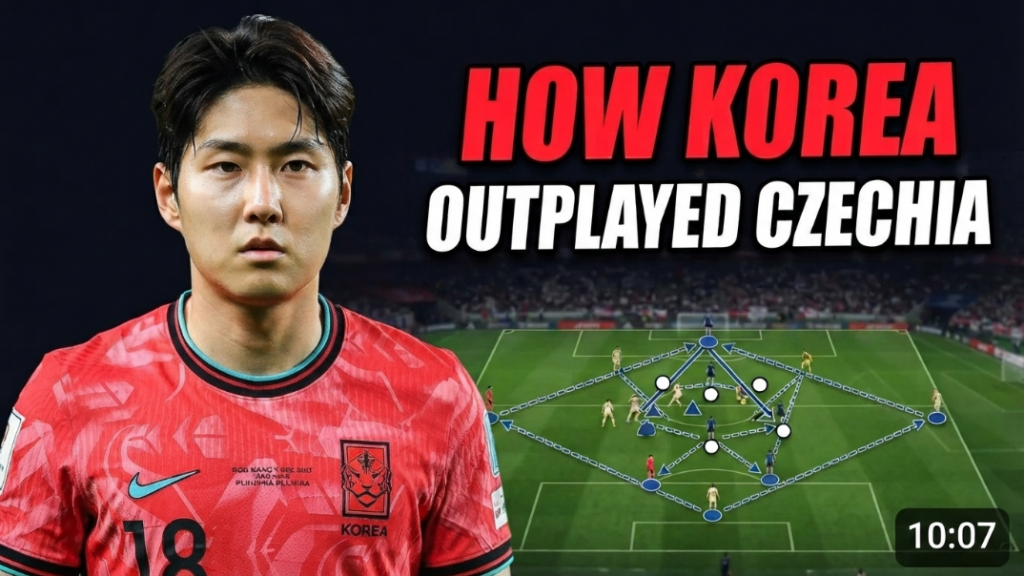
South Korea produced one of the most tactically impressive performances of the opening round at the 2026 FIFA World Cup, defeating the Czech Republic 2-1 through intelligent positioning, fluid attacking movements, and the outstanding creativity of Lee Kang-in.
While the scoreline suggested a close contest, the tactical battle told a different story. South Korea consistently dominated open-play situations, controlled more valuable areas of the pitch, and repeatedly manipulated the Czech defensive structure through coordinated rotations and excellent positional discipline.
This victory was not built on moments of individual brilliance alone. It was the product of a well-drilled attacking system that blended collective organization with the freedom of one exceptional playmaker.
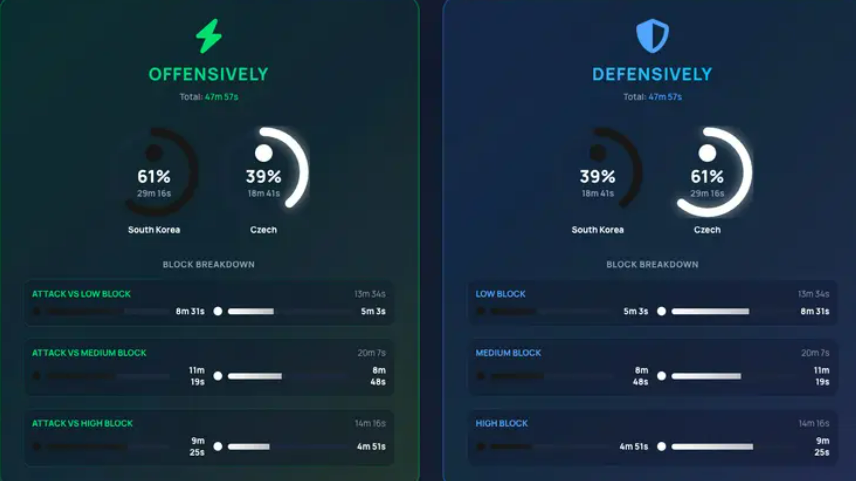
South Korea Controlled the Game Beyond the Scoreline
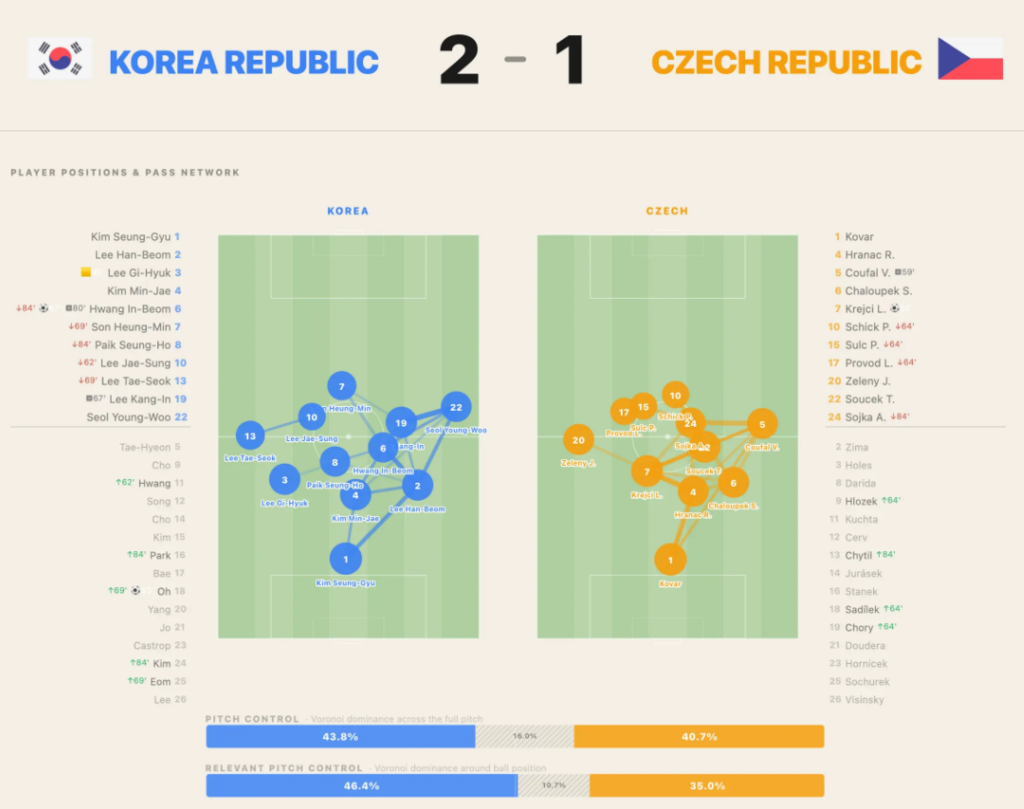
Although the Czech Republic remained dangerous from set-pieces throughout the match, South Korea dictated almost every aspect of open play.
The passing networks revealed a team comfortable building attacks through their wing-backs while maintaining excellent central connections between midfield and attack. South Korea also occupied more influential areas of the pitch, controlling both overall territory and the most valuable spaces around the ball throughout large periods of the game.
Rather than forcing attacks, they patiently circulated possession before accelerating through quick combinations whenever opportunities appeared.
This balance between patience and aggression became the foundation of their success.
The Attacking Structure That Broke Down Czech Republic
One of the most fascinating aspects of South Korea’s performance was their attacking structure.
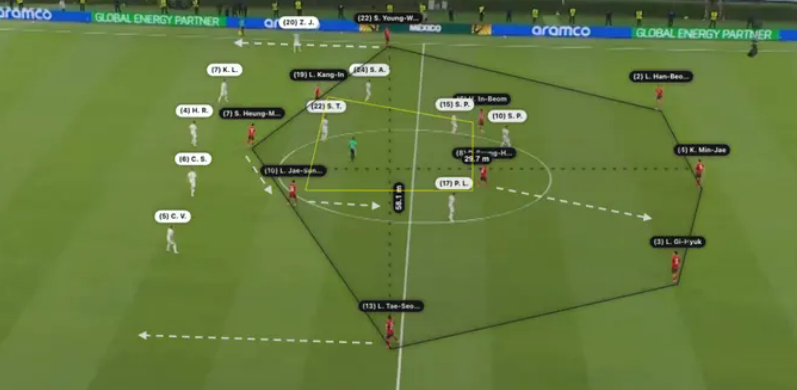
Starting from a nominal 3-4-3 formation, the system regularly transformed into a flexible 4-2-4 whenever they progressed into the attacking phase.
Paik Seung-Ho frequently dropped into the defensive line to create numerical superiority during build-up, while Lee Jae-Sung occupied the pocket left behind. At the same time, Son Heung-min adjusted his positioning higher up the pitch, ensuring South Korea always maintained multiple passing options between the Czech defensive lines.
Meanwhile, wing-backs Lee Tae-Seok and Seol Young-Woo constantly stretched the Czech back line by holding advanced and wide positions.
The result was simple but highly effective.
Czech defenders were repeatedly forced into uncomfortable decisions, unsure whether to follow runners into midfield or protect the space behind them.
Intelligent Rotations Created Constant Space
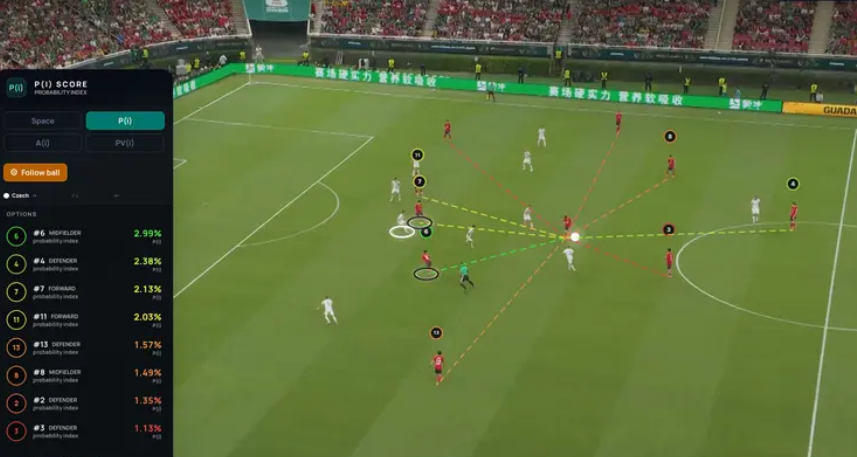
South Korea’s positional rotations were among the cleanest tactical patterns seen during the opening round of the World Cup.
Instead of relying on individual dribbling, the Korean players constantly exchanged positions, creating new passing lanes and forcing Czech defenders to abandon their defensive shape.
Whenever Seol Young-Woo received possession on the right flank, Lee Jae-Sung drifted into central pockets before immediately combining with Lee Kang-in.
Those quick exchanges transformed static possession into dynamic attacks almost instantly.
Rather than simply occupying positions, every movement had a purpose.
Each rotation opened space for another teammate, creating numerical superiority throughout midfield.
Lee Kang-in Was the Heart of Everything
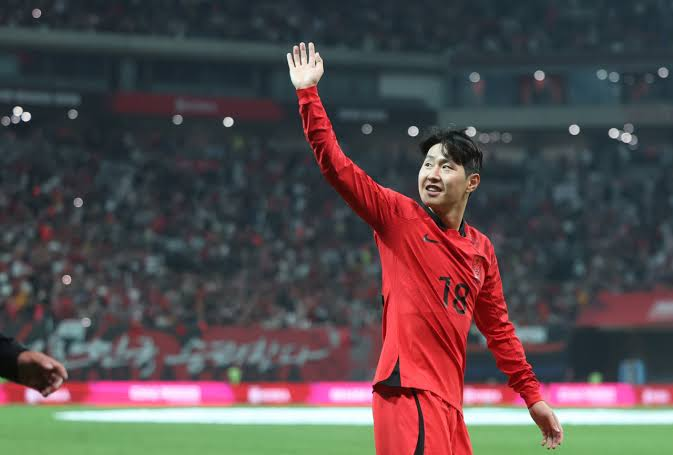
If South Korea’s tactical system provided the structure, Lee Kang-in supplied the imagination.
Operating as the right-sided attacking midfielder, he enjoyed the freedom to drift across the final third, constantly appearing between defensive lines.
His movement made him almost impossible to mark.
When Czech defenders stepped forward, Kang-in exploited the space behind them.
When they remained deeper, he simply received possession under pressure before turning and driving directly at the defensive line.
His first touch, vision and decision-making repeatedly destabilized the Czech defence.
Whether creating chances, progressing possession or acting as a decoy to open passing lanes for teammates, Kang-in influenced almost every dangerous attack South Korea produced.
It was a complete creative midfield performance.
A Collective Performance Built Around Individual Freedom
Perhaps the most impressive feature of South Korea’s display was how collective organization and individual creativity worked together.
Every attacking sequence followed recognizable tactical principles.
Wing-backs stretched the field.
Midfielders rotated intelligently.
Central players occupied dangerous pockets.
Then, once the defensive block had shifted, Lee Kang-in was given the freedom to make the decisive pass.
South Korea’s opening goal perfectly illustrated this philosophy.
Carefully coordinated movements pulled defenders out of position before Kang-in identified Hwang In-Beom’s perfectly timed run and delivered the decisive pass that unlocked the Czech defence.
Rather than depending on isolated brilliance, the goal emerged from a well-rehearsed tactical sequence.
Key Tactical Takeaways
- South Korea controlled open-play situations despite a competitive scoreline.
- Their flexible 3-4-3 regularly evolved into an attacking 4-2-4 structure.
- Intelligent positional rotations consistently disrupted Czech marking.
- Wing-backs provided width while midfield rotations created central superiority.
- Lee Kang-in combined creativity, movement and technical quality to orchestrate almost every dangerous attack.
Final Verdict
South Korea’s victory over the Czech Republic was far more than an impressive opening result at the 2026 FIFA World Cup.
It was a demonstration of how tactical discipline, intelligent positional play and individual quality can combine to outperform a well-organized opponent.
While Son Heung-min remains the team’s biggest international star, this performance firmly belonged to Lee Kang-in, whose intelligence and creativity transformed South Korea’s attacking structure into one of the tournament’s most exciting systems.
If the Taegeuk Warriors continue to execute this tactical blueprint with the same precision, they have every chance of becoming one of the surprise packages of World Cup 2026.