
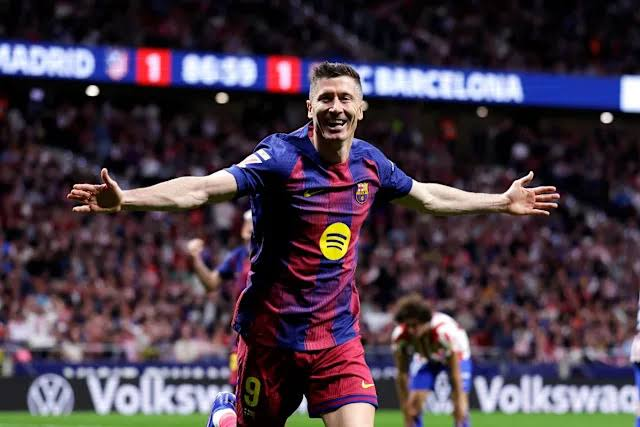
Barcelona took a massive step toward the 2025/26 La Liga title after securing a dramatic 2-1 victory over Atlético Madrid at the Riyadh Air Metropolitano.
The result was about far more than three points. It was a tactical battle between two of Spain’s most influential coaches, Hansi Flick and Diego Simeone, with both teams entering the match knowing that the outcome could significantly shape the title race.
For long periods, Atlético executed their game plan effectively, frustrating Barcelona’s possession-heavy approach while creating danger through direct attacks and quick transitions. However, the match changed completely following Nico González’s red card just before halftime, allowing Barcelona to dominate territory and eventually break down Atlético’s resistance.
The final score reflected Barcelona’s persistence, but the tactical story behind the victory was far more fascinating.
Match Details
| Competition | La Liga 2025/26 |
|---|---|
| Match | Atlético Madrid vs Barcelona |
| Venue | Riyadh Air Metropolitano |
| Result | Atlético Madrid 1-2 Barcelona |
| Matchday | Round 30 |
Barcelona Built Their Attack Around Lamine Yamal
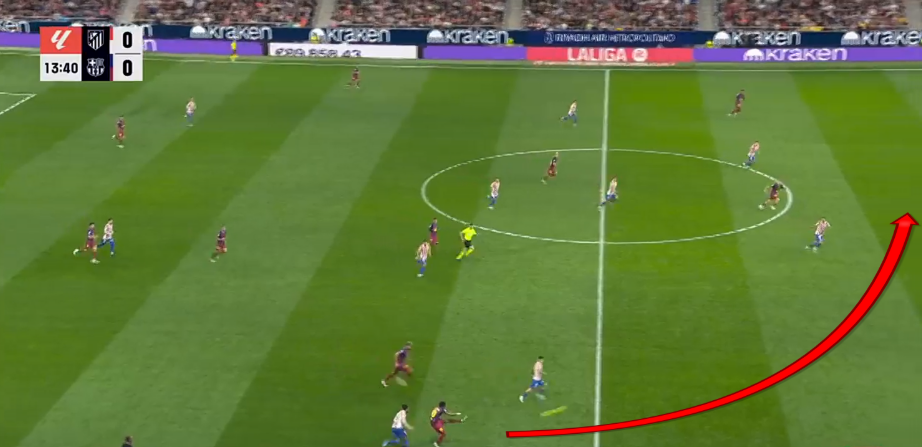
From the opening stages, Barcelona’s attacking plan was obvious.
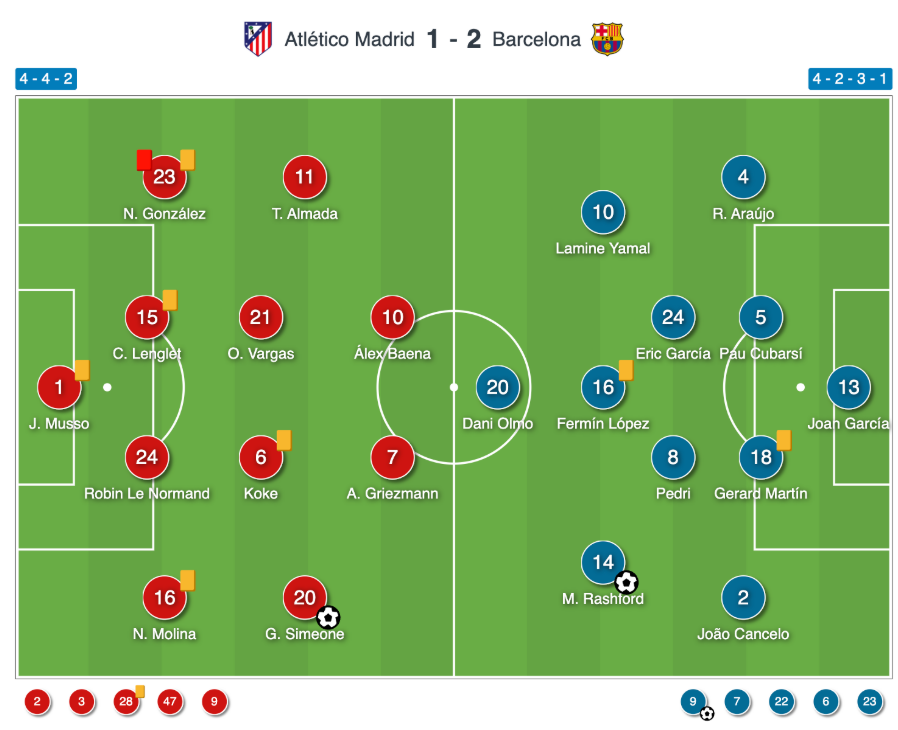
Hansi Flick deliberately looked to isolate Lamine Yamal against Atlético’s left side. The visitors overloaded central and left-sided areas during build-up before quickly switching play toward the young winger.
The objective was simple: create one-versus-one situations.
Whenever Yamal received possession near the touchline, Atlético immediately faced a dilemma. If Nico González stepped forward aggressively, Yamal could beat him on the outside. If the defender stayed deeper, the Barcelona star could cut inside onto his stronger left foot and attack central areas.
This strategy repeatedly stretched Atlético’s defensive shape and forced additional midfield support toward the flank.
As a consequence, spaces began to appear elsewhere on the pitch.
The influence of Yamal went beyond dribbling and chance creation. His mere presence altered Atlético’s defensive positioning and gradually pulled players away from their preferred structure.
Atlético’s Direct Approach Exploited Barcelona’s High Line
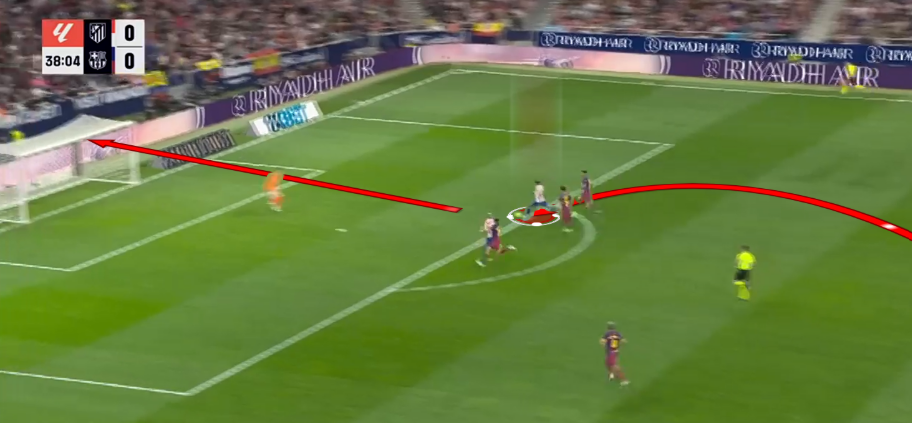
While Barcelona controlled possession, Atlético remained dangerous throughout the first half.
Diego Simeone recognized the risks associated with Flick’s aggressive defensive line and instructed his players to attack the space behind Barcelona’s defense whenever opportunities appeared.
The home side looked vertical whenever possession was regained.
Rather than attempting lengthy build-up sequences, Atlético immediately searched for runners attacking the channels behind Ronald Araújo and Pau Cubarsí.
This strategy produced the opening goal.
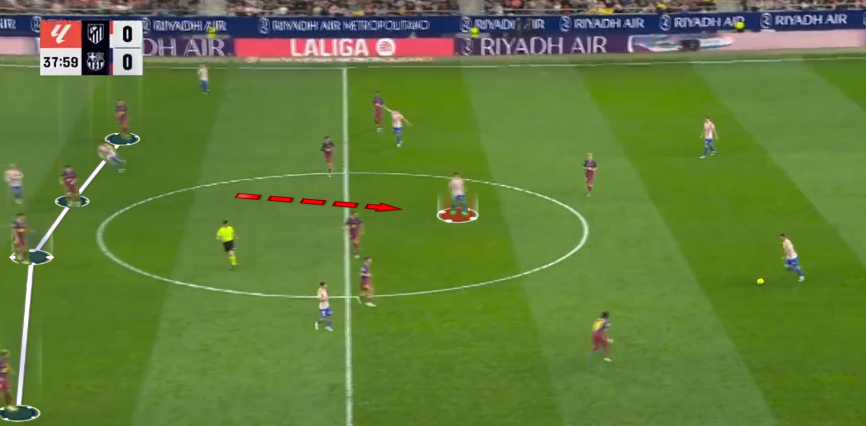
A perfectly weighted pass from Clément Lenglet released Giuliano Simeone behind the Barcelona defense. The young attacker timed his run brilliantly, exploited the space behind Gerard Martín, and calmly finished to give Atlético the lead.
The goal highlighted one of the few weaknesses within Flick’s system.
Barcelona’s high line allows them to sustain pressure and dominate territory, but it also creates large spaces behind the defense that can be exploited by quick and intelligent attackers.
For much of the first half, Atlético balanced defensive discipline with these direct attacking transitions.
The Red Card Changed Everything
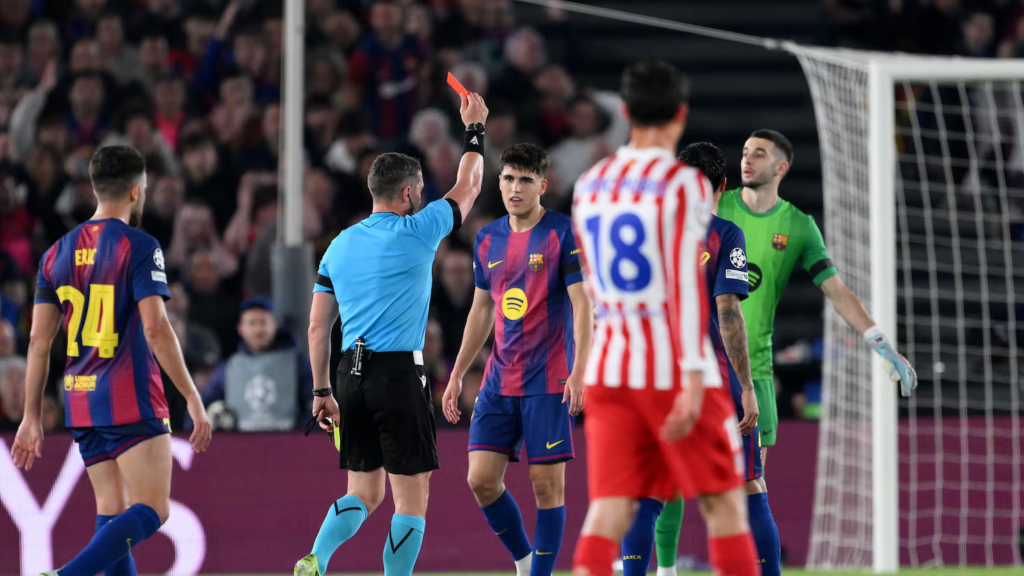
The turning point arrived during first-half stoppage time.
After spending the opening period dealing with constant pressure from Yamal, Nico González received his second yellow card and was sent off.
The dismissal completely transformed the tactical landscape.
Until that point, Atlético had managed to remain competitive despite Barcelona’s territorial dominance. Once reduced to ten men, Simeone was forced to abandon many of his attacking ambitions and focus almost exclusively on defensive survival.
The hosts retreated into a deep defensive block and attempted to protect their advantage.
Barcelona suddenly found themselves attacking against a compact wall of red-and-white shirts.
How Barcelona Broke Down Atlético’s Deep Block
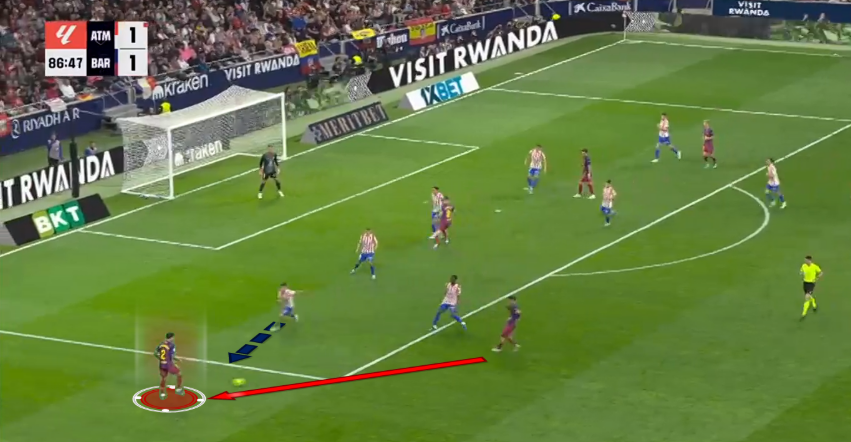
The second half became an exercise in patience.
Rather than forcing attacks through crowded central areas, Barcelona widened the pitch as much as possible.
João Cancelo and Gerard Martín pushed extremely high, almost operating as wingers rather than full-backs. Their positioning stretched Atlético’s defensive shape and prevented the home side from maintaining compactness across the entire width of the field.
This allowed Rashford, Dani Olmo, and Yamal to drift into more dangerous central positions.
Barcelona circulated possession endlessly, moving Atlético from side to side and gradually exhausting the ten-man defense.
The strategy was not about creating immediate chances.
It was about forcing Atlético to defend continuously until mistakes eventually appeared.
Lewandowski Delivers the Decisive Moment
As the match entered its final minutes, Barcelona’s pressure finally paid off.
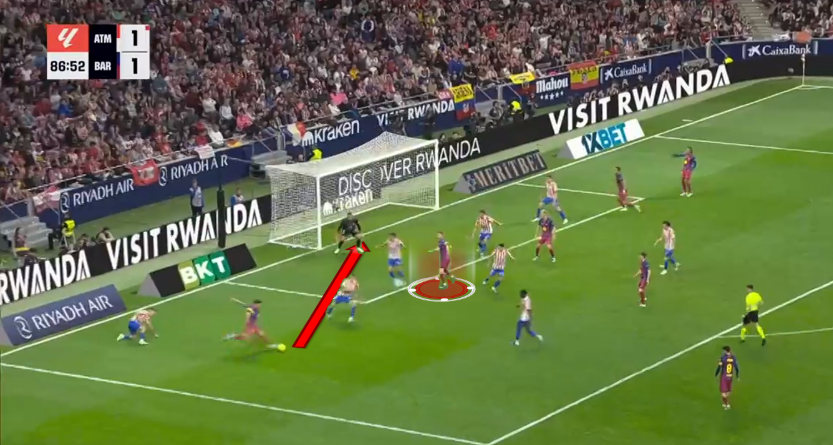
João Cancelo, who had spent most of the second half camped in Atlético’s half, became the key figure.
After receiving possession near the edge of the box, the Portuguese defender fired a dangerous effort toward goal. Although Juan Musso managed to make the initial save, the rebound created chaos inside the penalty area.
Robert Lewandowski reacted first.
The veteran striker instinctively converted the loose ball and completed Barcelona’s comeback.
The goal was the natural outcome of nearly an entire half spent attacking a deep defensive block.
It was not a moment of luck. It was the reward for sustained territorial pressure.
Tactical Verdict
This match showcased two very different football philosophies.
Atlético focused on defensive organization, compactness, and quick transitions into space.
Barcelona emphasized possession, width, positional play, and constant pressure.
For long periods, both approaches worked.
Atlético successfully exploited Barcelona’s high defensive line, while Barcelona repeatedly stretched Atlético’s block through Yamal and their wide positioning.
However, once the red card arrived, the balance shifted decisively.
Barcelona’s ability to maintain pressure, manipulate space, and patiently circulate possession eventually overwhelmed Atlético’s resistance.
Conclusion
Barcelona’s 2-1 victory was not simply the result of superior individual quality.
It was a demonstration of tactical persistence and structural control.
Hansi Flick’s side remained faithful to their principles throughout the match, continuously searching for solutions until Atlético’s defensive block finally broke.
For Simeone, there were positives to take from the performance, particularly the effectiveness of his team’s transitional attacks before the red card. Yet defending for an entire half with ten men against a side as dominant as Barcelona was always likely to end in disappointment.
With the title race entering its decisive phase, this victory may ultimately be remembered as the night Barcelona placed one hand firmly on the La Liga trophy.