
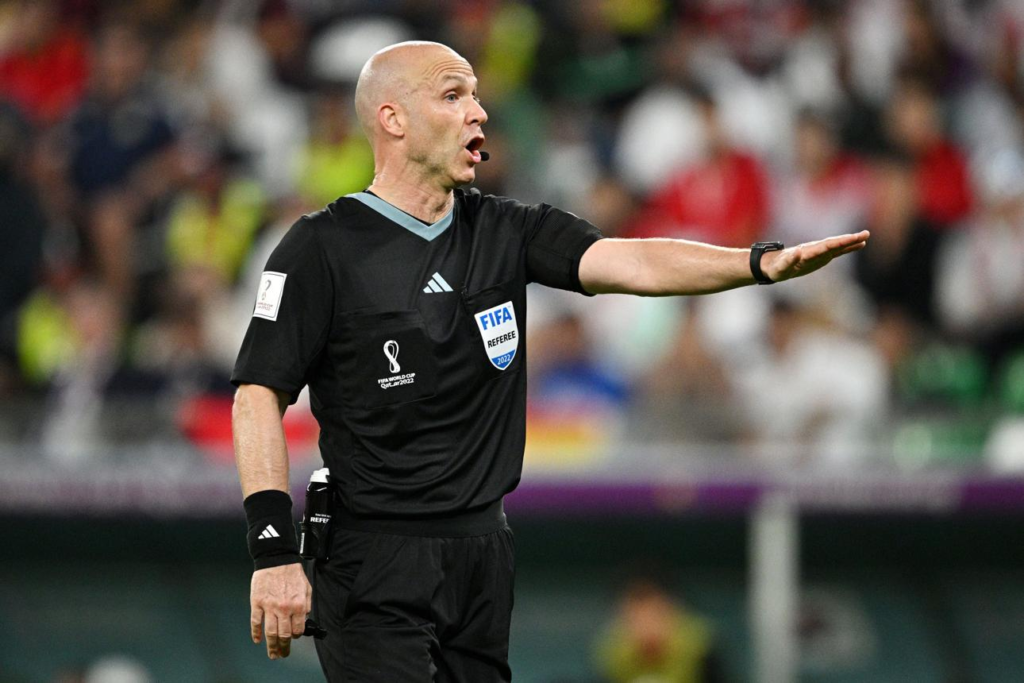
After two decades at the highest level of English football, Anthony Taylor has walked away from refereeing with a warning for the sport.
The 47-year-old official retired shortly after refereeing at the 2026 FIFA World Cup, bringing an extraordinary career to an end. Taylor leaves behind 668 matches in the English professional game, major domestic finals and 163 international fixtures.
But his retirement was not simply about leaving the pitch.
Taylor has opened up about the relentless pressure faced by referees, the impact of constant criticism and what he describes as a growing “culture of fear” surrounding officials.
He has also questioned how former referees analyze their old colleagues in the media and explained why he believes VAR should focus on obvious mistakes rather than microscopic details.
Now, instead of disappearing from football, Taylor is taking on a new challenge in Turkey.
Quick Overview
| Category | Details |
|---|---|
| Referee | Anthony Taylor |
| Age | 47 |
| Professional Career | 20 years |
| English Matches | 668 |
| International Matches | 163 |
| Final Tournament | FIFA World Cup 2026 |
| New Role | Director of Elite Refereeing in Turkey |
| Main Concerns | Pressure, scrutiny, VAR and referee criticism |
Why Did Anthony Taylor Retire?
Taylor’s decision surprised some observers because he had just returned from another World Cup.
He officiated three matches during the 2026 tournament, including the last-16 clash between Spain and Portugal in Dallas.
For Taylor, however, the World Cup provided the perfect moment to walk away.
He wanted to finish his career on his own terms.
After 20 years at the top level, the physical demands were becoming increasingly difficult, while the constant psychological pressure of elite refereeing had also taken its toll.
Taylor explained that the decision came from both his body and mind reaching a natural point where he was ready for something different.
And there was another important factor.
Family.
His career required enormous sacrifices from those closest to him, while the abuse directed toward referees had previously affected his family as well.
The Pressure on Modern Referees

Taylor believes referees operate inside an environment that can gradually damage confidence.
Officials have to deal with criticism from:
- Players
- Managers
- Supporters
- Media
- Former referees
- Fellow officials
- Social media users
Even when referees stay away from social media, football coverage never stops.
Taylor described modern football as effectively living inside a “goldfish bowl”, with opinions about every major decision available almost immediately.
That constant exposure can create a dangerous cycle.
A referee worries about making a mistake.
That fear affects confidence.
Reduced confidence can affect decision-making.
And another mistake can create even more criticism.
For someone officiating at the highest level, the psychological pressure can become enormous.
Why Taylor Criticized Former Referees
One of Taylor’s strongest criticisms was aimed at former officials who now work in the media.
He believes ex-referees have an important responsibility when analyzing controversial decisions.
Rather than simply declaring a decision right or wrong, Taylor argues that experts should explain the reasoning behind it.
Football is rarely as simple as black and white.
A referee can make a mistake without being incompetent.
A decision can also be genuinely subjective.
Taylor believes constantly presenting officials as failures can create what he calls a “culture of fear”, involving criticism, shame and disrespect.
That environment could ultimately make refereeing more difficult for the next generation.
Should Former Referees Be More Balanced?
This is one of the most interesting questions raised by Taylor’s comments.
Former officials have something ordinary pundits don’t have:
They understand what it feels like to make a split-second decision in front of 60,000 people.
A referee may have only seconds to judge:
- A potential penalty.
- A handball.
- A tackle.
- An offside situation.
- A possible red card.
- Player reactions.
Watching the same incident repeatedly from multiple camera angles is completely different.
That does not mean referees should never be criticized.
Mistakes matter.
But Taylor believes the analysis should include the context behind decisions rather than turning every controversial moment into a simple verdict.
Taylor’s New Challenge in Turkey
Rather than leaving football entirely, Taylor has accepted a major new role.
He has been appointed director of elite refereeing for the Turkish Football Federation.
The timing is particularly significant.
Turkey has recently been dealing with a major refereeing betting scandal following a five-year investigation.
The investigation found that 371 of 571 match officials had betting accounts.
Taylor’s role will therefore involve much more than simply teaching referees how to make decisions.
He wants to help younger officials develop:
- Mental resilience.
- Confidence.
- Professional skills.
- Match-management abilities.
- International experience.
- Greater consistency.
He will also work on identifying and developing future refereeing talent in Turkey.
For Taylor, it represents an opportunity to take everything he learned during two decades at the top level and pass it on to the next generation.
Anthony Taylor’s VAR Verdict

Taylor’s thoughts on VAR are more nuanced than simply being for or against the technology.
He believes VAR has an important purpose:
Correcting clear and significant mistakes.
The problem, in his view, is what happens when officials begin examining tiny details that don’t clearly demonstrate an error.
Taylor believes VAR should not become a tool for microscopic analysis.
Instead, intervention should be based on strong visual evidence that the original decision was clearly wrong.
That would mean:
Clear error → intervene.
Marginal detail → trust the original decision.
The objective should be improving accuracy without destroying the flow of football.
Why VAR Still Frustrates Fans
The basic idea behind VAR is easy to understand.
Get more important decisions correct.
The problem is the process.
When supporters watch referees spend several minutes analyzing a decision frame by frame, the technology can sometimes create more frustration than confidence.
Taylor believes that reducing intervention time and focusing only on obvious errors could improve public trust.
The challenge for football authorities is finding the correct balance between:
Accuracy vs. speed.
Too little intervention can allow obvious mistakes to stand.
Too much intervention can make every decision feel provisional.
Taylor’s Biggest Career Regret
Despite an extraordinary career, Taylor admits there is one major achievement missing from his résumé.
He never refereed a UEFA Champions League final.
That is remarkable considering the matches he has handled throughout his career.
But the 2026 World Cup provided an opportunity to end his refereeing career on football’s biggest international stage.
After officiating at his second World Cup, Taylor decided there was no better moment to close the chapter.
His career ended at the highest level.
Now a completely different challenge begins.
The Bigger Problem Facing Football Referees

Taylor’s comments highlight a problem that goes beyond one referee.
Football needs referees.
But the modern environment is making elite officiating increasingly difficult.
Every major decision can immediately become:
- A television debate.
- A social media argument.
- A newspaper headline.
- A viral video.
- A tactical talking point.
- A target for online abuse.
That environment can make young officials question whether pursuing the profession is worth the pressure.
If experienced referees are already describing the psychological burden as intense, football’s governing bodies need to think carefully about how they protect and develop the next generation.
My Analysis
Anthony Taylor’s retirement offers an important reminder that referees are part of football’s human machinery.
They will make mistakes.
Players miss penalties. Strikers miss chances. Managers make substitutions that fail. Defenders lose concentration. Goalkeepers make errors.
Referees are no different.
The problem is that their mistakes are often judged in slow motion.
A decision made in two seconds can be analyzed for ten minutes by millions of people.
VAR was supposed to reduce that problem, but it can sometimes create another one when every tiny detail becomes worthy of investigation.
Taylor’s argument makes sense: VAR should correct obvious errors, not turn football into forensic science.
His decision to move into referee development in Turkey could also become one of the most interesting next chapters of his career.
Instead of simply being remembered for controversial decisions, Taylor now has an opportunity to help create a better environment for the officials who will replace him.
Key Takeaways
- Anthony Taylor has retired from refereeing after a 20-year career.
- The 47-year-old officiated 668 English professional matches and 163 international fixtures.
- He says constant scrutiny contributed to the pressure surrounding elite refereeing.
- Taylor believes former referees working in the media should provide more balanced analysis.
- He warned that excessive criticism can create a “culture of fear” among officials.
- Taylor has become director of elite refereeing in Turkey.
- His new role comes after a major betting scandal involving Turkish match officials.
- Taylor believes VAR should focus on clear errors rather than microscopic checks.
- His biggest career regret is never refereeing a Champions League final.
Final Thoughts
Anthony Taylor’s retirement marks the end of one refereeing career, but his comments raise much bigger questions about the future of football officiating.
The modern referee is expected to be almost flawless while operating under extraordinary pressure. Every decision can be replayed, dissected and criticized within seconds.
VAR has helped improve accuracy, but Taylor believes the technology must remain focused on its original purpose rather than becoming a microscope for every marginal incident.
His move into Turkish football gives him a chance to put those beliefs into practice.
After 20 years of making decisions on the pitch, Taylor’s next challenge is helping the next generation of referees make theirs with greater confidence, resilience and support.