

If you’ve ever watched a football match and suddenly heard the commentator shout “Offside!”, you’re not alone in wondering what actually happened.
The offside rule is one of the most talked-about and misunderstood rules in football. It creates drama, cancels goals, sparks debates, and often leaves new fans scratching their heads. Whether you’re watching the Premier League, Champions League, World Cup, or your local team, understanding offside will help you enjoy the game much more.
The good news? Once you learn the basics, the offside rule is much easier to understand than many people think.
Quick Answer: What Is Offside in Football?
| Question | Answer |
|---|---|
| What Is Offside? | A player is offside if they are in an illegal attacking position when the ball is played to them. |
| Is It a Foul? | No |
| Who Detects It? | Referees and assistant referees |
| Can VAR Check It? | Yes |
| Why Does It Exist? | To prevent attackers from gaining an unfair advantage |
What Is Offside in Football?
A player is considered offside when they receive the ball while being closer to the opponent’s goal line than both the ball and the second-last defender.
In simple terms, attackers cannot simply stand next to the goalkeeper waiting for a pass.
Football requires players to earn their position through movement and timing.
Simple Example
Imagine a striker standing behind all defenders while waiting for a teammate to pass the ball.
If the pass is made and the striker receives it from that position, the referee will likely stop play for offside.
How Does the Offside Rule Work?

The offside rule is judged at the exact moment a teammate passes the ball.
Not when the player receives it.
This is one of the most important details many fans misunderstand.
Key Factors Officials Check
✅ Position of the attacker
✅ Position of the defenders
✅ Position of the ball
✅ Exact moment the pass is made
Modern technology and VAR have made these decisions more accurate than ever before.
When Is a Player Offside?
A player is offside if all of the following conditions are met:
| Condition | Required? |
|---|---|
| In the opponent’s half | ✅ Yes |
| Ahead of the ball | ✅ Yes |
| Ahead of the second-last defender | ✅ Yes |
| Involved in active play | ✅ Yes |
If all four conditions are true, the player is likely offside.
When Is a Player NOT Offside?
Many situations that look offside actually aren’t.
A player is NOT offside if:
✅ They are level with the second-last defender
✅ They are behind the ball
✅ They receive the ball directly from a goal kick
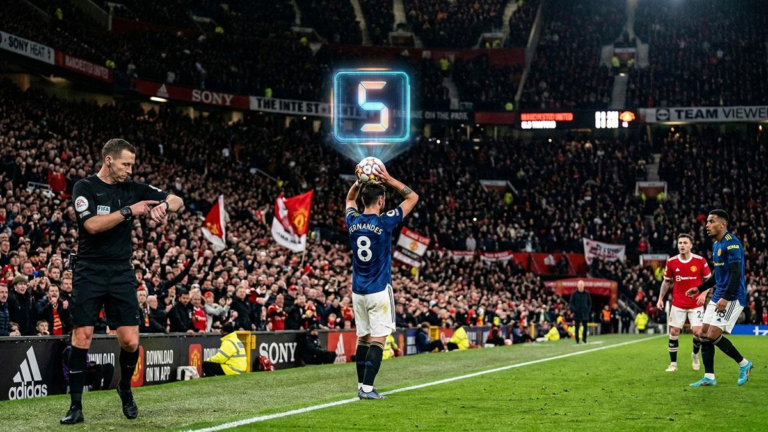
✅ They receive the ball directly from a throw-in
✅ They receive the ball directly from a corner kick
Quick Reference
| Situation | Offside? |
|---|---|
| Direct Throw-In | ❌ No |
| Direct Goal Kick | ❌ No |
| Direct Corner Kick | ❌ No |
| Level With Defender | ❌ No |
| Behind Ball | ❌ No |
What Does “Active Play” Mean?
Simply standing in an offside position is not always an offense.
The player must become involved in the play.
Examples of Active Involvement
✅ Receiving the ball
✅ Blocking a defender
✅ Interfering with the goalkeeper
✅ Attempting to play the ball
If a player is offside but not affecting the play, referees may allow the game to continue.
Why Is the Offside Rule Important?
Without the offside rule, football would look completely different.
Attackers could stay near the opponent’s goal for the entire match and wait for long passes.
Benefits of the Rule
| Benefit | Explanation |
|---|---|
| Fair Competition | Prevents goal-hanging |
| Better Tactics | Encourages teamwork |
| Balanced Matches | Helps defenders compete |
| More Strategy | Rewards timing and movement |
The rule keeps football tactical, competitive, and entertaining.
How VAR Changed Offside Decisions


In recent years, VAR (Video Assistant Referee) has transformed offside decisions.
Officials can now use technology to draw virtual lines and determine whether a player was offside by even a few centimeters.
Advantages of VAR
✅ Greater accuracy
✅ Fewer mistakes
✅ Fairer outcomes
Criticisms of VAR
❌ Longer interruptions
❌ Very tight decisions
❌ Reduced spontaneity during goal celebrations
Despite the debate, VAR remains a major part of modern football.
Common Offside Myths
Many football fans still misunderstand certain aspects of the rule.
| Myth | Reality |
|---|---|
| Any player ahead is offside | ❌ False |
| Offside applies everywhere on the pitch | ❌ False |
| A player can be offside in their own half | ❌ False |
| Being level is offside | ❌ False |
| VAR invented offside | ❌ False |
Understanding these myths helps make the rule much clearer.
Famous Offside Controversies
Some of football’s most debated moments involve offside decisions.
Major tournaments such as the World Cup, Champions League, and Premier League have all seen goals awarded or disallowed due to extremely close offside calls.
These moments often become talking points for years.
Quick Summary
| Topic | Key Point |
|---|---|
| Offside Definition | Illegal attacking position |
| Main Purpose | Prevent unfair advantage |
| Checked By | Referees and VAR |
| Difficulty Level | Medium |
| Importance | Very High ⭐ |
Final Thoughts
The offside rule may seem confusing at first, but it plays a crucial role in keeping football fair and competitive.
Once you understand that officials judge the attacker’s position at the moment the ball is passed, the rule becomes much easier to follow. Whether you’re watching the World Cup, Champions League, Premier League, or a local match, understanding offside will help you appreciate the tactical side of football and enjoy the game on a deeper level.
For new fans, it’s one of the first football concepts worth learning, and once you master it, many other aspects of the sport start to make much more sense.