
Football analysis has evolved dramatically over the past decade. While goals and assists remain the most recognizable statistics, modern analytics now measure many aspects of a player’s contribution that traditional numbers often overlook. One of the most valuable metrics is the progressive pass, a statistic widely used by coaches, analysts, scouts, and clubs to evaluate how effectively players move the ball toward the opponent’s goal.
Progressive passes have become a key indicator of creativity, vision, and decision-making. They reveal which players consistently break defensive lines, initiate dangerous attacks, and help their team advance up the pitch. Whether you’re watching the Premier League, Champions League, or World Cup, understanding this statistic can completely change how you view a player’s performance.
In this guide, we’ll explain what progressive passes are, why they matter, and which types of players excel at producing them.
Quick Overview
| Detail | Information |
|---|---|
| Statistic | Progressive Passes |
| Measures | Forward ball progression |
| Used By | Coaches, Scouts, Analysts |
| Main Purpose | Move the ball significantly closer to goal |
| Common Positions | Midfielders, Centre-Backs, Full-Backs |
What Is a Progressive Pass?
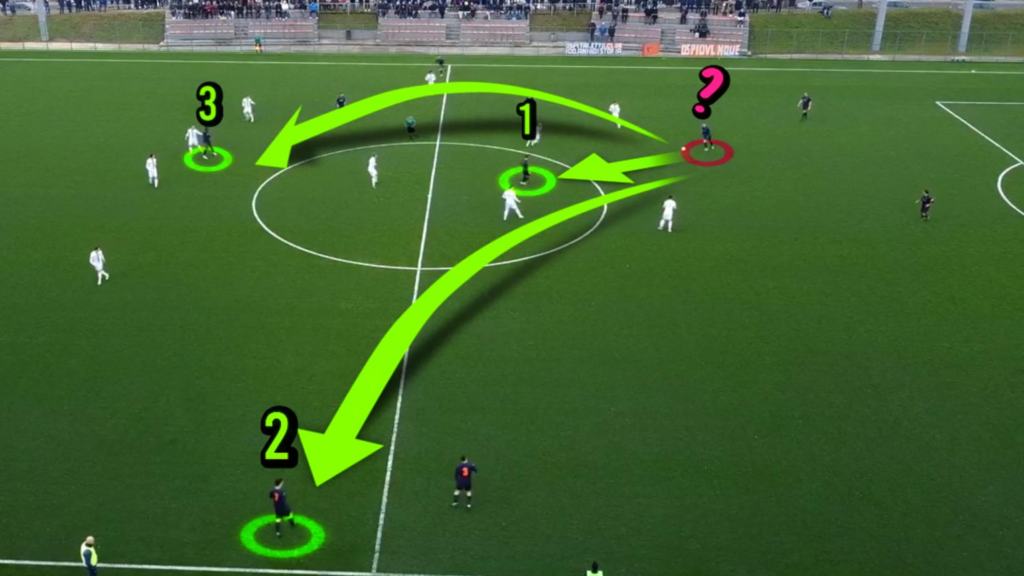
A progressive pass is a forward pass that moves the ball a significant distance toward the opponent’s goal.
Unlike a simple sideways or backward pass, a progressive pass helps advance the attack by breaking lines or moving possession into more dangerous areas.
Examples include:
- A centre-back finding a midfielder between the opposition’s midfield and defense.
- A deep-lying playmaker switching play into the attacking third.
- A full-back delivering a forward pass into space for a winger.
- A midfielder splitting the defense with a through ball.
The goal is simple: move the team closer to scoring opportunities.

Why Progressive Passes Matter
Possession alone does not guarantee attacking success.
A team may complete hundreds of safe passes without creating meaningful chances.
Progressive passes help teams by:
- Breaking defensive lines.
- Advancing attacks.
- Creating numerical advantages.
- Increasing attacking momentum.
- Opening space for teammates.
They are often the starting point of dangerous attacking moves.
Progressive Pass vs Regular Pass
| Category | Regular Pass | Progressive Pass |
|---|---|---|
| Direction | Any direction | Mostly Forward |
| Risk Level | Low | Higher |
| Attacking Value | Limited | High |
| Breaks Defensive Lines | Sometimes | Frequently |
| Creates Dangerous Situations | Rarely | Often |
Not every forward pass is progressive, but nearly every progressive pass has attacking intent.
Which Players Make the Most Progressive Passes?

Certain positions naturally attempt more progressive passes than others.
Typically, these include:
- Defensive midfielders
- Deep-lying playmakers
- Ball-playing centre-backs
- Creative central midfielders
- Attacking full-backs
These players are responsible for linking defense and attack.
Famous Players Known for Progressive Passing
| Player | Why They’re Known |
|---|---|
| Rodri | Controls possession and builds attacks |
| Toni Kroos | Exceptional long-range distribution |
| Joshua Kimmich | Accurate forward passing |
| Kevin De Bruyne | Creative line-breaking passes |
| Virgil van Dijk | Progressive distribution from defense |
These players consistently help their teams move up the field through intelligent passing rather than simply maintaining possession.


Progressive Passes vs Other Passing Statistics
Modern football uses several passing metrics.
| Statistic | Measures |
|---|---|
| Pass Accuracy | Percentage of completed passes |
| Key Passes | Passes leading directly to a shot |
| Through Balls | Passes behind the defense |
| Assists | Passes leading directly to goals |
| Progressive Passes | Significant forward progression |
Each statistic measures a different aspect of a player’s passing ability.
Why Scouts Value Progressive Passes
Professional scouts look beyond goals and assists.
Progressive passing helps identify players who can:
- Build attacks under pressure.
- Break compact defensive structures.
- Improve possession quality.
- Control match tempo.
- Create space for teammates.
This is one reason why midfielders with excellent progressive passing numbers are highly sought after in today’s transfer market.
Tactical Importance
Progressive passing plays a central role in modern tactical systems.
Teams that dominate possession often rely on these passes to avoid predictable sideways circulation.
Benefits include:
- Faster transitions.
- Better ball progression.
- Increased attacking opportunities.
- More effective counter-attacks.
- Improved control of midfield.
Without progressive passes, possession can become slow and ineffective.

By the Numbers
| Number | Meaning |
|---|---|
| 1 | Progressive pass can eliminate multiple defenders with one action |
| 90 Minutes | Progressive passes are commonly measured per full match |
| 5 Positions | Several roles regularly contribute progressive passing |
| Growing Metric | One of football’s fastest-rising analytical statistics |
Final Thoughts
Progressive passes have become one of the defining statistics of modern football because they measure something that traditional numbers often miss: the ability to move a team forward with purpose. Rather than rewarding safe possession, this metric highlights players who consistently break defensive lines, accelerate attacks, and create better opportunities for their teammates.
As football continues to embrace advanced analytics, understanding progressive passes offers supporters a deeper appreciation of the game. Whether watching an elite playmaker control midfield or a composed defender launch attacks from the back, recognizing these forward-thinking passes helps explain why certain players are so valuable beyond goals and assists alone.