
Introduction
Football has always been a game of talent, tactics, and instinct. But behind every successful team today, there is another invisible player on the pitch: data.
From discovering young talents to improving player performance, football clubs are using analytics to make smarter decisions. Numbers, statistics, and artificial intelligence are changing the way teams prepare for matches and build their squads.
A modern football club is no longer relying only on what a coach sees during training. Every sprint, pass, tackle, and movement can now be measured and analyzed.
What Is Football Analytics?
Football analytics is the process of collecting and studying data to understand player performance and team strategy.
Clubs use thousands of data points during every match, including:
- Pass accuracy
- Expected goals (xG)
- Distance covered
- Sprint speed
- Defensive actions
- Pressing intensity
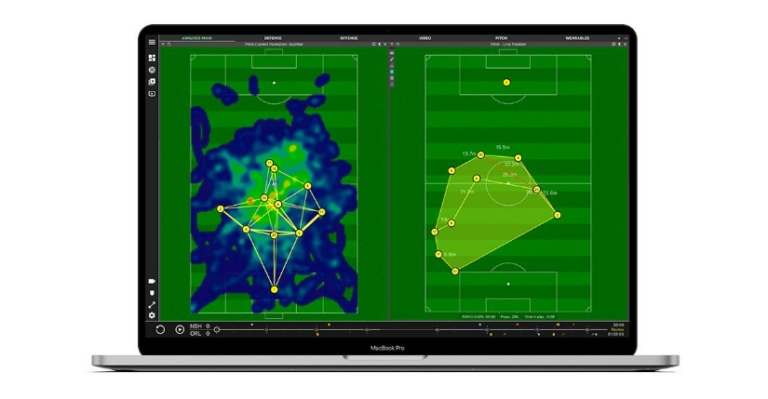
- Player positioning
- Chance creation
This information helps coaches understand what is happening on the pitch beyond the final score.

How Clubs Use Data To Improve Players
1. Player Performance Analysis
One of the biggest uses of analytics is improving individual players.
A club can analyze:
- How often a midfielder loses possession
- Where a striker creates chances
- How effective a defender is in one-on-one situations
- Whether a player is getting tired during matches
For example, if data shows that a winger creates more chances when starting from a wider position, coaches can adjust tactics to maximize his strengths.
2. Injury Prevention
Analytics also plays a major role in keeping players healthy.
Teams monitor:
- Training intensity
- Muscle workload
- Recovery time
- Running distance
By detecting unusual patterns, clubs can reduce the risk of injuries and decide when a player needs rest.

How Analytics Helps Clubs Find New Players
The Rise of Data-Based Scouting
Traditional scouting depended heavily on scouts watching players in stadiums.
Today, clubs combine human scouting with advanced databases.
Teams can search for players based on specific profiles:
- A young defender who wins many aerial duels
- A midfielder who creates chances under pressure
- A striker with high finishing numbers
This allows clubs to discover hidden talents before they become expensive stars.
Examples of Data-Driven Recruitment
Many successful clubs have built their transfer strategies around analytics.
Teams such as Liverpool, Brighton, and Brentford became known for using detailed data analysis to find undervalued players and develop them.
Analytics During Matches
Data is not only used before transfers. It also helps during games.
Coaches analyze:
- Opponent weaknesses
- Defensive gaps
- Pressing patterns
- Dangerous areas
During halftime, analysts can provide information that helps managers change tactics.
A small adjustment based on data can completely change the direction of a match.

The Future of Football Analytics
Artificial intelligence will make football analytics even more advanced.
Future systems could help clubs:
- Predict player development
- Recommend tactical changes automatically
- Identify future stars earlier
- Analyze opponents in real time
However, data will never completely replace coaches. Football remains a human game where emotions, leadership, and creativity still decide important moments.
Quick Summary
- Football clubs use analytics to improve tactics and player performance.
- Data helps prevent injuries and find new talents.
- Scouting is becoming more scientific with advanced statistics.
- AI will continue changing how teams prepare and compete.
Final Thoughts
Analytics has become one of football’s most powerful tools. The best clubs are no longer choosing between experience and data, they are combining both.
The future belongs to teams that can turn millions of numbers into better decisions on the pitch. ⚽📊