
Premier League shirts are about to look very different.
For almost two decades, betting companies have been a familiar sight across English football, particularly on the shirts of clubs outside the traditional Big Six. But from the 2026-27 season, gambling companies are no longer allowed to appear as front-of-shirt sponsors following the voluntary ban agreed by Premier League clubs.
The change marks the end of an era that began in the mid-2000s and raises a bigger question about where football clubs will find their next major commercial partners.
Technology, artificial intelligence, finance, insurance and cryptocurrency are increasingly moving into the space once dominated by bookmakers.
And there is serious money involved.
Quick Overview
| Category | Details |
|---|---|
| Change | Gambling front-of-shirt sponsorship ban |
| Introduced | 2026-27 season |
| Clubs previously using gambling sponsors | Up to 11 |
| New sponsor sectors | Technology, AI, finance, insurance, tourism |
| Biggest emerging sector | Finance |
| Major trend | Technology and AI sponsorship |
| Biggest historical shift | Gambling replaced traditional local sponsors |
Why Premier League Shirts Are Changing
For the past two seasons, 11 of the 20 Premier League clubs had gambling-related branding on their shirts.
That included online bookmakers, betting companies and crypto casinos.
The new rules mean clubs must now find alternative front-of-shirt sponsors.
Eight Premier League clubs needed new shirt sponsors during the summer, although several were able to secure deals quickly.
Others have found the process much more difficult.
Nottingham Forest and Sunderland remain among the clubs looking for new principal shirt sponsors, while Chelsea have also struggled to establish a long-term arrangement.
The problem isn’t necessarily a lack of interest.
It is the price.
Who Is Replacing Gambling Companies?

The most noticeable change has been the rise of technology and artificial intelligence companies.
Crystal Palace and Fulham have both moved away from gambling sponsorship toward technology companies, with Temporal and ClickHouse appearing on their shirts.
Four Premier League clubs now have technology sponsors.
They include:
- Ipswich
- Manchester United
- Crystal Palace
- Fulham
Finance is even more prominent.
Five of the 17 clubs with confirmed principal sponsors have companies from the financial sector.
Everton, for example, have partnered with CMC Markets.
Other clubs have moved toward industries including:
- Insurance
- Tourism
- Recruitment
- Technology
- Artificial intelligence
The Premier League shirt has effectively become a billboard for the modern global economy.
From Local Businesses to Global Brands
The transformation is striking when compared with football’s past.
During the 1980s, clubs frequently partnered with companies that supporters actually knew from their local communities or high streets.
Names such as:
- Draper Tools
- Crown Paints
- JVC
- Sharp
- Hitachi
became part of football culture.
Everton made history when Danish food company Hafnia became the first sponsor to appear on a league shirt in 1979-80.
Liverpool followed shortly afterward with Japanese electronics company Hitachi.
At the time, sponsorship was still relatively local.
That world has almost disappeared.
The Premier League Became a Global Advertising Machine
As the Premier League’s international audience exploded, the value of shirt sponsorship changed dramatically.
A club no longer needed a company based in its own city.
Instead, sponsors wanted access to millions of supporters around the world.
That is why modern supporters may see companies on their shirts that they have never heard of before.
Some are based thousands of miles away from the club.
Ipswich are now unusual because their sponsor, Halo, is located only around 12 miles from the club.
That kind of geographical connection has become increasingly rare.
The Money Behind Shirt Sponsorship
The financial growth has been enormous.
Football finance expert Kieran Maguire told BBC Sport that commercial revenue across football had increased from around £58 million to £2.4 billion in 2024-25, an increase of almost 4,000%.
Front-of-shirt sponsorship is a major component of that commercial income.
And the gap between the biggest clubs and the rest is enormous.
Manchester United’s Snapdragon deal has been estimated at around £60 million per season.
For a newly promoted club, meanwhile, a shirt sponsorship deal could be worth only around £5 million to £6 million.
That difference explains why gambling companies became so attractive to smaller Premier League clubs.
How Gambling Took Over Football Shirts
The modern gambling sponsorship boom can be traced back to the 2005 Gambling Act.
The legislation created greater opportunities for betting companies to advertise in football.
Tottenham became one of the early examples, signing a reported £34 million four-year deal with Mansion in 2006.
That was enormous at the time.
But today’s biggest deals make it look tiny.
When Tottenham renewed their partnership with AIA in 2019, the agreement was reportedly worth £320 million over eight years, equivalent to around £40 million per season.
The commercial landscape had changed completely.
Why Smaller Clubs Relied on Gambling Sponsors
The Big Six have something smaller Premier League clubs don’t:
global commercial power.
Manchester United, Liverpool, Manchester City, Arsenal, Chelsea and Tottenham can attract enormous international brands.
Clubs outside that group have historically had fewer options.
Gambling companies, however, often possessed huge advertising budgets and were willing to pay significant amounts for Premier League exposure.
That resulted in gambling sponsorship spreading particularly heavily among the “other 14” clubs.
By 2017-18, nine clubs had gambling companies on their shirts.
Over the following years, that number climbed as high as 11.
Now the entire market has been forced to adjust.
Could Gambling Sponsors Move to Sleeves?
The ban doesn’t necessarily mean betting companies disappear completely from Premier League football.
Some have already moved their branding elsewhere.
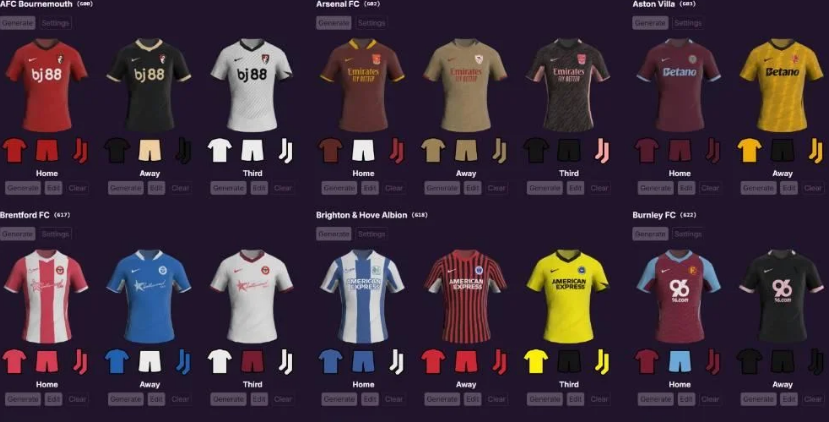
Aston Villa have moved Betano from the front of the shirt to the sleeve.
Everton have done something similar with Stake.com.
Bournemouth continue to have gambling advertising on their sleeve and training wear despite moving Vitality to the front of their shirts.
Manchester United have also demonstrated just how valuable secondary sponsorship can be.
Their Betway training-wear agreement has reportedly been valued at up to £20 million per year, potentially more than the main shirt sponsorship of many smaller Premier League clubs.
So the gambling industry isn’t necessarily leaving football.
It is simply being pushed away from the most visible piece of real estate.
The Next Threat: Cryptocurrency Sponsors?

There could be another major sponsorship battle developing.
Cryptocurrency companies are increasingly appearing on Premier League shirts and training wear.
Chelsea have a partnership with BingX, while Manchester City have an agreement with OKX.
That has already attracted attention from regulators.
The UK’s Financial Conduct Authority has warned football clubs about questionable sponsorship arrangements involving unauthorised financial firms.
For clubs searching for the next big commercial payday, cryptocurrency companies may look attractive.
But regulators and supporters will be watching closely.
What Happens to Smaller Clubs?
This could be one of the biggest consequences of the gambling ban.
For major clubs, replacing a gambling sponsor may be relatively straightforward.
For smaller clubs, losing a high-paying betting partner could create a significant financial hole.
That is particularly important because commercial income can be used to:
- Improve training facilities.
- Strengthen playing squads.
- Fund academy development.
- Support stadium improvements.
- Increase financial stability.
If alternative industries aren’t willing to pay comparable amounts, smaller clubs could feel the impact more severely than the Premier League’s wealthiest teams.
The Future of Premier League Sponsorship
The direction of travel is becoming increasingly clear.
Football sponsorship has moved through several eras:
Local businesses → electronics → alcohol → gambling → technology and finance
Artificial intelligence could become one of the next major categories.
As investment in AI companies continues to grow, football provides those businesses with something extremely valuable:
global visibility.
A Premier League shirt can reach television audiences across virtually every continent.
For technology companies trying to establish themselves internationally, that exposure can be worth considerably more than conventional advertising.
My Analysis
The gambling ban is more significant than simply removing betting logos from football shirts.
It changes the economics of sponsorship.
For years, gambling companies were willing to pay serious money because football offered exactly the audience they wanted. Removing them creates a vacuum, particularly for clubs outside the Big Six.
The interesting part is what fills that vacuum.
Technology and AI are obvious candidates because they are expanding rapidly and increasingly want global recognition. Finance is already proving capable of taking a large share of the market.
But the bigger clubs will continue to have an advantage.
Manchester United can reportedly command tens of millions from a single sponsor. A newly promoted club cannot.
That means the sponsorship market could actually become more unequal, even though the gambling ban affects everyone.
And there is another fascinating possibility.
If betting companies simply migrate from the front of shirts to sleeves, training kits and stadium advertising, the visual change may be smaller than supporters expect.
The gambling logo might disappear from the chest, only to pop up somewhere else.
Key Takeaways
- Gambling companies can no longer appear as Premier League front-of-shirt sponsors from 2026-27.
- Up to 11 clubs had gambling-related shirt sponsors during the previous two seasons.
- Technology and AI companies are becoming increasingly important sponsors.
- Finance is currently the leading sponsorship sector among confirmed deals.
- Smaller Premier League clubs could face greater financial pressure from the loss of gambling money.
- Some betting companies have already moved to sleeves and training wear.
- Cryptocurrency firms could become the next major sponsorship trend.
- Premier League commercial revenue has grown dramatically alongside the competition’s global popularity.
Final Thoughts
The Premier League shirt has always been more than football clothing. It is a snapshot of the business world surrounding the sport.
In the 1980s, electronics companies dominated.
Alcohol followed.
Then gambling became one of the most powerful forces in football sponsorship.
Now that era is ending.
The next Premier League shirts will increasingly feature technology companies, financial institutions, AI businesses and other global brands.
For supporters, the change may simply mean a cleaner-looking shirt.
For clubs, however, it represents something much bigger: a race to replace billions of pounds of commercial opportunity without gambling sponsorship at the front of the shirt.
And if the current trend continues, the next time you buy a Premier League jersey, there is a good chance the logo on the chest will belong to a company you’ve never heard of yet.