
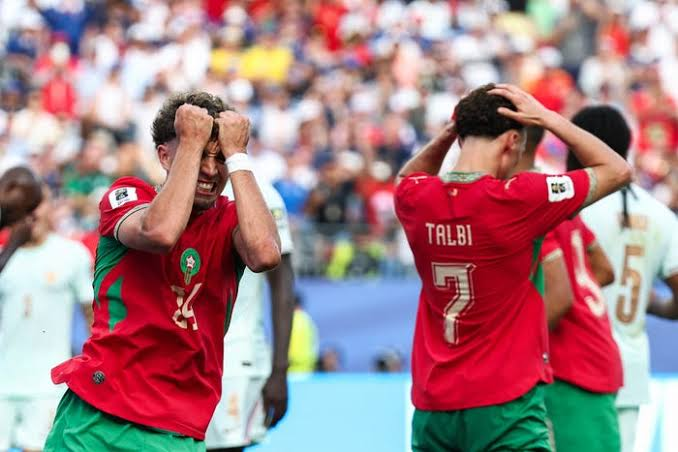
France’s 2-0 victory over Morocco ended the Atlas Lions’ hopes of another memorable FIFA World Cup campaign, but the final score was only part of the story. While Morocco remained organized defensively for much of the match, their lack of attacking ambition became the biggest talking point after the final whistle.
Against one of the tournament’s strongest teams, Morocco spent long periods protecting their own penalty area but rarely threatened France at the other end. The cautious approach helped keep the game competitive for over an hour, yet it ultimately left the Atlas Lions with too much to do once France finally found the breakthrough.
A Defensive Plan That Never Became an Attacking One
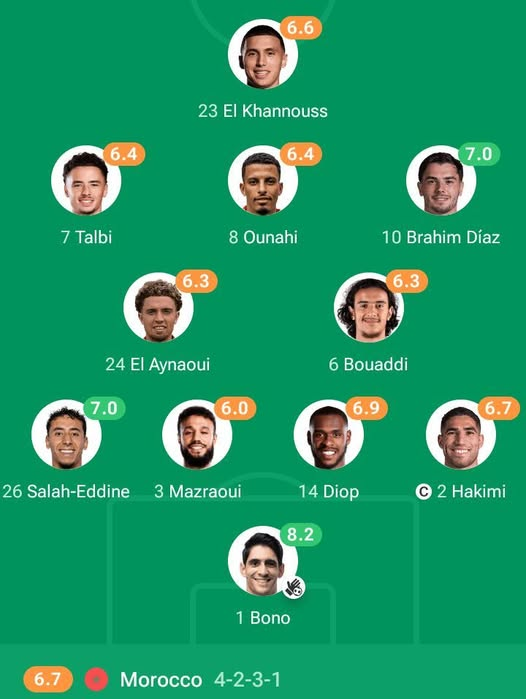
Morocco entered the quarter-final with confidence after an impressive tournament, hoping to gain revenge for their defeat to France in the 2022 World Cup semi-finals.
Instead, the Atlas Lions focused almost entirely on defensive organization.
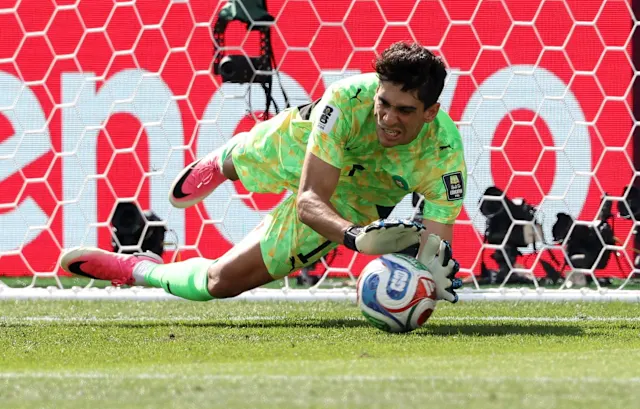
Mohamed Ouahbi’s side stayed compact, denied space between the lines and forced France to work hard for clear opportunities. For long periods, the strategy succeeded, with Yassine Bono making several excellent saves to frustrate Les Bleus.
However, Morocco struggled whenever they regained possession.
Rather than launching quick attacks, they often recycled the ball safely, allowing France to recover their defensive shape before any real danger developed.
France Controlled the Biggest Moments
Although Morocco defended with discipline, France dictated almost every important phase of the game.
The French press prevented Morocco from building attacks through midfield, forcing long passes that were comfortably dealt with by the French defense.
When Morocco did cross the halfway line, they lacked numbers in attack and rarely managed to support the player on the ball.
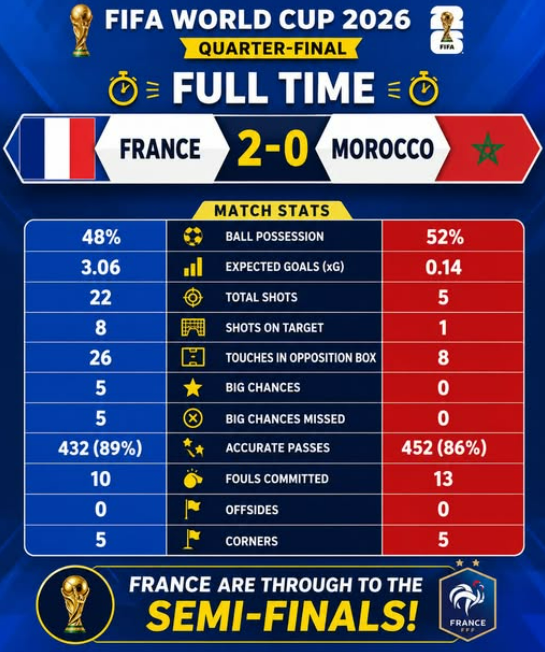
Their first shot on target did not arrive until the closing stages of the match, highlighting just how little pressure they placed on Mike Maignan throughout the evening.
Against a team of France’s quality, that level of attacking output was always likely to be punished.
Missing a Natural Striker
One of Morocco’s biggest challenges was the absence of a consistent focal point in attack.
Without a fully fit natural striker available from the start, several attacking players rotated through the central role during the match.
While the movement created some unpredictability, it also meant Morocco rarely had a player capable of holding up the ball inside France’s penalty area or finishing crosses delivered from wide positions.
When Soufiane Rahimi entered later in the game, Morocco looked slightly more dangerous, but by then France had already taken control.
The lack of depth in the striker position remains an area the coaching staff will likely address before future tournaments.
Tactical Analysis
Morocco’s game plan was built around limiting France’s strengths rather than maximizing their own.
The Atlas Lions defended in a compact low block, hoping to frustrate Kylian Mbappé and Ousmane Dembélé before attacking on the counter.
The problem was that those counterattacks rarely developed.
France recovered possession quickly, dominated the midfield battle and repeatedly forced Morocco backwards.
Once France scored, Morocco were finally forced to attack with greater urgency, but the additional space left behind allowed Les Bleus to strike again through another fast transition.
The tactical approach kept the match close for over an hour, but it never truly looked capable of winning it.
Valuable Lessons for the Future
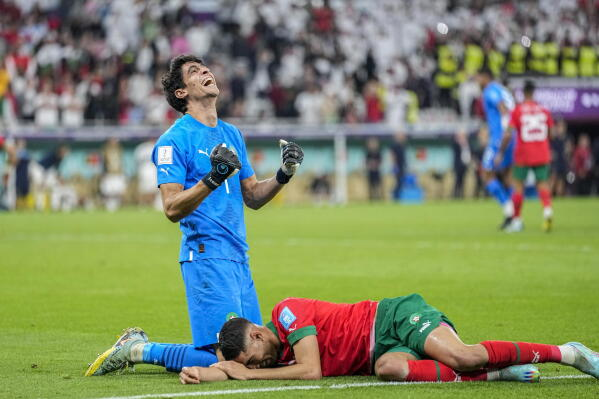
Despite the disappointment, Morocco can still look back on another strong World Cup campaign with pride.
The Atlas Lions once again proved they belong among the world’s top national teams, competing with confidence against elite opposition throughout the tournament.
However, the defeat also exposed areas that require improvement.
Greater attacking depth, more options at centre-forward and increased confidence when facing possession-dominant opponents could make the difference in future knockout matches.
With the Africa Cup of Nations approaching and the 2030 World Cup on home soil drawing closer, these lessons could prove invaluable.
Key Takeaways
- Morocco were eliminated after a 2-0 defeat to France in the World Cup quarter-finals.
- The Atlas Lions struggled to create meaningful attacking opportunities.
- Yassine Bono delivered another outstanding performance despite the loss.
- The absence of a natural centre-forward limited Morocco’s attacking threat.
- The tournament highlighted both Morocco’s progress and areas that still need improvement.
Final Thoughts
Morocco’s World Cup journey ended in disappointment, but it should not overshadow the progress made by the national team over recent years. Facing one of the tournament’s strongest sides was always going to be a difficult challenge, yet the Atlas Lions remained competitive through disciplined defending and outstanding goalkeeping. The biggest lesson from the defeat is not about defensive quality but attacking ambition. If Morocco can add greater depth in key positions and become more aggressive against elite opponents, they will be even better prepared to challenge for major honors in the years ahead.