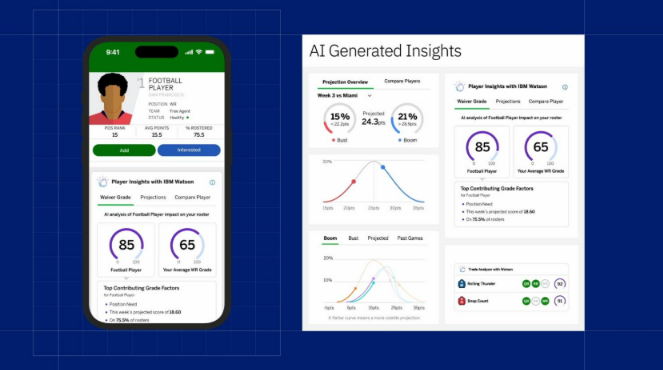


Millions of football fans rely on live score apps every day to keep up with matches from around the world. Whether it’s a last-minute winner in the Premier League or a red card in the Champions League, supporters expect updates to appear on their screens almost instantly.
But delivering live scores in real time is far more complicated than it seems. Behind every notification lies a sophisticated network of data collectors, high-speed servers, cloud infrastructure, and intelligent software working together to process thousands of match events every minute.
In this article, we’ll take a closer look at the technology that powers today’s live score apps and explain why these platforms have become an essential part of modern football.
Where Live Match Data Comes From
Everything starts inside the stadium.
Professional football matches are monitored by trained data analysts and advanced tracking systems. Every important event is recorded the moment it happens, including:
- Goals
- Assists
- Yellow and red cards
- Substitutions
- Corners
- Penalties
- Offside decisions
- Injuries
- Full-time and half-time whistles
Each event is timestamped and sent to central data servers within seconds.
The faster this information is collected, the faster fans receive updates on their devices.

Real-Time Data Transmission
Once an event has been recorded, it needs to reach millions of users around the world almost instantly.
This happens through a high-speed data pipeline:
- A match event occurs.
- Data operators verify the event.
- Information is transmitted to central servers.
- Cloud systems distribute the update globally.
- Mobile apps receive the latest data.
- Users see the update within seconds.
This entire process is designed to minimize delays, even during the busiest football weekends.
Cloud Computing Keeps Everything Running
Major football matches can attract millions of users at the same time.
Without cloud computing, many live score apps would struggle to handle such massive demand.
Cloud technology allows providers to:
- Scale server capacity instantly
- Prevent crashes during peak traffic
- Deliver fast updates worldwide
- Store historical match data
- Improve reliability across different regions
This ensures fans receive consistent performance, even during events like the FIFA World Cup or UEFA Champions League final.
Push Notifications in Seconds
One of the most popular features of live score apps is instant notifications.
When a goal is scored, fans often receive an alert just moments later.
Here’s how it works:
- The event is confirmed by data providers.
- Notification servers identify users following the match.
- Messages are sent through mobile notification services.
- Smartphones display the alert immediately.
Many apps also let users choose exactly which events they want to be notified about, such as goals, red cards, kickoff reminders, or full-time results.
Live Match Statistics
Modern live score apps provide far more than just the scoreline.

Many include detailed statistics that update throughout the match.
| Statistic | Purpose |
|---|---|
| Possession | Measures ball control |
| Shots | Tracks attacking attempts |
| Shots on Target | Indicates goal threat |
| Corners | Shows attacking pressure |
| Pass Accuracy | Evaluates passing quality |
| Fouls | Records disciplinary actions |
| Yellow Cards | Tracks cautions |
| Player Ratings | Measures individual performance |
These statistics help fans understand how the game is unfolding beyond the scoreboard.
Artificial Intelligence Behind the Scenes
Artificial intelligence plays an increasingly important role in live football technology.
AI systems can automatically:
- Detect unusual match events
- Identify tactical patterns
- Generate live match summaries
- Calculate advanced statistics
- Predict win probabilities
- Recommend related content
Instead of waiting for human editors, many updates can now be produced almost instantly through intelligent automation.
Why Speed Matters
In football, timing is everything.
A delay of even a few seconds can spoil the excitement for fans watching on television or following social media.
To reduce latency, developers focus on:
- Fast server response times
- Efficient databases
- Global content delivery networks (CDNs)
- Optimized mobile applications
- Reliable internet infrastructure
The goal is to ensure every update reaches users as quickly as possible.
Supporting Thousands of Matches
Every weekend, thousands of football matches take place across different countries and competitions.


A quality live score app can cover:
- Domestic leagues
- International tournaments
- Youth competitions
- Women’s football
- Cup competitions
- Friendly matches
Managing this enormous volume of information requires highly organized databases capable of processing millions of data points every day.
Keeping Data Accurate

Speed is important, but accuracy is even more critical.
Before updates are published, many platforms verify information using:
- Professional match analysts
- Automated validation systems
- Multiple independent data sources
- Quality control teams
This reduces errors and ensures fans receive trustworthy information throughout the match.
The Future of Live Score Apps
Technology continues to improve every season.
Future live score apps are expected to offer:
- Faster real-time updates
- More advanced player tracking
- AI-generated tactical analysis
- Personalized match insights
- Interactive 3D visualizations
- Augmented reality match experiences
These innovations will make following football even more engaging for supporters around the world.
Why Fans Love Live Score Apps
The best live score apps combine several essential features:
- Instant match updates
- Accurate statistics
- Reliable notifications
- Comprehensive competition coverage
- User-friendly design
- Fast performance
- Personalized alerts
Together, these features create an experience that keeps football fans connected wherever they are.
Final Thoughts
Live score apps may appear simple on the surface, but they rely on a powerful combination of human expertise, real-time data collection, cloud computing, artificial intelligence, and high-speed communication networks.
Every goal, card, and substitution travels through an advanced digital ecosystem before appearing on your screen just moments later.
As football technology continues to evolve, live score apps will become even faster, smarter, and more interactive, giving fans deeper insights and an even closer connection to the beautiful game.