
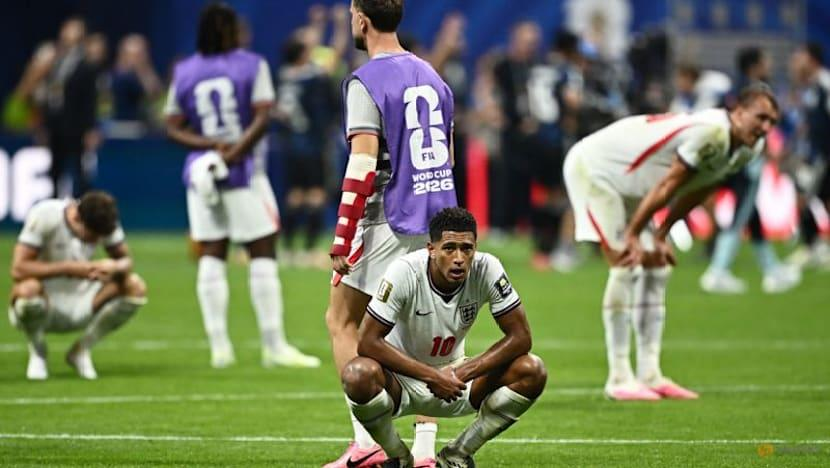
England’s hopes of ending their long wait for World Cup glory came to another painful conclusion after a dramatic 2-1 semi-final defeat to Argentina. Despite taking the lead through Anthony Gordon, the Three Lions were unable to hold their advantage as the reigning champions mounted a late comeback to reach the final.
The defeat was more than just another missed opportunity. It extended a worrying trend that has followed England for nearly three decades. Since 1998, the Three Lions have failed to eliminate a FIFA top-10 ranked nation in the knockout stages of the World Cup, highlighting a recurring challenge against football’s elite.
With Thomas Tuchel brought in to guide England beyond previous tournament disappointments, the result has inevitably raised fresh questions about his tactical decisions and the team’s ability to overcome the biggest opponents.
Quick Match Overview
| Detail | Information |
|---|---|
| Competition | FIFA World Cup 2026 |
| Match | England 1-2 Argentina |
| Stage | Semi-Final |
| England Scorer | Anthony Gordon |
| Argentina Scorers | Enzo Fernández, Lautaro Martínez |
| England Manager | Thomas Tuchel |
| Main Storyline | Argentina’s late comeback ends England’s World Cup dream |
Another Opportunity Slips Away
England entered the semi-final full of confidence after overcoming several difficult tests earlier in the tournament.
Anthony Gordon’s second-half goal appeared to put England on course for a historic victory.
However, Argentina responded with:
- Sustained attacking pressure.
- Greater possession.
- Improved control of midfield.
- Clinical finishing in the closing minutes.
Goals from Enzo Fernández and Lautaro Martínez completed the comeback and ended England’s World Cup campaign.

A Concerning World Cup Trend
The defeat continued a pattern that has frustrated England supporters for years.
Since 1998, England have been eliminated every time they have faced a FIFA top-10 ranked nation in the World Cup knockout rounds.
England’s World Cup Eliminations Since 1998
| Tournament | Stage | Opponent |
|---|---|---|
| 1998 | Round of 16 | Argentina |
| 2002 | Quarter-finals | Brazil |
| 2006 | Quarter-finals | Portugal |
| 2010 | Round of 16 | Germany |
| 2018 | Semi-finals | Croatia |
| 2022 | Quarter-finals | France |
| 2026 | Semi-finals | Argentina |
The pattern illustrates how difficult England have found it to overcome the strongest teams on the biggest stage.
Tuchel’s Tactical Shift Changed the Match
Following Gordon’s opening goal, England adopted a more defensive approach.
The changes included:
- Switching to a back five.
- Replacing attacking players with defenders.
- Sitting deeper inside their own half.
- Focusing on protecting the one-goal advantage.
While the intention was understandable, the tactical adjustment allowed Argentina to dominate possession and build continuous pressure.
Instead of threatening on the counterattack, England spent much of the final half-hour defending close to their penalty area.
Argentina Controlled the Closing Stages
As England retreated, Argentina gradually took control.
Their dominance was built on:
- Patient possession.
- Creative passing from Lionel Messi.
- Midfield superiority.
- Constant attacking movement.
The pressure eventually produced two late goals that transformed the match.
England struggled to regain possession or relieve the defensive pressure once momentum shifted.

Squad Selection Faces New Scrutiny
Attention has also turned toward England’s squad construction.
Some observers believe England lacked attacking alternatives capable of changing the game after retreating defensively.
Questions have been raised about:
- Squad balance.
- Midfield creativity.
- Tactical flexibility.
- Late attacking substitutions.
While England possessed significant talent, they struggled to regain attacking momentum after taking the lead.
How Does Tuchel Compare to Southgate?
Thomas Tuchel was appointed with the expectation that he could take England one step further than previous manager Gareth Southgate.
Interestingly, both managers reached the World Cup semi-finals before suffering narrow defeats.
There are similarities between the two campaigns:
- Strong tournament runs.
- Excellent defensive organization.
- Competitive performances against elite teams.
- Narrow knockout defeats.
However, Tuchel’s arrival was intended to break England’s long-standing barrier rather than repeat it.

What England Must Improve
Looking ahead to future tournaments, several areas stand out.
Key Priorities
- Maintain attacking intent after taking the lead.
- Improve possession under pressure.
- Create more chances against elite opponents.
- Increase tactical flexibility.
- Develop greater squad depth in creative positions.
Addressing these issues could help England compete more effectively against the world’s strongest nations.
Match Summary
| Category | Result |
|---|---|
| Semi-Final | England 1-2 Argentina |
| England Scorer | Anthony Gordon |
| Argentina Scorers | Enzo Fernández, Lautaro Martínez |
| Next Match | England vs France (Third-Place Playoff) |
Final Thoughts
England’s defeat to Argentina will be remembered not only for the dramatic late comeback but also for extending a troubling trend against the world’s strongest teams. While Thomas Tuchel guided the Three Lions to another World Cup semi-final, his tactical changes after taking the lead have become the focus of intense debate.
The squad has shown resilience, talent, and determination throughout the tournament, but the inability to overcome top-ranked opponents remains the final obstacle. As England begin preparing for UEFA Euro 2028, breaking that cycle will be essential if they are to turn promising campaigns into major international trophies.