
Brazil completed a perfect Group C campaign with a convincing 3-0 victory over Scotland, but the result told only part of the story.
Carlo Ancelotti’s side finished top of the group with seven points after demonstrating tactical flexibility, defensive organisation and attacking variety throughout the contest. Vinicius Junior once again stole the headlines with a brilliant brace, while Matheus Cunha added the third before Neymar made his long-awaited return to international football.
More importantly, Brazil showed they are no longer dependent on one style of play. Against Scotland, they proved they can dominate with aggressive pressing, patient possession and intelligent positional football, making them one of the most complete teams remaining in the tournament.
Ancelotti’s Pressing Trap Changed the Game
Brazil surprised Scotland with a different defensive structure from the opening whistle.
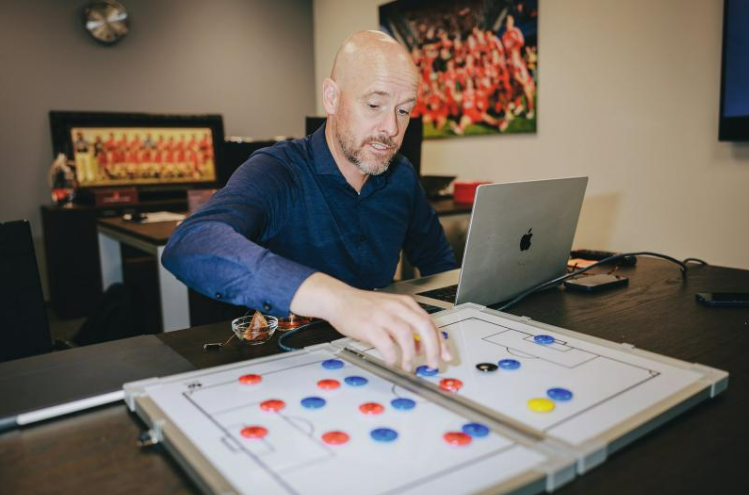
Instead of their usual 4-4-2 defensive block, Carlo Ancelotti positioned Casemiro slightly deeper behind the midfield, creating a flexible 4-1-3-2 shape whenever Scotland attempted to build from the back.
Rather than forcing Scotland wide, Brazil deliberately encouraged Steve Clarke’s side to play through central areas.
That decision quickly paid off.
Brazil’s midfield immediately closed passing lanes while Casemiro protected the defence behind them, creating repeated opportunities to regain possession in dangerous areas.
The opening goal came directly from that tactical approach.
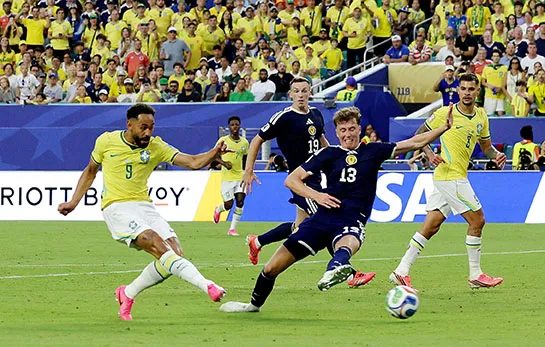
Rayan relentlessly pressed Scott McKenna, forcing the Scottish defender into a costly mistake before Vinicius Junior calmly finished the chance.
Brazil’s second goal followed a similar pattern, with Matheus Cunha winning possession before Bruno Guimarães delivered a perfect cross for Vinicius to score again.
A Different Side of Brazil’s Attack
Brazil’s third goal highlighted another important development.
Unlike the first two goals, Scotland were already organised defensively.
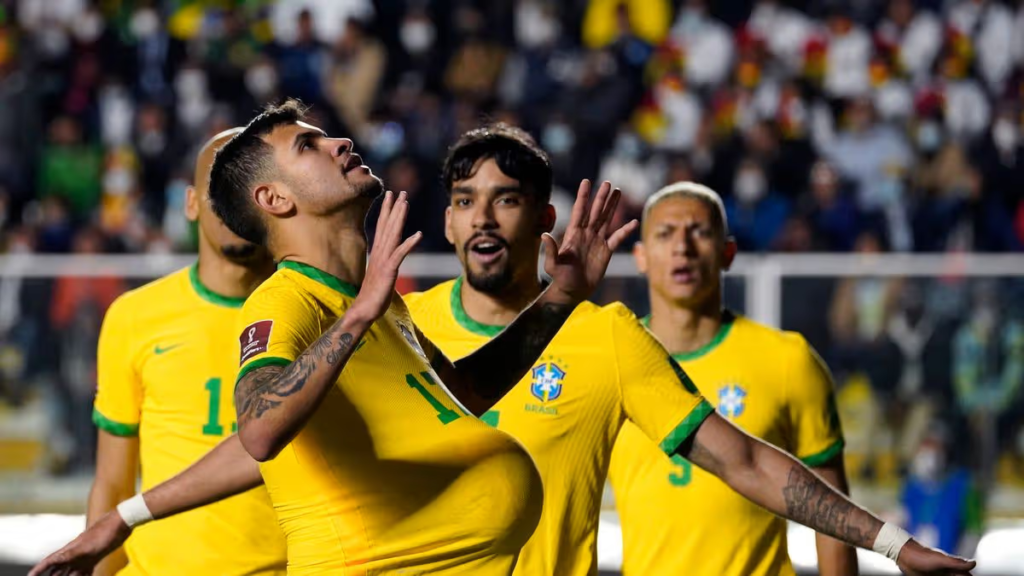
Instead of relying on pressing or counter-attacks, Brazil patiently moved the ball through midfield before producing a flowing passing sequence involving Marquinhos, Lucas Paquetá, Casemiro and Bruno Guimarães.
The move ended with Matheus Cunha calmly finishing after intelligent movement inside the penalty area.
It was exactly the type of goal Brazil may need during the knockout rounds against teams prepared to defend deep for long periods.
The combination showed that Ancelotti’s side are equally comfortable controlling possession as they are attacking in transition.
Defensive Balance Continues to Impress
Brazil were equally impressive without the ball.
Gabriel Magalhães closely tracked Scott McTominay whenever Scotland attempted to progress through midfield, while Casemiro consistently dropped into defensive positions whenever necessary.
The movement between both players prevented Scotland’s biggest attacking threat from influencing the match.
Throughout the tournament Brazil have become increasingly organised defensively, conceding very few clear opportunities despite facing different tactical systems in every group-stage fixture.
That balance between attack and defence may prove decisive as the level of opposition increases.
Neymar’s Return Adds Another Weapon
One of the biggest moments of the evening arrived late in the second half.
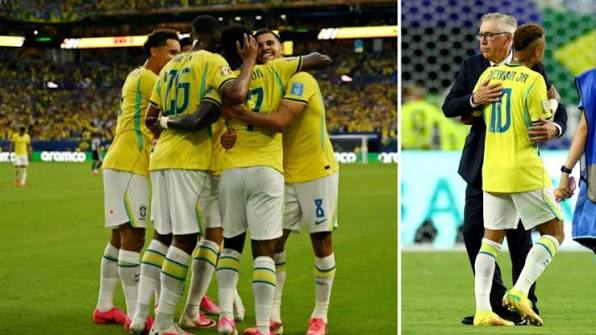
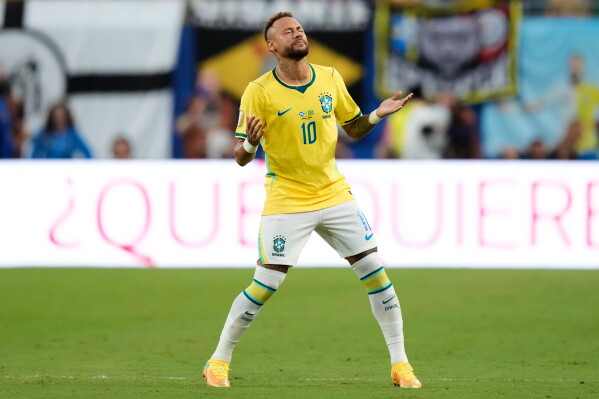
After 918 days away from international football, Neymar finally returned in a Brazil shirt.
Although his appearance lasted only around twenty minutes, the objective was never to dominate the game.
Instead, Ancelotti used the opportunity to rebuild Neymar’s match rhythm ahead of the knockout rounds.
The Brazilian legend showed flashes of quality with several clever passes and immediately took responsibility for set pieces.
His return gives Brazil another experienced attacking option just as the tournament enters its decisive stage.
Brazil Look Ready for the Knockout Stage
Finishing top of Group C means Brazil will now face the runners-up from Group F in the Round of 32.
Whether that opponent is the Netherlands, Japan or Sweden, Ancelotti’s side appear prepared for every tactical challenge.
Against Scotland they showed they can:
- Press aggressively and force defensive mistakes.
- Dominate possession through patient passing combinations.
- Break down organised defensive blocks.
- Protect leads with disciplined defensive positioning.
- Introduce experienced players like Neymar without disrupting the team’s balance.
Those qualities make Brazil one of the strongest contenders remaining in the competition.
Final Verdict
Brazil’s victory over Scotland was about much more than securing first place in Group C.
Carlo Ancelotti demonstrated that this Brazil team possesses tactical flexibility, defensive discipline and attacking variety capable of adapting to different opponents. Vinicius Junior continues to perform at an elite level, Bruno Guimarães controls matches from midfield, and Neymar’s return adds another dimension before the knockout rounds begin.
If Brazil continue to combine their high-intensity pressing with the composed positional football displayed in Miami, they will enter the Round of 32 looking every bit like genuine contenders to lift the 2026 FIFA World Cup.