
Category
FIFA’s New VAR Rule Takes Center Stage in Argentina vs Switzerland
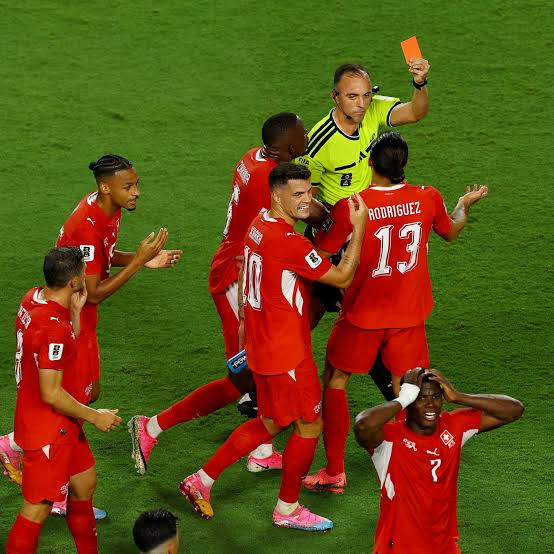
One of the biggest talking points of Argentina’s dramatic 3-1 extra-time victory over Switzerland was not Julián Álvarez’s stunning winner, but the controversial dismissal of Swiss striker Breel Embolo.
The forward was sent off in the second half after VAR intervened to overturn the referee’s original decision, marking the first time FIFA’s new yellow-card review protocol has been used during the 2026 FIFA World Cup.
The incident immediately divided football fans around the world, with many supporting the decision while others questioned both the timing and the consistency of the new rule.
Match Summary
| Competition | FIFA World Cup 2026 |
|---|---|
| Match | Argentina 3-1 Switzerland |
| Stage | Quarter-final |
| Incident | Breel Embolo Sent Off |
| VAR Decision | Yellow Card for Simulation (Second Yellow) |
What Happened?
The controversial moment arrived around the 70th minute with the score level at 1-1.
Referee João Pinheiro initially awarded Switzerland a free kick after Leandro Paredes appeared to foul Embolo during a midfield challenge.
However, the Video Assistant Referee reviewed the incident using FIFA’s newly introduced protocol that allows VAR to intervene when a yellow-card decision could directly lead to a player’s dismissal.
After watching the replay on the pitchside monitor, Pinheiro overturned his original decision.
Instead of awarding the foul, the referee ruled that Embolo had simulated the contact.
Since the Swiss striker had already been booked earlier in the match, the yellow card became his second, resulting in a red card.
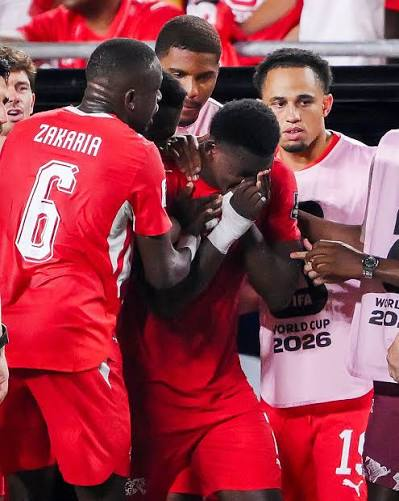
The decision left Embolo visibly emotional as he walked off the pitch in tears.
Why Could VAR Intervene?
Unlike previous tournaments, FIFA introduced a new World Cup regulation allowing VAR officials to review certain yellow-card situations if they could directly affect a player’s dismissal.
Normally, VAR cannot intervene for standard yellow cards.
However, because Embolo was already on a booking, officials were allowed to review whether the initial foul decision should instead have resulted in a caution for simulation.
It became the first time this regulation had been applied during the tournament.
Fans React Across Social Media
The decision quickly became one of the most discussed moments of the World Cup.
Some supporters argued the replay clearly showed Embolo initiating the contact and attempting to deceive the referee.
Others believed the intervention created unnecessary controversy, especially given previous complaints surrounding refereeing decisions involving Argentina earlier in the tournament.
The debate intensified after Egypt had also questioned several key decisions during their Round of 16 defeat against the defending champions.
As expected, social media platforms were flooded with contrasting opinions, ranging from praise for the officials following the laws of the game to criticism from fans who felt the decision unfairly changed the outcome of the quarter-final.
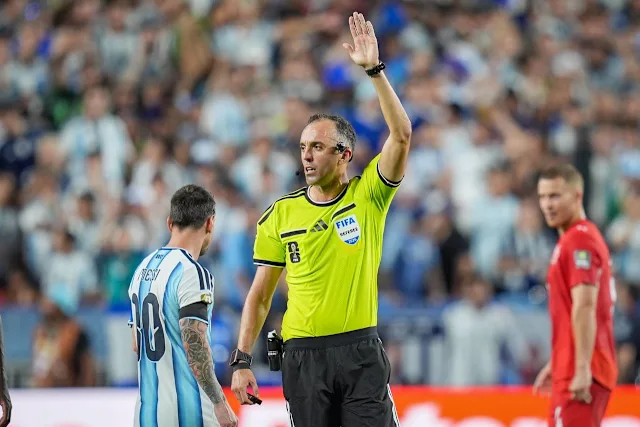
Referee João Pinheiro reviewing the incident on the VAR monitor
Did the Red Card Change the Match?
Before Embolo’s dismissal, Switzerland arguably looked the stronger side.
Dan Ndoye had equalized shortly after halftime, and Murat Yakin’s team continued to press Argentina aggressively while limiting Lionel Messi’s influence.
Playing with ten men dramatically shifted the momentum.
Argentina controlled possession for the remainder of normal time before Julián Álvarez produced a spectacular extra-time winner. Lautaro Martínez then added a late third goal as Switzerland committed numbers forward in search of another equalizer.
Although Argentina still needed moments of brilliance to secure victory, the numerical advantage undoubtedly made their task considerably easier.
Was the Decision Correct?
From a Laws of the Game perspective, many refereeing analysts agreed that if the referee concluded Embolo had deliberately simulated contact, the second yellow card was the correct decision.
The controversy centered less on the interpretation itself and more on the use of FIFA’s new VAR protocol.
While some praised the technology for correcting an incorrect decision, others questioned whether such interventions should be allowed when they directly influence a player’s dismissal in a World Cup knockout match.
The incident is likely to remain one of the tournament’s most debated refereeing moments.
Final Thoughts
Breel Embolo’s red card may become one of the defining refereeing moments of the 2026 FIFA World Cup. FIFA’s new VAR protocol achieved exactly what it was designed to do by correcting what officials believed was an incorrect on-field decision, but it also reignited discussions about consistency, transparency and the growing influence of video technology in football.
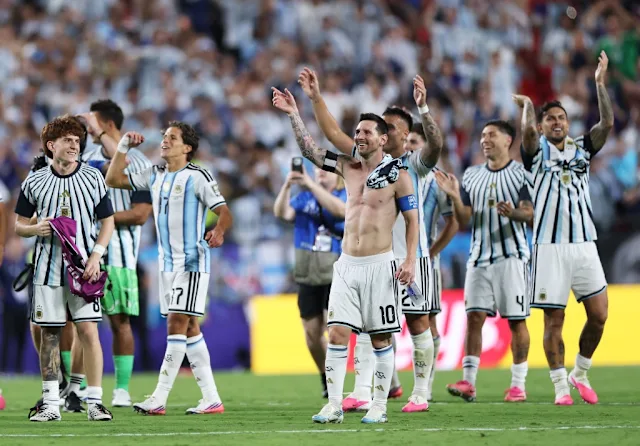
Regardless of the controversy, Argentina capitalized on the numerical advantage, defeating Switzerland 3-1 after extra time to book a blockbuster semi-final against England.
Key Takeaways
- Breel Embolo received a second yellow card for simulation after a VAR review.
- FIFA’s new yellow-card intervention rule was used for the first time at the 2026 World Cup.
- The dismissal sparked widespread debate among fans and pundits.
- Argentina defeated Switzerland 3-1 after extra time.
- The defending champions will now face England in the World Cup semi-finals.