
Football tactics have evolved dramatically over the past decade, and one of the biggest tactical innovations has been the rise of the inverted full-back.
Instead of staying wide throughout the match, modern full-backs now frequently move into central midfield during possession. This tactical adjustment allows teams to dominate the middle of the pitch, create numerical advantages, and control games more effectively.
Popularized by coaches such as Pep Guardiola, the inverted full-back has become a key feature of elite football, with clubs across Europe adopting the system.
In this guide, we’ll explain what an inverted full-back is, how the role works, why managers use it, and which players perform it best.
Quick Overview
| Topic | Explanation |
|---|---|
| Position | Full-back moving into central midfield |
| Main Purpose | Create midfield overloads |
| Used By | Top possession-based teams |
| Key Skills | Passing, positioning, decision-making |
| Tactical Benefit | Better ball control and build-up play |
What Is an Inverted Full-Back?

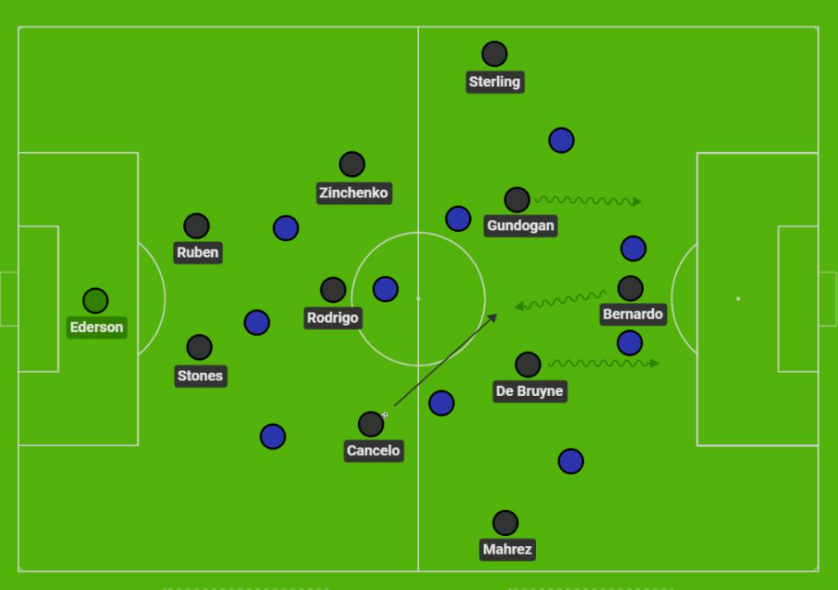
An inverted full-back is a defender who starts in a traditional left-back or right-back position but moves into central midfield when their team has possession.
Rather than hugging the touchline, the player drifts inside to support midfielders, helping the team keep possession and progress the ball through central areas.
This movement creates extra passing options and often leaves wingers free to stay wide and stretch the opposition’s defense.
Traditional Full-Back vs Inverted Full-Back
| Traditional Full-Back | Inverted Full-Back |
|---|---|
| Stays wide | Moves into midfield |
| Focuses on overlapping runs | Focuses on central passing |
| Delivers crosses | Controls possession |
| Provides width | Creates midfield overloads |
| Supports winger | Supports central midfielders |
Why Do Managers Use Inverted Full-Backs?
Modern football is often decided by which team controls midfield.
By moving a full-back inside, coaches can create a numerical advantage in central areas.
Main Benefits
- Better ball retention
- Extra passing options
- Improved build-up play
- Stronger defensive transitions
- Greater control of possession
- More tactical flexibility
Tactical Shape During Possession

Many teams completely change shape once they gain possession.
Example
| Without the Ball | With the Ball |
|---|---|
| 4-3-3 | 3-2-5 |
| 4-2-3-1 | 3-2-4-1 |
| 4-4-2 | 3-3-4 |
The full-back moves into midfield while one center-back remains wider to maintain defensive balance.
Responsibilities of an Inverted Full-Back
An inverted full-back performs many of the duties usually associated with midfielders.
Key Responsibilities
| Responsibility | Why It Matters |
|---|---|
| Ball progression | Starts attacks |
| Short passing | Maintains possession |
| Defensive cover | Protects midfield |
| Press resistance | Escapes pressure |
| Tactical positioning | Creates space |
| Supporting build-up | Links defense and attack |
Skills Required

Not every full-back can play this demanding role.
The best inverted full-backs possess:
- Excellent first touch
- Accurate passing
- Tactical intelligence
- Calmness under pressure
- Strong positioning
- High football IQ
- Defensive awareness
These qualities allow them to operate comfortably in crowded midfield areas.
Famous Inverted Full-Backs
| Player | Club | Strength |
|---|---|---|
| João Cancelo | Al Hilal (formerly Man City) | Creativity |
| John Stones* | Manchester City | Hybrid defender-midfielder |
| Oleksandr Zinchenko | Arsenal | Passing |
| Trent Alexander-Arnold | Liverpool | Distribution |
| Rico Lewis | Manchester City | Tactical intelligence |
*John Stones often steps into midfield from center-back, performing a similar hybrid role.
Advantages of the System

4
| Advantage | Impact |
|---|---|
| Midfield overload | More passing options |
| Better possession | Harder to press |
| Improved build-up | Cleaner progression |
| Defensive stability | Stronger transitions |
| Tactical flexibility | Multiple formations during matches |
Potential Weaknesses
Every tactical system has risks.
| Weakness | Explanation |
|---|---|
| Space behind full-back | Vulnerable to counterattacks |
| Requires intelligent players | Difficult role to master |
| Wide areas exposed | Opponents may attack the flanks |
| Demanding physically | Constant movement required |
If possession is lost quickly, teams can become exposed down the wings.
Teams That Commonly Use Inverted Full-Backs


Several top clubs have successfully implemented the inverted full-back system.
| Club | Tactical Style |
|---|---|
| Manchester City | Positional play |
| Arsenal | Possession football |
| Bayern Munich | High pressing |
| Barcelona | Build-up through midfield |
| Liverpool | Hybrid full-back roles |
These clubs use the role to dominate possession and create superior numbers in midfield.
How AI and Data Help Analyze Inverted Full-Backs
Modern clubs use advanced analytics to evaluate how effectively full-backs perform this role.
Metrics include:
- Progressive passes
- Pass completion percentage
- Touches in midfield
- Ball recoveries
- Press resistance
- Possession value
- Defensive actions
Heat maps and positional data also reveal how often a full-back moves inside during matches.
Is This the Future of Football?
Many tactical analysts believe the inverted full-back is no longer just a trend but a core part of modern football.
As coaches continue emphasizing possession, flexibility, and numerical superiority in midfield, more defenders are being trained to operate comfortably in central areas.
Youth academies across Europe are already developing technically gifted full-backs capable of playing both in defense and midfield.
Final Thoughts
The inverted full-back has become one of the defining tactical innovations of modern football. By stepping into midfield during possession, these players help teams control games, build attacks more effectively, and create numerical advantages where matches are often won.
While the role demands exceptional technical ability, tactical awareness, and decision-making, it has transformed how many of the world’s top clubs approach the game. As football tactics continue to evolve, the inverted full-back is likely to remain one of the most influential positions on the pitch.