

Introduction
Predicting a football match has always been part of the game’s excitement. Fans make predictions based on form, history, and emotions.
But today, artificial intelligence is changing the way predictions are made.
AI systems can analyze thousands of data points in seconds, from player performances to tactical patterns, helping clubs, analysts, and fans understand the possible outcomes of a match.
Of course, football remains unpredictable. A red card, a brilliant individual moment, or a lucky goal can destroy even the smartest prediction model.
What Data Does AI Use to Predict Matches?
AI does not simply look at the final scores of previous games. It studies a huge amount of information.
Some of the most important data includes:
| Data | Why It Matters |
|---|---|
| Recent Form | Shows how teams are performing |
| Goals Scored & Conceded | Measures attacking and defensive strength |
| Expected Goals (xG) | Calculates chance quality |
| Player Statistics | Evaluates individual impact |
| Injuries | Identifies missing key players |
| Possession & Passing | Measures playing style |
| Home Advantage | Considers stadium impact |
| Previous Meetings | Finds historical patterns |
By combining all these factors, AI creates a more detailed picture of each team.

How Machine Learning Predicts Results
Machine learning is the brain behind many football prediction systems.
The process usually works like this:
1. Collect Historical Football Data
AI models are trained using thousands of previous matches.
They study:
- Final scores
- Shots
- Possession
- Player actions
- Tactical formations
- Team strength
The system learns patterns that humans may not notice.
2. Analyze Current Team Conditions
Before a match, AI updates its predictions using recent information.
For example:
A team may have won five games in a row, but if their main striker is injured and their defense is struggling, the prediction changes.
3. Calculate Probabilities
Instead of saying:
“Team A will definitely win.”
AI usually produces probabilities:
- Team A win: 45%
- Draw: 30%
- Team B win: 25%
Football prediction is about probability, not certainty.
The Role of Expected Goals (xG)

Expected Goals has become one of the most important statistics in modern football analysis.
AI uses xG to understand whether a team creates dangerous chances.
Example:
Team A wins 2-0 but creates only low-quality chances.
Team B loses 1-0 but creates several clear opportunities.
AI may believe Team B actually performed better and could be more dangerous in future matches.
AI Player Analysis
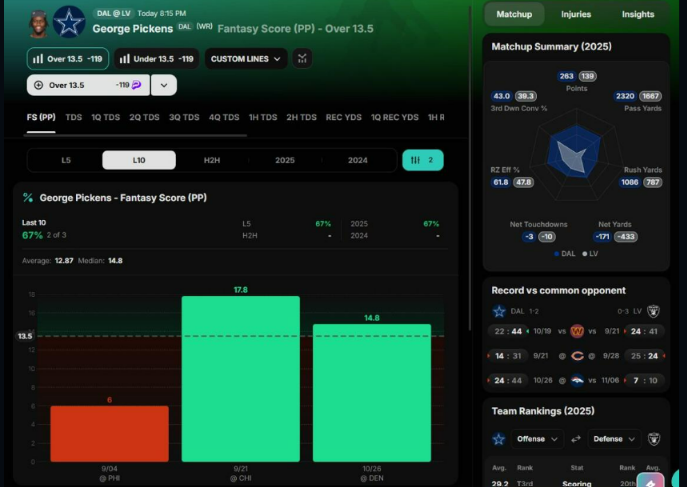
Modern prediction systems also analyze individual players.
They can evaluate:
- Goal contribution
- Passing accuracy
- Defensive actions
- Pressing intensity
- Physical performance
A missing midfielder who controls the game can dramatically change a team’s predicted chances.
How Football Clubs Use AI Predictions
Professional clubs use AI for more than predicting winners.
They use it to:
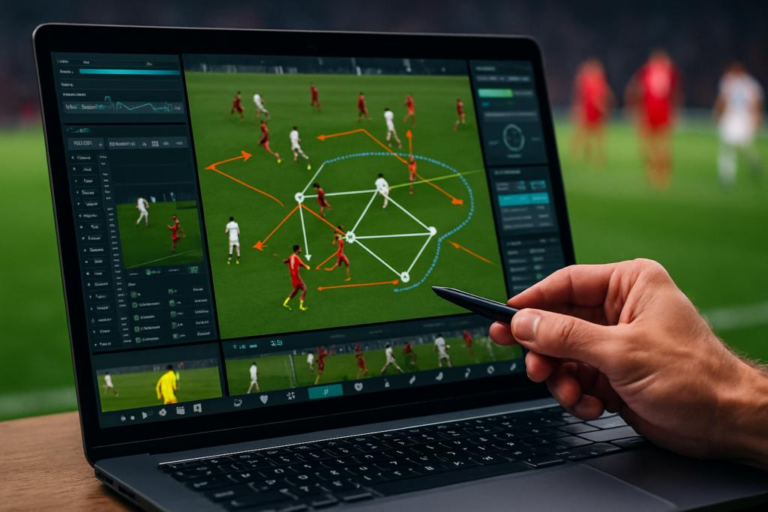
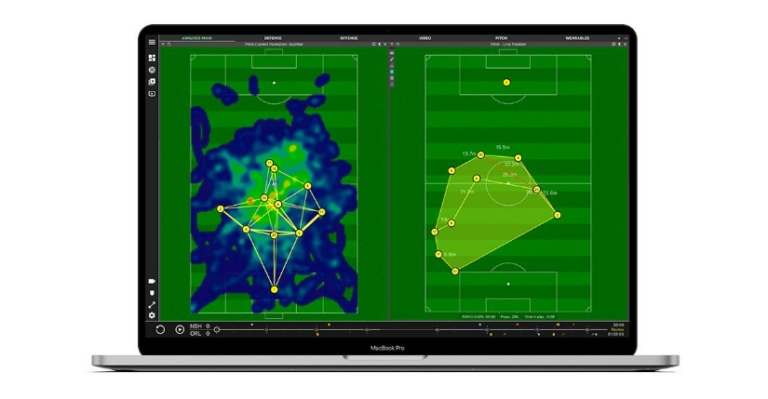
- Prepare match strategies
- Identify opponents’ weaknesses
- Scout future players
- Prevent injuries
- Improve training sessions
Before facing a strong opponent, coaches can use AI reports to understand:
- Where the opponent attacks
- Which areas they leave open
- Which players create the biggest threats
Can AI Predict the Exact Score?
This is one of the hardest challenges.
Predicting a winner is already difficult, but predicting an exact score like 2-1 or 3-0 is much harder.
Football has low scoring compared to sports like basketball, meaning one small event can completely change the match.
A goalkeeper mistake or a late penalty can make predictions fail.
The Future of AI Football Predictions
AI models will continue becoming more advanced.
Future systems may include:
- Real-time match predictions during games
- AI tactical suggestions for coaches
- Player fatigue prediction
- Automated scouting reports
- Personalized predictions for fans
Football will always keep its surprises, but AI is becoming a powerful analyst sitting alongside coaches and supporters.
Quick Summary
- AI predicts football results by analyzing huge amounts of match data.
- Machine learning finds patterns from previous games.
- Statistics like xG, player form, and injuries influence predictions.
- AI provides probabilities, not guaranteed outcomes.
- Human decisions and unpredictable moments still decide matches.
Final Thoughts
Artificial intelligence is turning football prediction from guesswork into a science. The best models do not try to replace the magic of football, they simply help us understand the game on a deeper level.
The future match analyst may not only carry a notebook, but also an AI assistant quietly calculating thousands of possibilities behind the scenes. ⚽🤖