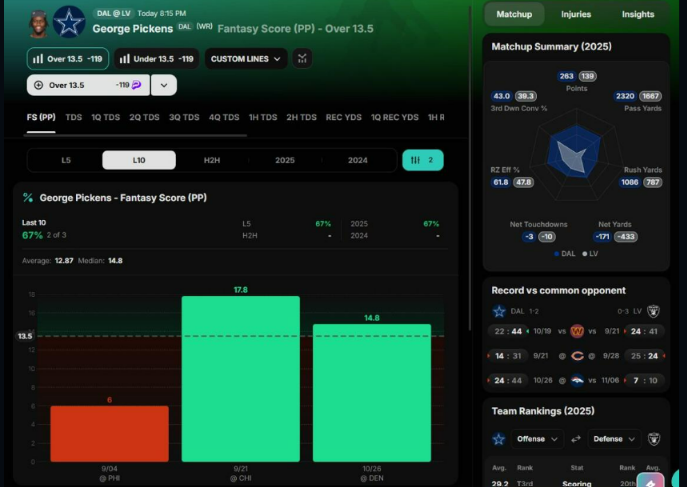


Football transfers have changed dramatically over the last two decades.
In the past, clubs often relied on traditional scouts to discover talent. A scout would attend matches, evaluate players, write reports, and recommend potential signings to the club.
While scouting remains important, modern football recruitment now involves something else:
Data and analytics.
Today, many professional clubs employ entire departments dedicated to football analytics. These teams analyze thousands of players worldwide using advanced statistics and performance metrics before a transfer target is even considered.
From identifying hidden gems to avoiding expensive mistakes, data has become one of the most powerful tools in modern football recruitment.
But how exactly does the process work?
The Evolution of Football Scouting
Traditional scouting is still valuable.
Experienced scouts can evaluate:
- Body language
- Leadership
- Decision-making
- Personality
- Adaptability
However, scouting alone has limitations.
A scout cannot watch every player in every league around the world.
This is where data changes everything.
Modern clubs can analyze thousands of players simultaneously using football databases and analytics platforms.
Traditional vs Modern Recruitment
| Traditional Recruitment | Modern Recruitment |
|---|---|
| Scout watches players | Scout + Data Analysis |
| Limited player pool | Global player database |
| Subjective opinions | Objective metrics |
| Time-consuming | Faster filtering process |
| Higher risk | Better-informed decisions |
The most successful clubs combine both approaches.
Why Clubs Invest in Football Analytics
Transfers are expensive.
A failed signing can cost a club millions of dollars in transfer fees and wages.
Analytics help reduce that risk.
Instead of relying only on reputation or highlights, clubs can evaluate a player’s long-term performance using data.
Benefits of Data-Driven Recruitment
✅ Better player identification
✅ Reduced transfer risk
✅ Improved squad planning
✅ More efficient scouting
✅ Discovery of undervalued players
For many clubs, analytics have become an essential competitive advantage.
What Statistics Do Clubs Analyze?

Modern recruitment teams examine much more than goals and assists.
Different positions require different metrics.
For Strikers
- Goals
- Expected Goals (xG)
- Shots per game
- Conversion rate
- Touches in the penalty area
For Midfielders
- Progressive passes
- Key passes
- Pass completion
- Ball recoveries
- Chance creation
For Defenders
- Tackles
- Interceptions
- Aerial duels won
- Defensive actions
- Passing under pressure
For Goalkeepers
- Save percentage
- Goals prevented
- Distribution accuracy
- Crosses claimed
This allows clubs to build detailed player profiles.
The First Stage: Data Filtering
Most clubs don’t start by watching videos.
They start with data.
Imagine a Premier League club needs a new striker.
Recruitment analysts may search for players who meet specific criteria:
| Requirement | Example |
|---|---|
| Age | Under 25 |
| Position | Centre Forward |
| Goals | 15+ per season |
| xG Performance | Above Average |
| League Quality | Top European Leagues |
The list of thousands of players can quickly shrink to a few dozen realistic targets.

The Second Stage: Video Analysis
Once analysts identify promising players through data, clubs begin watching footage.
This helps answer questions statistics cannot fully explain.
For example:
- How does the player move off the ball?
- How does he react under pressure?
- Does he fit the team’s tactical system?
- Is he comfortable in different formations?
Video analysis provides important context.
The Third Stage: Live Scouting
Even in the age of analytics, live scouting remains essential.
Scouts attend matches to observe:
- Communication
- Work ethic
- Attitude
- Leadership qualities
- Physical presence
These traits are difficult to measure with statistics alone.
The best recruitment decisions combine data and human observation.
Clubs Famous for Using Data
Several clubs have become famous for their analytical recruitment models.
Brighton & Hove Albion
Brighton consistently identifies talented players before their market value explodes.
Brentford
Brentford relies heavily on data-driven recruitment and has achieved remarkable success despite a smaller budget.
FC Midtjylland
The Danish club became one of football’s most famous examples of analytics-driven decision making.
Union Saint-Gilloise
The Belgian club has used data effectively to compete against wealthier rivals.

Can Analytics Predict Success?
Not perfectly.
Football remains unpredictable.
A player who performs brilliantly in one league may struggle in another.
Factors such as:
- Language
- Culture
- Injuries
- Coaching
- Confidence
can affect performance.
Analytics improve decision-making, but they do not guarantee success.
How Analytics Help Smaller Clubs
Data has become particularly valuable for clubs with limited budgets.
Wealthy clubs can afford expensive transfer mistakes.
Smaller clubs cannot.
Analytics help them:
- Find undervalued players
- Discover emerging talent
- Sell players for profit
- Compete with richer rivals
This has helped level the playing field in modern football.
The Future of Football Recruitment
Recruitment technology continues to evolve rapidly.
Future trends may include:
- AI-powered scouting
- Predictive performance models
- Automated player comparisons
- Real-time tracking systems
- More advanced physical data
Clubs are constantly searching for new ways to gain an advantage.
Quick Facts
| Question | Answer |
|---|---|
| Do clubs still use scouts? | ✅ Yes |
| Do clubs use data before scouting? | ✅ Often |
| Can analytics replace scouts? | ❌ No |
| Which clubs are famous for data recruitment? | Brighton, Brentford, Midtjylland |
| Is football becoming more data-driven? | ✅ Absolutely |
Final Thoughts
Football recruitment is no longer based solely on intuition and traditional scouting. Modern clubs now combine data, video analysis, and live scouting to make smarter transfer decisions.
Analytics help teams identify talent, reduce risks, and compete more effectively in an increasingly expensive transfer market. While statistics can never tell the entire story, they have become one of the most important tools in modern football recruitment.
As technology continues to advance, data and analytics will likely play an even bigger role in shaping the future of football transfers and squad building.